cpeditor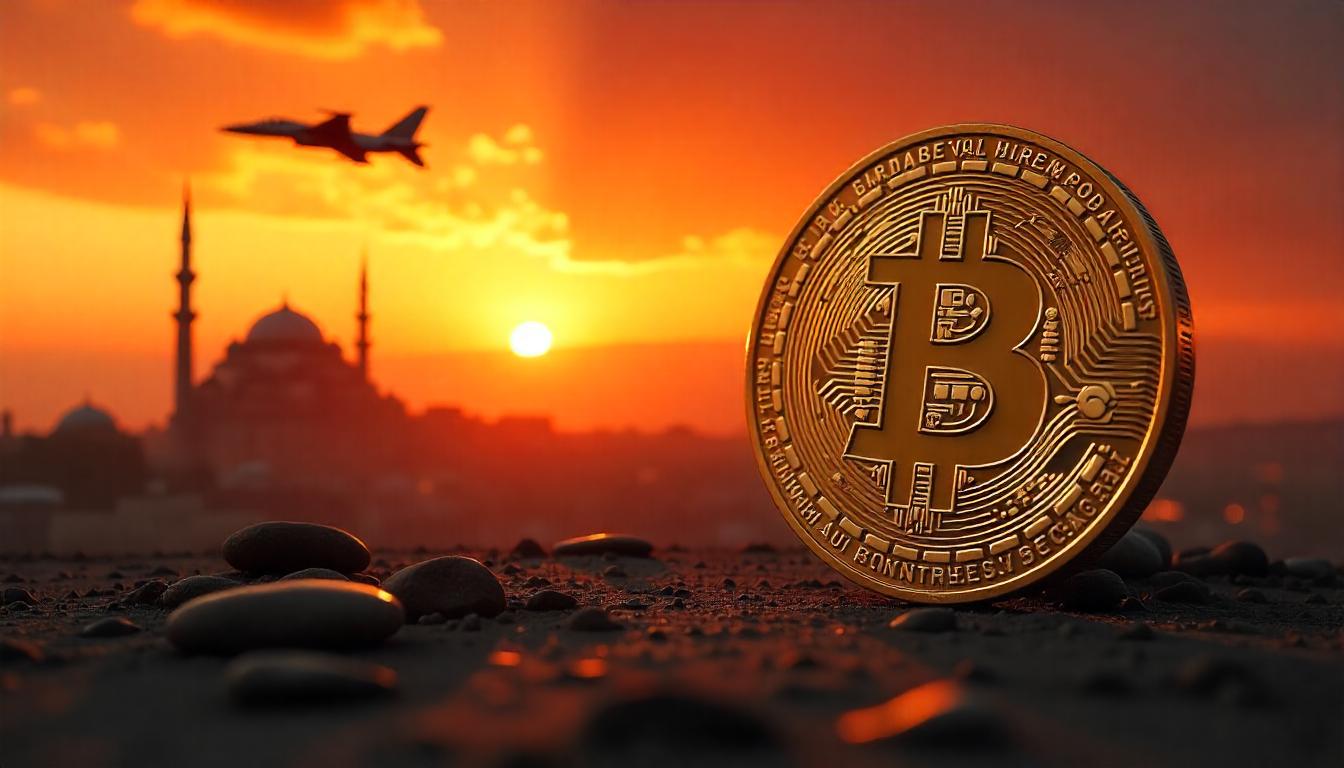
Bitcoin Sinks as Trump Demands Iran’s Surrender, Markets Brace for Possible War
The cryptocurrency market is reeling as geopolitical tensions between the U.S. and Iran intensify, fueling fears of outright conflict.
Bitcoin (BTC) has fallen 3.8% in the past 24 hours, slipping below $104,000 once again. The CoinDesk 20 Index, which tracks the largest digital assets excluding stablecoins, exchange tokens, and memecoins, plunged 6.1% in the same timeframe. Major tokens followed suit, with ether (ETH) and solana (SOL) each down 7%, while sui (SUI) tumbled almost 10%.
Crypto-linked stocks were not spared. Shares of Coinbase (COIN), MicroStrategy (MSTR), and Circle (CRLC) fell 2–3%, while mining companies such as Bitdeer (BTDR), Riot Platforms (RIOT), CleanSpark (CLSK), HIVE Blockchain (HIVE), and Hut 8 (HUT) saw losses between 6% and 7%.
The sell-off accelerated after U.S. President Donald Trump issued a stark warning to Iran.
“We know exactly where the so-called ‘Supreme Leader’ is hiding,” Trump wrote on social media, referencing Iran’s head of state, Ali Khamenei. “He is an easy target, but he is safe there — we are not going to take him out (kill!), at least not for now. But we don’t want missiles shot at civilians or American soldiers. Our patience is wearing thin.”
Trump also demanded Iran’s unconditional surrender and urged residents of Tehran to evacuate. According to the White House, the National Security Council was convened urgently, and Trump cut short a G7 summit to focus on the crisis.
On Polymarket, traders now place the odds of U.S. military action against Iran before July at 65%, underscoring how quickly sentiment has shifted.
“The sudden and severe escalation of the Iran-Israel conflict introduced a significant geopolitical risk premium, prompting an immediate flight from risk assets across the board, to which crypto has not proven immune,” said Javier Rodriguez-Alarcón, Chief Investment Officer at XBTO.
Matteo Greco, senior analyst at Finequia, echoed the concern, warning that the conflict could ripple through the broader economy. “Should Israeli military actions impact Iran’s oil production, a spike in oil prices could follow, fueling renewed inflationary pressures,” he said.
Rodriguez-Alarcón added that the situation remains unpredictable: “Any credible de-escalation in the Middle East could serve as a significant risk-on catalyst, while a further deterioration would likely trigger another move down across risk assets.”