cpeditor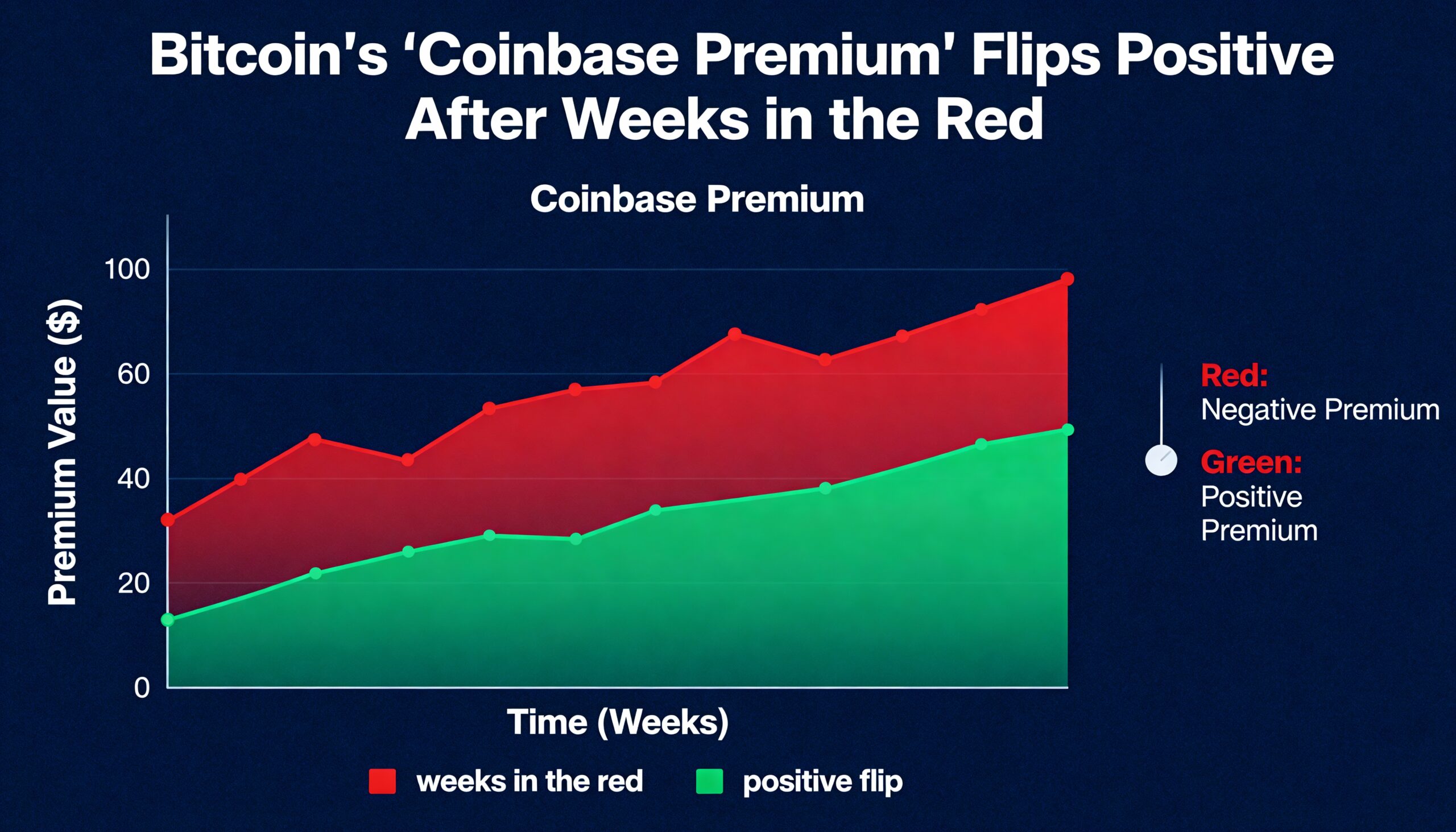
Bitcoin may be seeing its first real resurgence of U.S. buy-side participation in weeks, as the Coinbase Premium Index flipped positive after nearly a month in negative territory.
The reversal appeared early Saturday in Asia, with BTC trading around $91,000. The Coinbase Premium — which measures the price difference between Coinbase and the broader market — has long served as a gauge of U.S. capital flows. Negative readings often point to domestic outflows or reduced risk appetite among U.S. institutions, while a persistent positive premium typically aligns with ETF inflows and stronger dollar liquidity.
Thursday marked the first session since late October in which Coinbase spot prices consistently traded above global averages, signaling renewed U.S. demand.
Liquidity trends support the shift. Stablecoin reserves on Binance climbed to a record $51.1 billion in November, indicating substantial dry powder on the sidelines. Options desks also report a reset in positioning. GSR noted that speculative longs have largely cleared and that easing skew and downside demand reflect a “market ready for growth.”
Research firms Kronos and Presto similarly described the recent move higher as a standard rebound from oversold conditions, following two weeks of aggressive leverage washouts.
Still, bitcoin remains trapped between major technical levels. According to FxPro analyst Alex Kuptsikevich, the $90,000 region — a strong reaction zone earlier this year — may now act as resistance. Bulls will likely need a decisive break above $95,000 to reestablish broader momentum. On the downside, a drop below $87,000 could reopen the path toward $80,000, extending November’s capitulation phase.
Market sentiment is also recovering only marginally. The fear index has risen to 25, moving out of extreme fear but not yet indicating full confidence. And despite bitcoin’s rebound, just one out of seven leading tokens posted gains in the past 24 hours — underscoring how narrow the rally remains even with total crypto market capitalization holding near $3.1 trillion.