cpeditor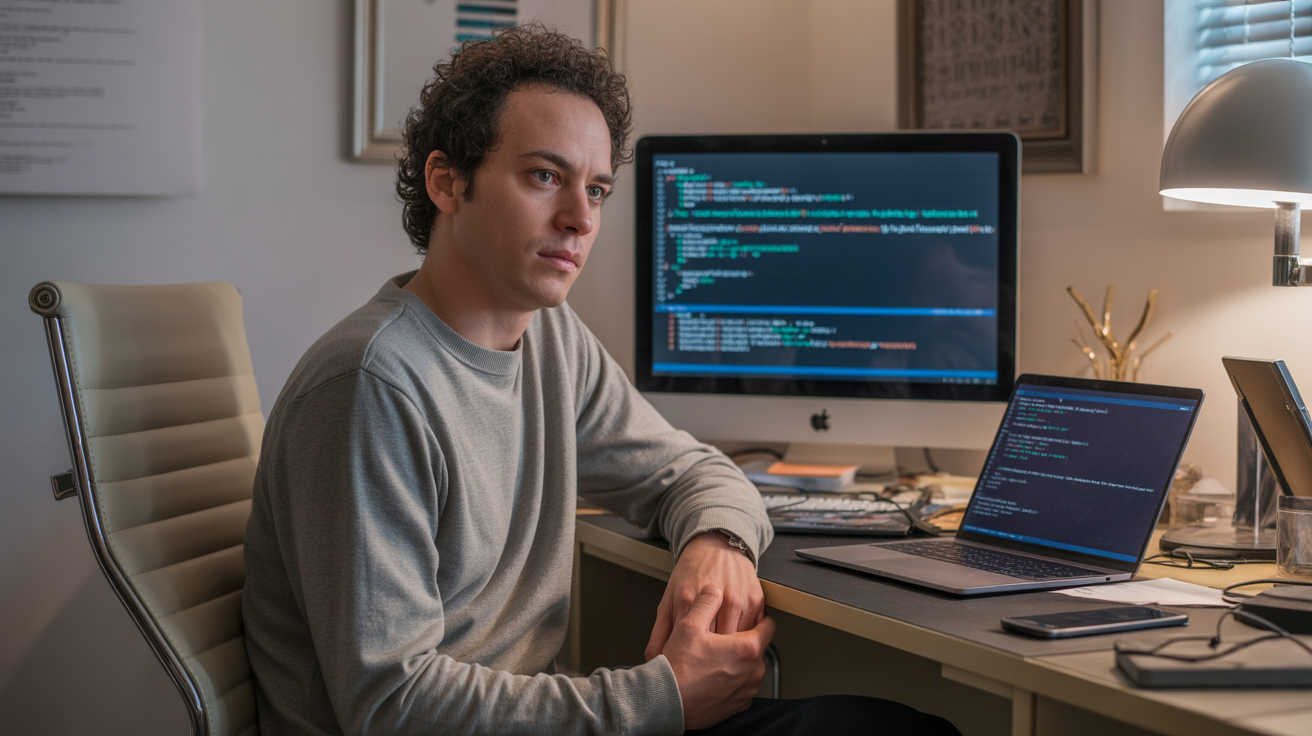
Polymarket Founder Shayne Coplan: Blockchain Let Me Build a Global Platform From My Bedroom
Miami Beach — When Shayne Coplan launched Polymarket, he didn’t have a team, venture funding, or institutional backing. What he did have was a laptop, conviction, and the power of blockchain.
“I’m a solo founder. I literally started with next to no money,” Coplan said during a discussion at Cantor Fitzgerald’s crypto, AI, and blockchain conference in Miami Beach on Wednesday. “The cool thing about blockchains is it lets some kid in his bedroom—or their office, bathroom, or wherever—experiment with financial applications and innovate freely.”
Coplan credited blockchain’s open architecture for enabling him to build a functioning global market without traditional fintech barriers. “In traditional finance, the entry barriers are prohibitive for anyone young, resource-limited, or time-constrained trying to create something new,” he said.
A Market for Real-World Outcomes
Launched in 2020, Polymarket allows users to trade on the likelihood of real-world events—from elections and Fed decisions to celebrity news. Unlike polls or expert predictions, Polymarket relies on market-driven probabilities, reflecting collective conviction and risk.
“When people track elections affecting their livelihoods, they want real insight,” Coplan explained. “Polls are often just noise, but markets provide a price backed by risk and belief.”
Polymarket operates on a peer-to-peer trading model, where prices represent the midpoint between buy and sell orders. “At any given moment, the midpoint indicates the likelihood of an event paying out $1 if correct,” he said.
Beyond Politics: Decision-Making and Risk Management
Coplan sees potential for prediction markets in public policy and financial risk. “You can model scenarios—what happens if candidate A drops out? What if they don’t? Properly structured markets can aid decision-making on an unprecedented scale,” he said.
He also highlighted Polymarket’s edge over traditional sportsbooks. “Legacy platforms trade against the house, can manipulate prices, and may even ban profitable users. We offer fairness: your opinion and your money determine the price.”
In sectors like insurance, Coplan envisions markets where risk-pricing and liquidity provision are decentralized. “People good at pricing risk can provide liquidity, while those skilled in sales can facilitate hedging,” he said.
The Role of AI and Niche Markets
AI agents may soon play a larger role in market efficiency. “Agents can monitor news, gauge sentiment, and correct mispricings, even with limited liquidity. This creates competition to build the most accurate algorithms,” Coplan said.
He believes that the long tail of niche markets—any arena involving uncertainty—holds significant potential. “It may not generate huge volume, but it unlocks a new format of information. Polymarket odds can be applied to countless opportunities,” he noted.
As Polymarket scales in the U.S. and rolls out a beta exchange, Coplan remains focused on delivering a product that embodies blockchain’s original promise.
“We aim to build the best product—something people love to use, where your opinion actually matters,” he said.