cpeditor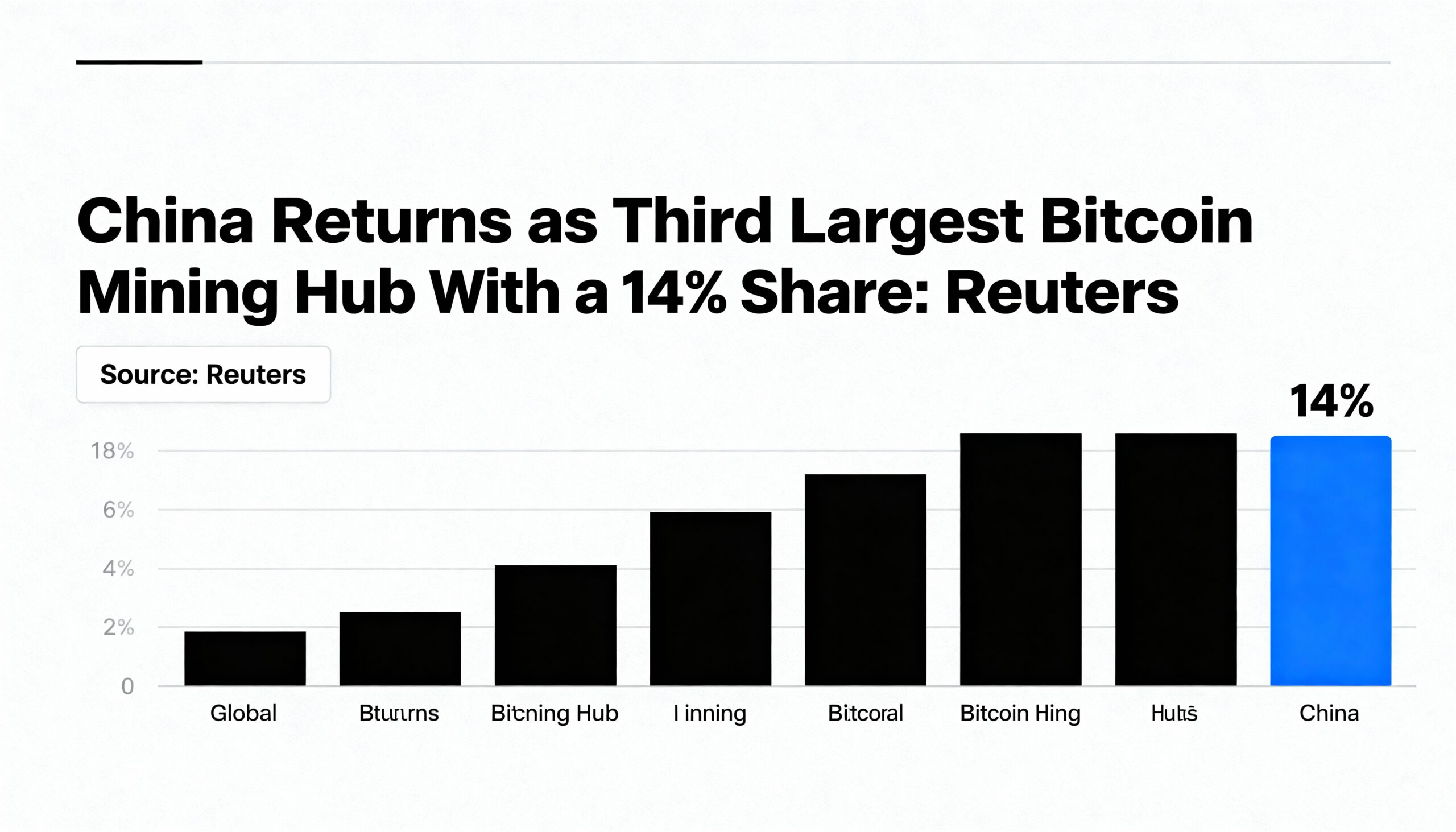
China’s underground bitcoin mining sector is expanding again as access to cheap power, rising miner demand, and subtle shifts in policy create conditions for a renewed push in several key provinces.
After nearly vanishing from the global map following Beijing’s 2021 crackdown, China has reemerged as the world’s third-largest bitcoin mining hub, capturing roughly 14% of global hashrate as of October, according to Hashrate Index. The rebound is being fueled by miners and companies quietly operating in regions with abundant low-cost electricity—particularly Xinjiang, where excess power supply and rapid data-center development have made covert operations more feasible.
Miners told Reuters that surplus electricity in areas such as Xinjiang and Sichuan is drawing new underground operations, with some former miners returning to the sector. CryptoQuant estimates that 15% to 20% of global mining capacity is now based in China.
The renewed activity is also reflected in hardware demand. Mining-rig manufacturer Canaan has seen a sharp recovery in domestic sales, supported by higher bitcoin prices and uncertainty surrounding U.S. tariffs that has slowed overseas orders.
While Beijing hasn’t formally reversed its crypto stance, the broader tone appears to be easing. Hong Kong’s stablecoin regulatory push and discussions around potential yuan-backed stablecoins suggest a more flexible approach to digital assets within the region.
Hashprice Hits Record Low
Despite the mining resurgence, profitability has continued to deteriorate. Bitcoin hashprice—a measure of expected miner revenue per unit of hashrate—fell to a new all-time low on Friday, dropping to $34.2 per PH/s, according to Luxor.
Hashprice is influenced by four main factors: network difficulty, bitcoin’s price, the block subsidy, and transaction fees. It rises when bitcoin’s price or fee volume increases and declines when mining difficulty climbs.
With bitcoin down more than 30% from its October peak, transaction fees muted, and network hashrate hovering just above one zettahash—about 10% below recent highs—miner revenues have hit fresh lows. The next difficulty adjustment, expected Wednesday, is projected to decrease by slightly more than 2%