cpeditor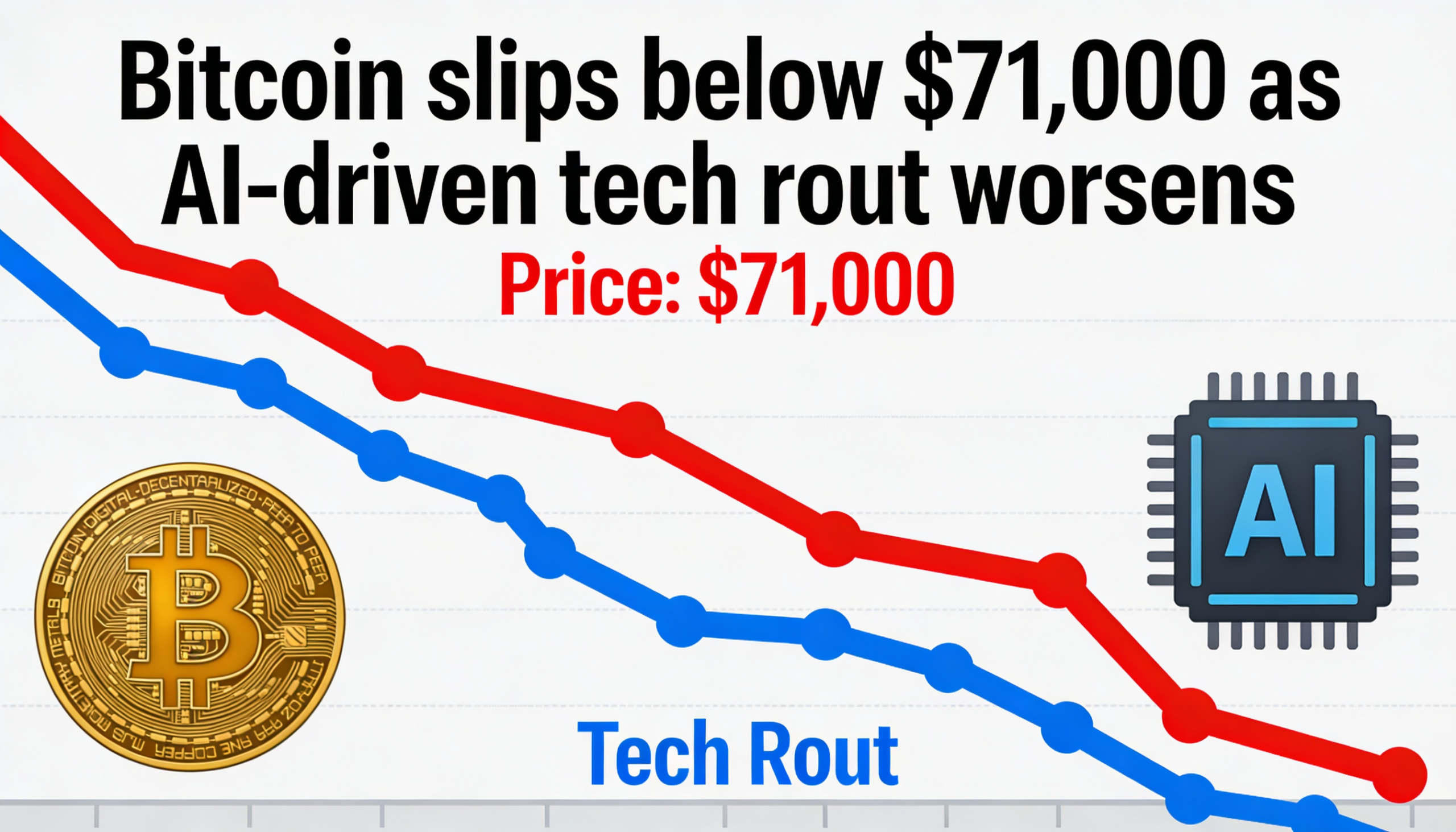
Bitcoin slipped below $71,000 during Asian trading on Thursday as a renewed selloff in global technology shares spilled into crypto markets, undermining hopes for a durable rebound following last week’s volatility.
The world’s largest cryptocurrency fell as much as 7.5% over the past 24 hours, briefly touching lows near $70,700 before recovering some ground, according to CoinDesk data.
Losses mirrored sharp declines across Asian equities, where investor unease over stretched valuations, slowing earnings growth, and signs that artificial intelligence spending may be cresting pushed capital further away from risk assets.
MSCI’s Asia technology index declined for a fifth time in six sessions, led by a roughly 4% drop in South Korea’s Kospi as heavyweight AI-linked stocks came under renewed pressure.
The weakness followed a pullback in U.S. markets, where the Nasdaq slid after underwhelming earnings from companies including Alphabet, Qualcomm, and Arm reinforced doubts about the durability of the AI investment cycle.
Bitcoin has increasingly behaved like a high-beta risk asset during equity-led drawdowns, particularly in periods of thinning liquidity and elevated macro uncertainty.
The latest decline comes after choppy trading earlier in the week, when bitcoin slid toward $73,000 before rebounding above $76,000—moves traders described as reflecting fragile conviction rather than a clear trend reversal.
“Bitcoin’s break below the low-$70,000 range has accelerated a broader deleveraging, flushing out crowded positioning built during the post-ETF rally,” said Wenny Cai, chief operating officer at Synfutures. “Liquidations have been heavy, sentiment has turned risk-off, and price action is now being driven more by balance-sheet mechanics than by narrative.”
“This doesn’t signal the end of institutional participation, but it does mark the end of complacency,” Cai added.
Pressure was compounded by sharp moves in commodities, with silver plunging as much as 17% and gold falling more than 3%, extending a brutal unwind that has already triggered heavy liquidations in tokenized metals products on crypto trading venues.