cpeditor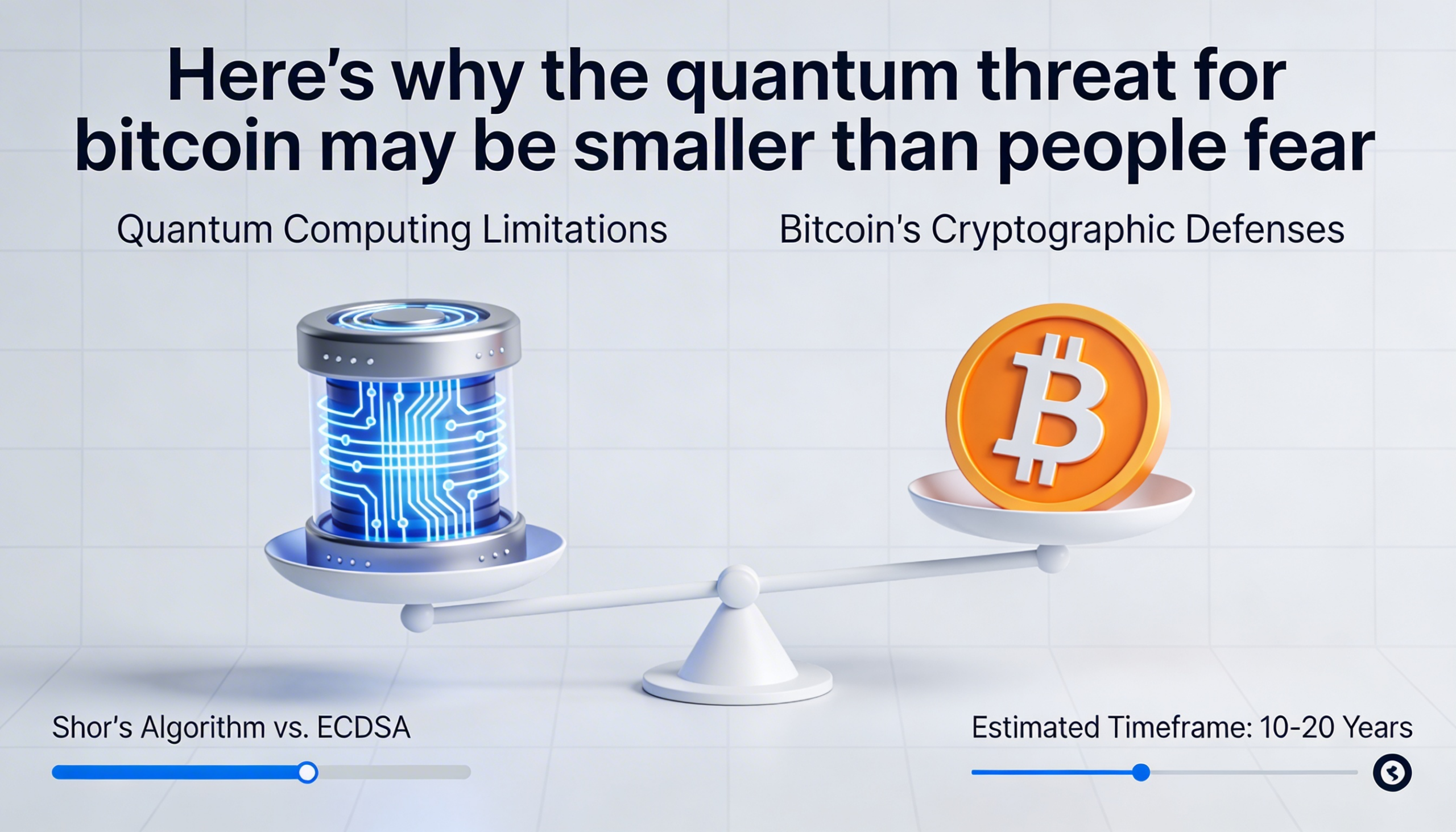
A new report from CoinShares argues that fears of an imminent quantum computing threat to bitcoin are overstated, with only a limited portion of supply realistically exposed in a way that could disrupt markets.
According to the digital asset manager, the primary misconception lies in how vulnerable bitcoin is distributed. Rather than being concentrated in a few large wallets, potentially exposed coins are spread across tens of thousands of smaller holdings, significantly reducing the practicality and economic incentive for a large-scale attack.
CoinShares, the fourth-largest issuer of digital asset exchange-traded products globally behind BlackRock, Grayscale and Fidelity, reported more than $10 billion in assets under management as of September 2025 and holds an estimated 34% share of the EMEA market.
The report, released Saturday, challenges estimates suggesting that 20% to 50% of bitcoin supply could eventually be vulnerable to quantum-enabled key extraction. CoinShares said such figures blur the distinction between theoretical cryptographic exposure and coins that could plausibly be compromised at scale.
Instead, the analysis focused on legacy Pay-to-Public-Key (P2PK) addresses, where public keys are permanently visible on-chain and therefore more exposed if sufficiently powerful quantum computers were to emerge. CoinShares estimates that roughly 1.6 million BTC — about 8% of total supply — remains in these older address types.
Even within that subset, the amount of bitcoin capable of causing meaningful market disruption if stolen is far smaller. CoinShares estimates that only about 10,200 BTC sits in addresses large enough to matter at a systemic level. The rest is fragmented across more than 32,000 unspent transaction outputs (UTXOs), each averaging around 50 BTC.
This fragmentation dramatically raises the bar for an attacker. Rather than breaching a single wallet and extracting a market-moving sum, a quantum adversary would need to compromise thousands of individual keys one by one, making the effort slower, more detectable and far less profitable, even under optimistic assumptions about quantum capability.
CoinShares also highlighted the gap between current quantum hardware and what would be required to threaten bitcoin’s cryptography. The firm estimates that fault-tolerant quantum systems roughly 100,000 times more powerful than today’s machines would be needed, placing the threat at least a decade away. Ledger CTO Charles Guillemet, cited in the report, noted that Google’s Willow system currently operates at 105 qubits, while key extraction would require machines with millions of qubits.
Rather than treating quantum risk as an emergency, CoinShares framed it as a foreseeable engineering challenge. The firm supports a gradual transition toward post-quantum signature schemes that bitcoin could adopt over time without disrupting the network.
Quantum concerns have resurfaced amid recent market volatility, as investors search for structural explanations for price weakness. In December, CoinDesk reported that most bitcoin developers view quantum computing as a distant concern, arguing that machines capable of breaking bitcoin’s cryptography are unlikely to exist for decades.
Critics counter that the greater risk lies not in the timeline, but in the lack of visible preparation, particularly as governments and major technology firms begin rolling out quantum-resistant systems. Proposals such as BIP-360, which would introduce new wallet formats enabling gradual migration, reflect that debate and highlight a growing divide between developer caution and institutional investors seeking clearer long-term assurances.