cpeditor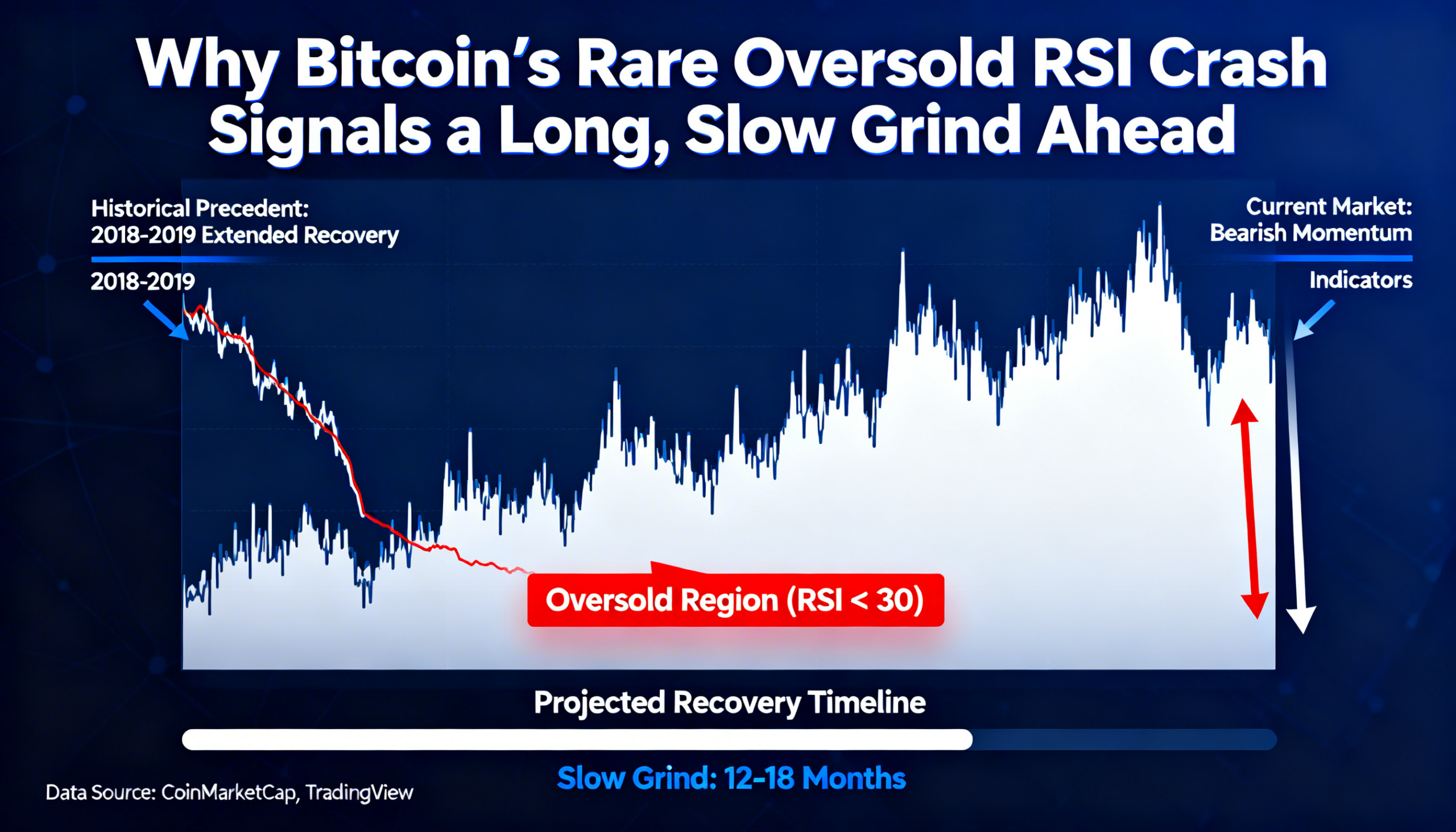
Bitcoin’s latest oversold signal suggests the cryptocurrency may enter a period of consolidation around $60,000 before the next significant upward move.
This month, bitcoin’s 14-day Relative Strength Index (RSI) fell below 30 for only the third time in its history, according to Checkonchain. The RSI measures momentum by comparing average gains and losses over a 14-day period. Readings above 70 indicate overbought conditions, while levels below 30 signal oversold territory, implying that selling pressure may be exhausted. Bitcoin has not reached extreme overbought RSI levels since December 2024, when it first surpassed $100,000.
Historically, RSI readings under 30 have marked major cycle lows. In January 2015, the RSI dropped to roughly 28 as bitcoin traded near $200, leading to about eight months of sideways consolidation before a sustained rally. A similar pattern occurred in December 2018, when the RSI fell below 30 near $3,500, followed by roughly three months of accumulation before prices advanced.
Bitcoin is currently trading near $66,000, with market sentiment stuck in “fear” or “extreme fear” territory on the Crypto Fear & Greed Index for most of the past month. Since peaking in October, the cryptocurrency has lost over 50%, briefly testing the $60,000 level.
If historical patterns hold, the current oversold RSI suggests bitcoin could spend the coming months consolidating near $60,000 before embarking on its next upward leg.