cpeditor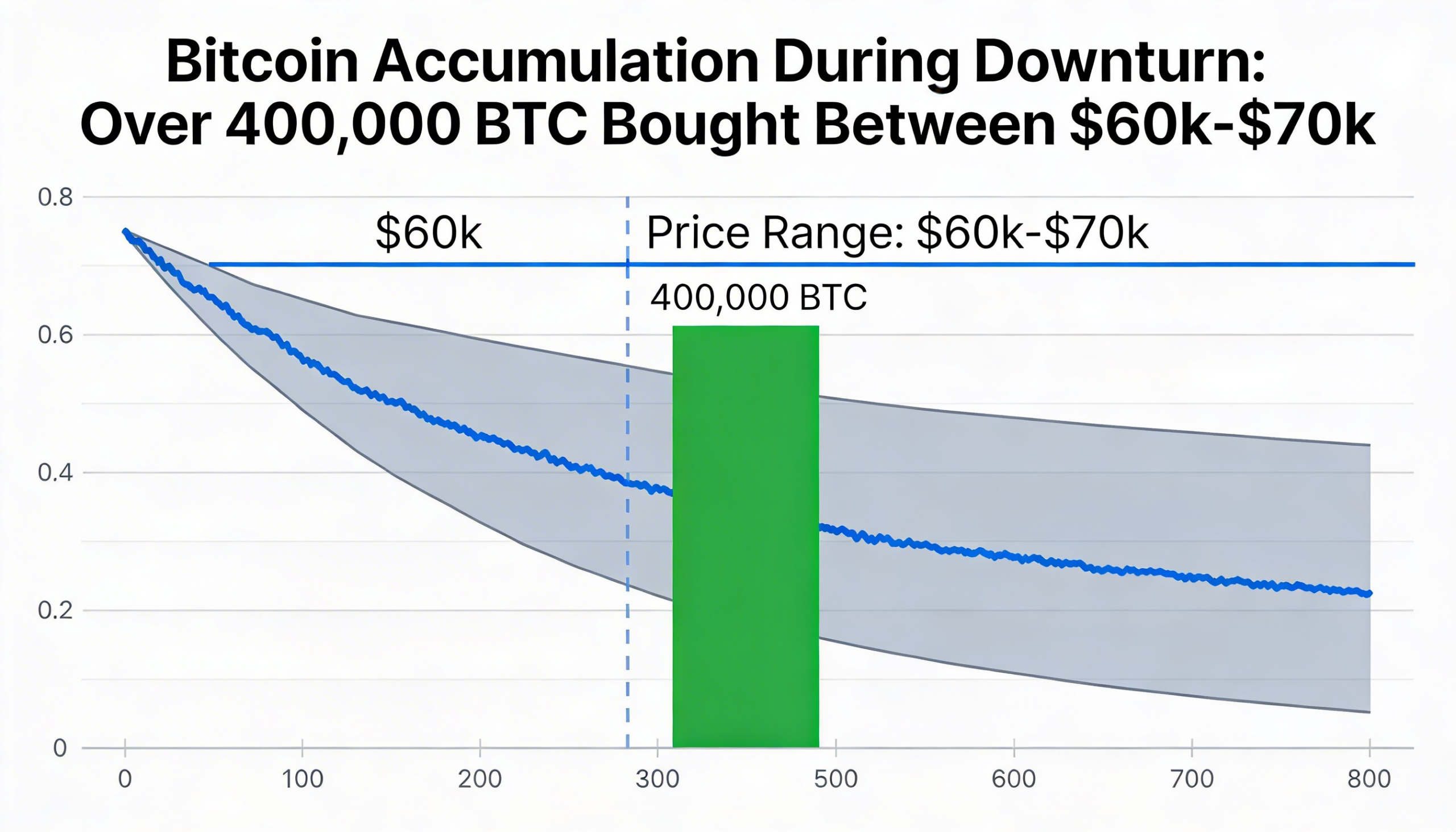
Blockchain data from Glassnode reveals a sharp increase in accumulation as Bitcoin traded between $60,000 and $70,000 during its latest correction.
Holdings within that price band have grown from about 997,000 BTC on Jan. 1 to roughly 1.43 million BTC, an increase of nearly 429,000 BTC, or 43%. This means more than 8% of bitcoin’s non-exchange circulating supply now has a cost basis in the $60,000–$70,000 range, creating a dense concentration of ownership.
The buildup has occurred alongside a significant drawdown. Bitcoin has fallen from approximately $88,000 at the start of the year to around $63,000, placing it roughly 50% below its October all-time high of $126,000.
The analysis is based on Glassnode’s Unspent Transaction Output Realized Price Distribution (URPD) metric. URPD groups existing supply by the price at which each coin last moved on-chain. The entity-adjusted version consolidates addresses belonging to the same owner, removes internal wallet transfers, and excludes exchange-held balances, providing a clearer view of genuine investor cost basis.
Previously, the $70,000 to $80,000 zone was described as an “air pocket” — an area characterized by historically thin trading activity. That pattern played out during the recent sell-off, when bitcoin dropped from $80,000 to $70,000 in just five days between Jan. 31 and Feb. 5, highlighting how quickly price can move through lightly transacted ranges before finding heavier supply below.
With substantial accumulation now anchored in the $60,000–$70,000 region, that band could emerge as a key support area as the market determines its next direction.