cpeditor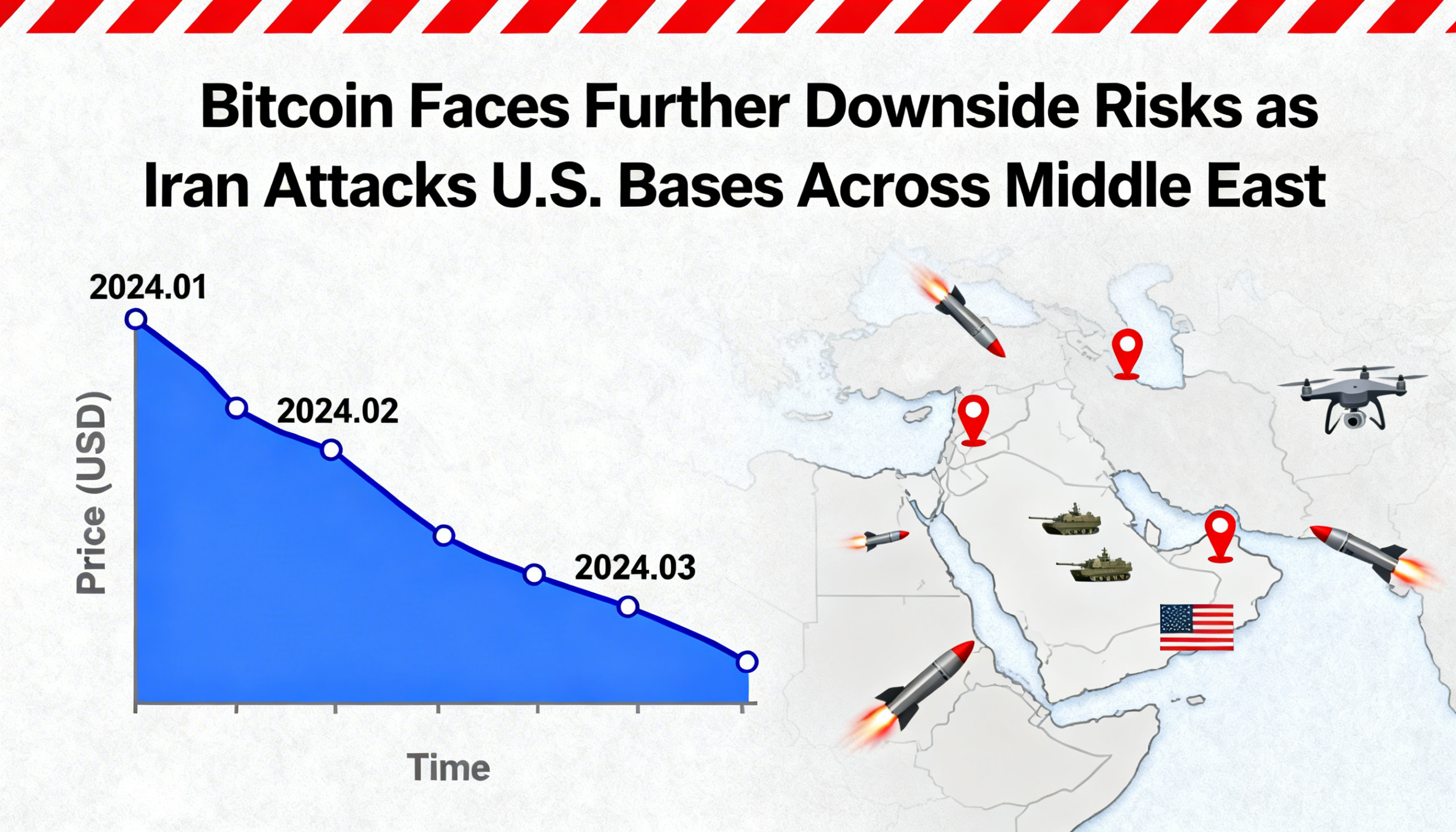
Iran fired repeated waves of missiles and drones across the region, striking Israel, U.S. military facilities and Gulf allies, with blasts reported in Dubai, Kuwait and Bahrain.
What began as an Israeli operation against Iranian targets hours earlier has rapidly escalated into the broadest Middle East confrontation in decades, injecting fresh volatility into global markets — including cryptocurrencies.
Reporting from Bloomberg, CNN and Reuters said Iran’s retaliation extended beyond Israel to U.S. bases and strategic interests throughout the Gulf. Bahrain confirmed an American military installation had been attacked. Qatar and the United Arab Emirates said they intercepted incoming missiles over their territory, while explosions were heard in Dubai. Bahrain subsequently shut its airspace.
Iran’s semi-official Tasnim news agency warned that all U.S. bases and interests in the region would be targeted.
U.S. President Donald Trump said Washington had launched “major combat operations in Iran” aimed at destroying the country’s missile arsenal, naval assets and nuclear facilities. He cautioned that American casualties were possible, noting that losses are an unfortunate but common outcome in wartime.
Bitcoin, which had already fallen below $64,000 after the initial Israeli strike, managed to hold above $63,000 as Iran’s broader assault unfolded. The relative resilience appears partly technical. Weekend liquidity is typically thin, and much of the leveraged positioning that could have amplified a steeper sell-off had already been cleared during the prior drop from $70,000.
The bigger test may come when traditional markets reopen. Bitcoin often absorbs the first wave of geopolitical risk because it is the only major liquid asset trading continuously through the weekend.
Equities, crude oil and bond markets remain closed until Sunday futures trading or Monday’s open. If those markets gap sharply lower, bitcoin could face a second round of risk-off flows as institutional investors cut exposure across asset classes simultaneously.
That would bring the $60,000 level back into focus.
Past Middle East flare-ups have generally followed a pattern in which bitcoin drops on the initial shock and recovers once broader markets process the news and tensions appear contained. Iran’s strikes on Israel in April 2025 and similar episodes in 2020 unfolded in a comparable manner.
This time, however, the scale of the confrontation complicates any containment narrative. Missile impacts reported in Dubai, Kuwait and Bahrain suggest a widening regional war rather than a limited bilateral exchange — one centered in some of the world’s most economically critical corridors.
The downside scenario is straightforward. A broader conflict could push oil prices significantly higher, fueling global risk aversion and deepening losses in bitcoin. Despite its “digital gold” label, the cryptocurrency has historically behaved more like a high-beta risk asset than a traditional safe haven.
The $60,000 floor — which held during the Feb. 5 liquidation-driven sell-off — now stands as the next key support, potentially facing a far more severe macro and geopolitical stress test.