cpeditor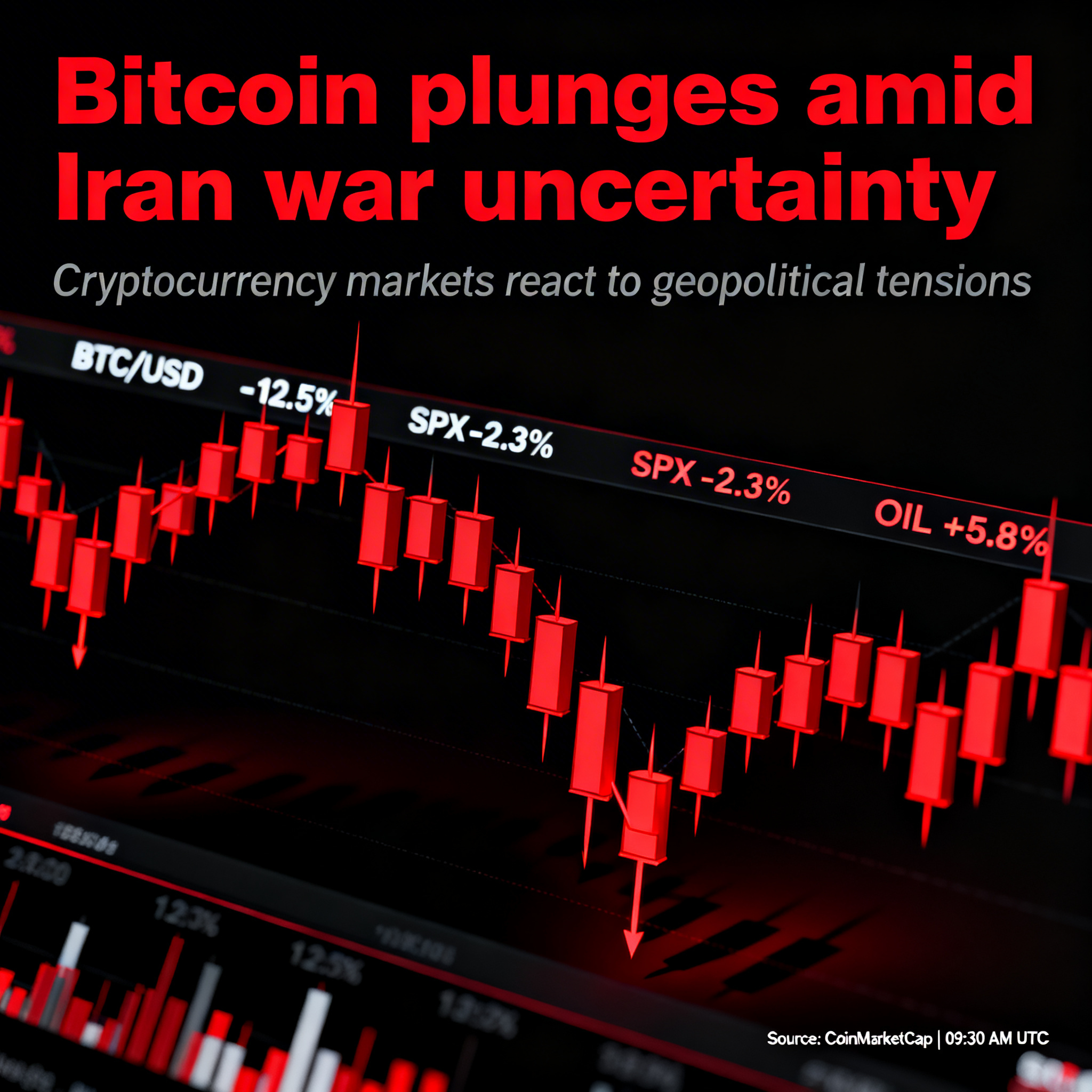
Bitcoin slipped back below the $70,000 level during European trading hours after failing to maintain momentum above $71,000, as investors remained cautious amid uncertainty surrounding the Iran conflict. At the same time, artificial intelligence–focused cryptocurrencies outperformed the broader market, buoyed by strong retail demand.
The leading cryptocurrency, Bitcoin, traded near $69,500 by mid-morning in Europe after giving up Tuesday’s gains following a rejection around $71,750.
Since midnight UTC, bitcoin has declined roughly 0.55%. The drop was relatively small compared with losses in several altcoins. Privacy-focused coin Zcash fell about 4.5%, while decentralized lending protocol Aave dropped around 2.1%.
Traditional markets showed little movement. Gold and the U.S. dollar were largely unchanged, while U.S. stock index futures edged up by roughly 0.15%.
Market sentiment continues to be shaped by geopolitical developments tied to Iran and Israel. Conflicting remarks from Donald Trump earlier this week added to uncertainty surrounding the situation.
Oil prices also experienced sharp swings. Crude briefly fell to around $81 per barrel on Tuesday before rebounding to nearly $89 during Wednesday’s European session.
Derivatives positioning
Bitcoin’s inability to sustain a move above $70,000 has been painful for traders holding leveraged bullish positions. In the past 24 hours alone, more than $220 million worth of crypto futures positions were liquidated, with long bets accounting for most of the losses.
Open interest in dollar-denominated bitcoin futures across major exchanges declined to roughly 226,000 BTC from 233,000 BTC. The drop suggests traders largely reduced exposure rather than aggressively shorting the market. Similar patterns have been observed in futures tied to Ethereum and Solana.
In contrast, derivatives activity tied to XRP has been increasing, with open interest climbing to 1.74 billion tokens — the highest level since Feb. 23.
Across the broader altcoin market, open interest has generally declined over the past 24 hours, pointing to capital leaving several alternative tokens.
However, futures linked to TRON, Conflux and Monero show a more bullish setup, with positive funding rates and rising cumulative volume delta indicating active buying in derivatives markets. Most other tokens continue to show neutral or negative funding rates.
Bitcoin’s 30-day implied volatility index, BVIV, has fallen for three consecutive sessions. Despite the decline, its longer-term averages — the 50-, 100- and 200-day levels — are now aligned in a bullish structure, suggesting volatility could increase in the near term.
A similar trend is visible in ether’s volatility indicators. Meanwhile, Wall Street’s key volatility gauge, the CBOE Volatility Index, has risen about 4% to around 26, highlighting elevated risk in equities that could spill over into digital asset markets.
On the Chicago Mercantile Exchange, open interest in bitcoin futures has declined to about $7.39 billion — the lowest level since September 2024. Ether futures have also seen a sharp drop, suggesting institutional interest in the two largest cryptocurrencies remains weak.
Options markets continue to reflect caution. On Deribit, protective puts for bitcoin and ether still trade at higher premiums than call options, though demand for downside protection has eased since early last month. Meanwhile, traders on decentralized options platform Derive are increasingly positioning for a potential rally above $80,000 while some participants continue selling put options.
Token talk
AI-focused cryptocurrencies stood out as the strongest performers on Wednesday.
The token Internet Computer climbed more than 8% after securing a listing on the South Korean exchange Upbit. Following the listing, daily trading volume surged from about $65 million to roughly $267 million as retail investors piled in.
Another AI-themed token, Fetch.ai, also posted gains, rising around 6% over the past 24 hours.
Momentum in the AI token sector was partly fueled by comments from Jensen Huang, who wrote in a recent blog post that artificial intelligence represents an industrial transformation comparable to the electrification era.
Elsewhere, the broader altcoin market weakened. Decentralized finance tokens such as Curve DAO Token and Jupiter each declined about 6.5% over the past day.
Despite the mixed market performance, overall sentiment in the crypto space has started to improve. The Crypto Fear & Greed Index has risen to 25 out of 100, moving back into the “fear” category after spending more than a month in the “extreme fear” zone.
The improvement reflects the crypto market’s relative resilience since tensions involving Iran intensified, with bitcoin and the broader digital asset sector outperforming precious metals and U.S. equities since the beginning of March.