cpeditor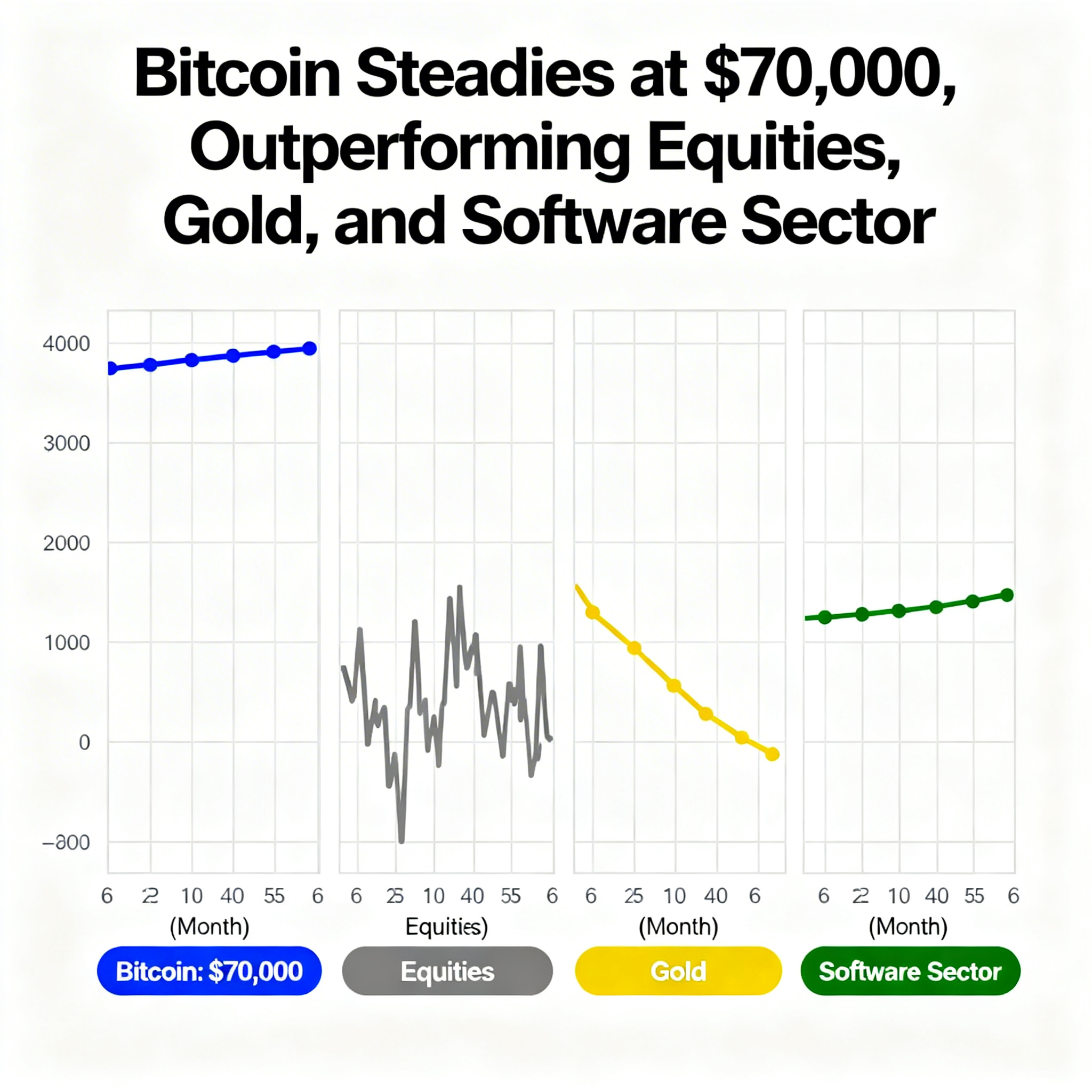
Bitcoin has rebounded roughly 7% from its Sunday lows, holding up well even as traditional markets struggle to gain momentum. Analysts say the cryptocurrency’s recent performance reflects signs of fading selling pressure, shifting correlations with gold and improving inflows into spot bitcoin exchange-traded funds.
The largest digital asset, Bitcoin, recently traded just below $71,000 after recovering from its Sunday evening dip. The rebound has come despite rising geopolitical tensions tied to the Iran conflict and broader macro concerns, including possible disruptions to global oil supplies and stress in private credit markets.
Compared with other major assets, bitcoin’s performance is starting to stand out. Both the Nasdaq-100 and the S&P 500 have remained largely flat over the same period, while Gold — typically considered a safe haven during market turbulence — has posted only modest gains. So far in March, bitcoin is the only one among the three to record clear upside.
Bitcoin is also beginning to break away from its previously tight correlation with struggling software stocks. Over the past five days, iShares Bitcoin Trust (IBIT) has gained about 3.75%, while the iShares Expanded Tech-Software ETF has declined roughly 2.45%.
This divergence has encouraged some analysts to suggest the crypto market may be stabilizing after months of declines.
Signs of seller fatigue
One encouraging signal, according to Aurelie Barthere, is bitcoin’s limited reaction to fresh geopolitical headlines.
Earlier in the week, falling oil prices briefly lifted equities and cryptocurrencies as markets tentatively priced in a possible de-escalation in tensions related to Iran. However, that optimism faded later in the session, and risk assets gave back part of their gains.
Despite the reversal, bitcoin’s downside move remained relatively contained. Barthere noted that some traditional benchmarks, such as the Euro Stoxx 50, have dropped more sharply over the same period.
This resilience suggests that the marginal seller in the bitcoin market may be less aggressive than those in equity markets.
Shifting correlation with gold
Another development attracting attention among traders is bitcoin’s evolving relationship with gold.
According to Bryan Tan at the crypto trading firm Wintermute, the correlation between bitcoin and gold has recently turned positive, rising to around +0.16 from -0.49 just a week earlier.
During the early phase of the Middle East conflict, bitcoin declined while gold rallied — a classic risk-off response. More recently, however, both assets have been rising together while the U.S. dollar weakens.
If the correlation continues to trend higher, it could change how investors interpret bitcoin’s behavior during geopolitical stress, potentially shifting the narrative away from viewing it purely as a risk asset.
ETF flows showing improvement
Another factor supporting bitcoin’s recent strength may be improving flows into spot bitcoin ETFs.
ETF flows had been trending negative for several months following the market peak in October. However, recent data indicates a noticeable improvement.
According to Joe Edwards at Enigma, the past two weeks have seen stronger inflows, particularly into iShares Bitcoin Trust, the largest spot bitcoin ETF.
Those steady inflows suggest institutional demand may be stabilizing, giving analysts cautious optimism that the crypto market could be finding a firmer footing even as broader global uncertainty persists.