cpeditor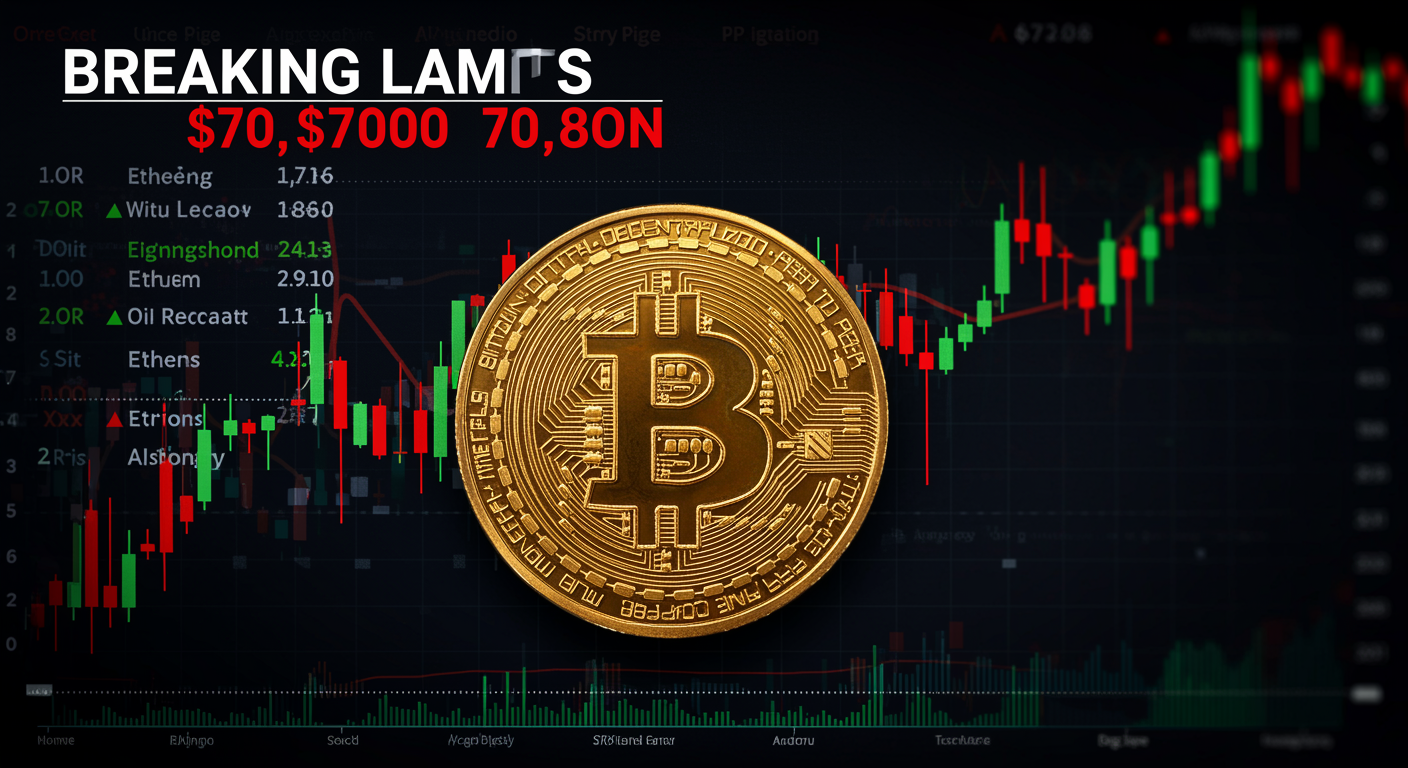
Oil prices edged lower after a coalition of major economies announced joint measures to stabilize global energy markets, offering support to crypto assets.
Bitcoin outperformed the broader market, rising to $70,800—up more than 1%—after recovering from earlier lows below $68,900. Meanwhile, Ethereum, XRP, and Solana registered smaller gains of under 1%, trailing bitcoin’s advance.
In energy markets, West Texas Intermediate crude declined करीब 2% to $93.80, with Brent crude also moving lower. The downturn followed a coordinated pledge from the U.K., France, Germany, Italy, the Netherlands, and Japan to support energy stability and maintain secure shipping routes through the Strait of Hormuz.
A statement from the office of Keir Starmer condemned recent attacks linked to Iran and called for de-escalation. At the same time, U.S. Treasury Secretary Scott Bessent indicated that Washington could consider lifting sanctions on Iranian oil tankers and potentially tapping its Strategic Petroleum Reserve.
Earlier signals from the Federal Reserve highlighting uncertainty around growth and inflation have led traders to scale back expectations for interest rate cuts. This shift has left both crypto and traditional markets increasingly responsive to oil price movements.
Although crude prices have pulled back, geopolitical risks in the Middle East continue to cloud the outlook. WTI remains near a key support level around $92, still elevated relative to pre-conflict levels. Analysts at Mott Capital Management noted that as long as this support holds, oil could maintain an upward bias, with options market positioning suggesting potential for further gains.
Meanwhile, equity markets are signaling caution. The S&P 500 has dropped below its 200-day simple moving average for the first time since May last year, pointing to weakening momentum. A broader risk-off shift in equities could spill over into crypto and other financial markets.