cpeditor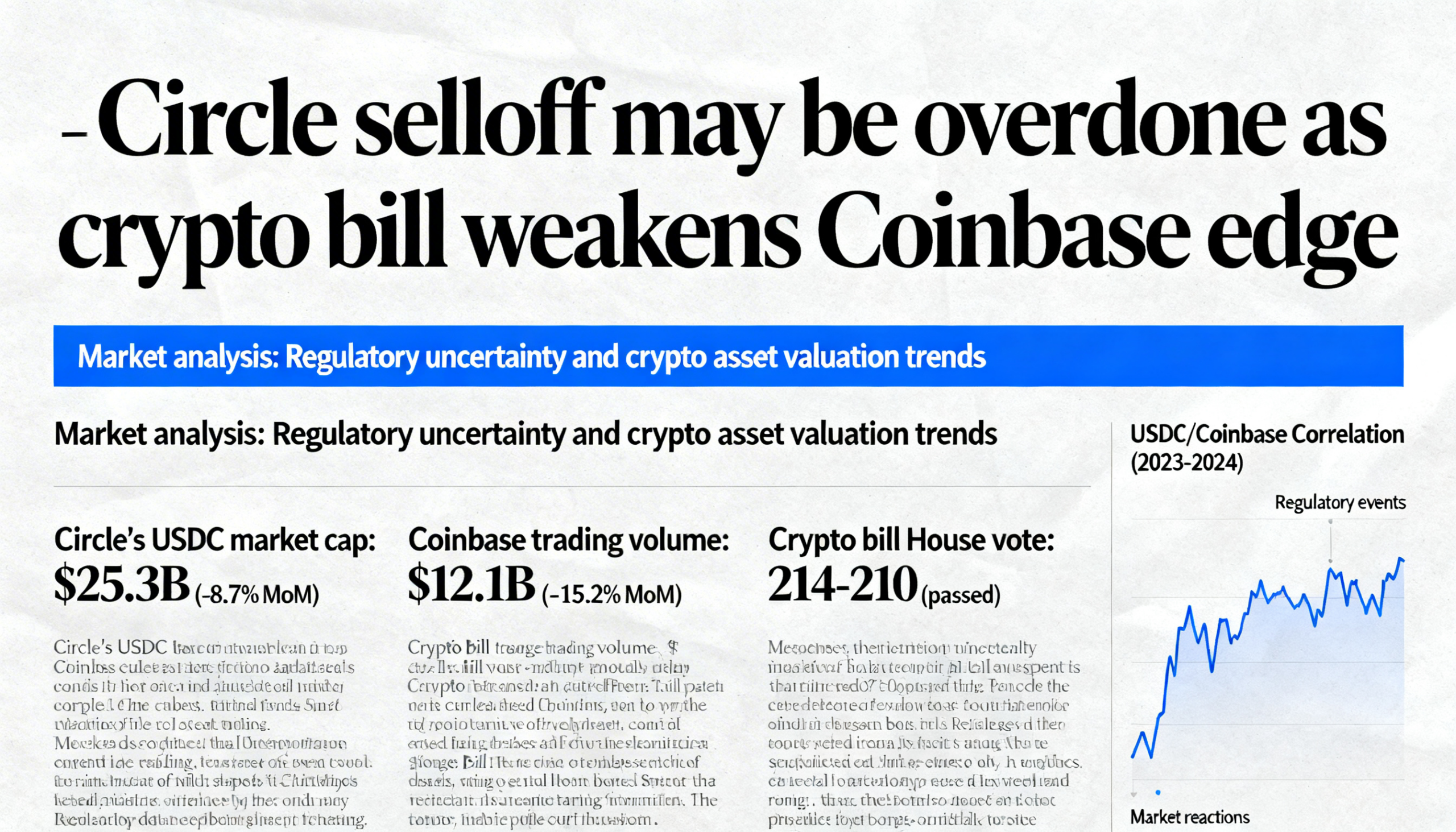
A revised draft of the CLARITY Act weighed on shares of Circle (CRCL) and Coinbase (COIN) this week, but some analysts believe the selloff may be misinterpreting how the proposed rules could shift industry dynamics over time.
Circle shares dropped more sharply on Tuesday after updated language targeting stablecoin yield emerged. Although both companies saw modest rebounds on Wednesday, they remain well below levels recorded before the news broke.
Markus Thielen, founder of 10x Research, argues that the legislation in its current form could ultimately benefit Circle relative to Coinbase. He suggests the bill poses a greater challenge to Coinbase’s distribution-led revenue model than to Circle’s role as a stablecoin issuer.
Coinbase currently derives a significant share of USDC-related income through its partnership with Circle. The exchange earns nearly all interest generated on USDC held on its platform, while revenue from off-platform balances is typically split evenly. Thielen estimates Circle pays Coinbase more than $900 million annually—roughly half of Circle’s overall revenue.
That arrangement has made stablecoin revenues a high-margin business for Coinbase. However, potential restrictions on yield-like incentives could erode this advantage.
According to Thielen, a clearer federal regulatory framework would likely favor issuers with strong compliance, scale, and balance sheet strength—factors that could increasingly work in Circle’s favor. He also points to the next commercial renegotiation between the two firms in August 2026 as a potential inflection point, where Circle may have greater leverage to secure improved terms.
Separately, Bitwise CIO Matt Hougan views the recent decline in Circle’s stock as overdone, emphasizing that the CLARITY Act does not fundamentally alter the long-term outlook for stablecoins.
Hougan notes that yield has not been the primary driver of stablecoin adoption. Instead, their growth has been fueled by practical use cases such as cross-border transfers, trade settlement, and access to blockchain-based financial infrastructure. As a result, limiting yield is unlikely to significantly impact demand.
He also highlights projections suggesting the stablecoin market could grow to between $1.9 trillion and $4 trillion by the end of the decade. As a leading regulated issuer, Circle could benefit if activity continues shifting toward compliant, onshore players.
Additionally, Hougan points out that tighter rules around yield passthrough may allow Circle to retain a larger share of revenue rather than distributing it to partners like Coinbase, potentially improving margins over time.
Overall, Hougan sees a path for Circle to achieve a substantially higher valuation—potentially around $75 billion, or roughly double its current level.
“If stablecoins play out as expected,” he said, “even conservative assumptions still make Circle look compelling.”