cpeditor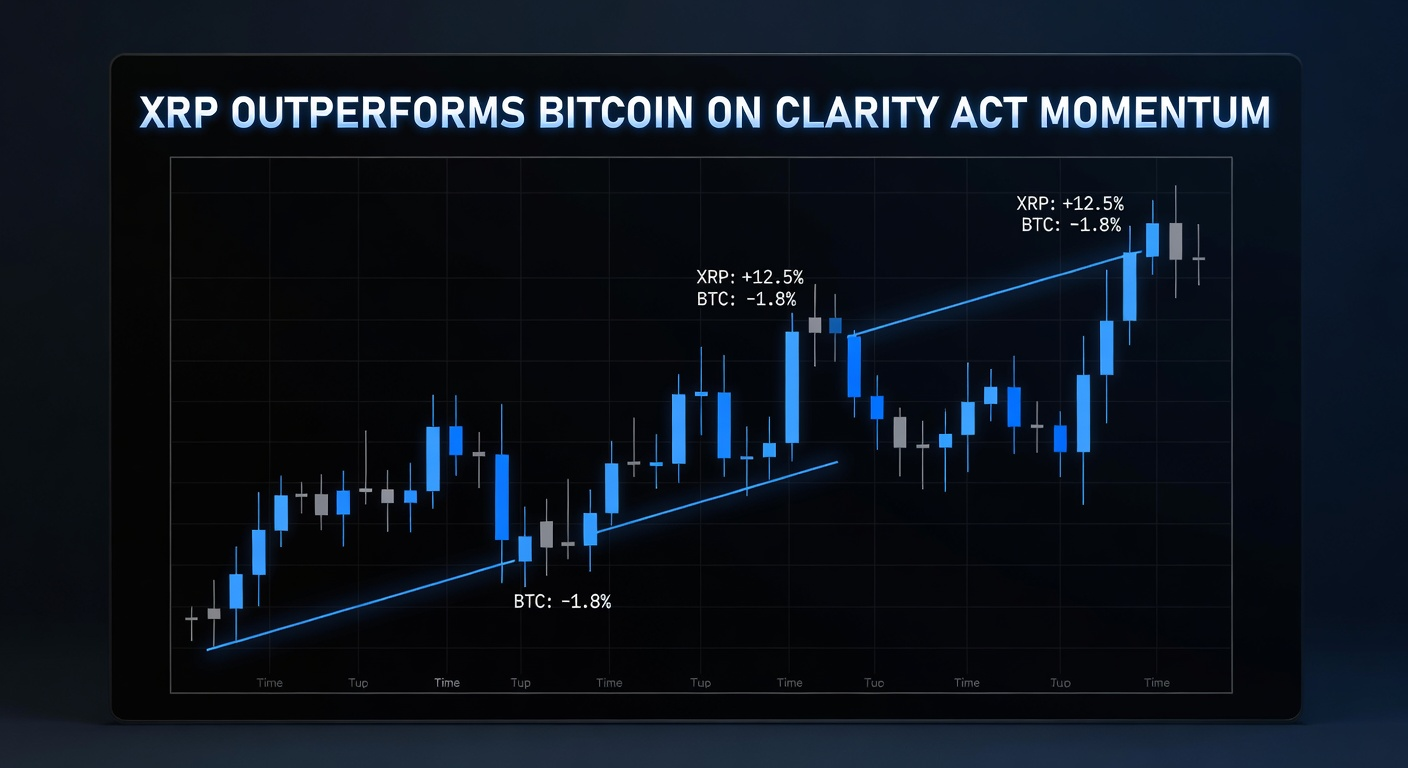
XRP advanced after U.S. lawmakers pushed forward a key crypto market-structure bill, reinforcing expectations that clearer regulation could unlock broader institutional participation.
The token gained 5% after the Senate Banking Committee approved the Digital Asset Market Clarity Act in a 15–9 vote on Thursday, moving the legislation a step closer to a full Senate debate and keeping it at the center of crypto policy discussions in Washington.
Following the vote, XRP moved above $1.50, rising 5% over 24 hours and 7.6% on the week. The performance outpaced bitcoin and ether, which have posted comparatively modest gains of under 3% during the same period.
The reaction underscores XRP’s long-standing sensitivity to regulatory developments. Since the SEC’s lawsuit against Ripple in 2020, the token has faced prolonged uncertainty, including exchange delistings and reduced institutional engagement. While a 2023 court ruling clarified the status of secondary-market XRP trading, investors have continued to seek a more durable, legislative framework.
The CLARITY Act aims to deliver that by defining rules for digital asset markets, including custody, trading, market-making, and ETF participation—key areas for institutional adoption.
However, significant hurdles remain. The bill must still be aligned with a separate version from the Senate Agriculture Committee, pass both chambers of Congress, and be signed into law. While Senator Cynthia Lummis has suggested that consensus is forming, opposition from Senator Elizabeth Warren indicates the process may face delays. The upcoming Memorial Day recess adds pressure to advance negotiations.
Beyond regulation, XRP’s narrative is increasingly supported by ecosystem growth and institutional use cases linked to Ripple and the XRP Ledger.
The network has seen rising traction in tokenization, with over $3 billion in tokenized real-world assets now issued on the ledger, positioning it as a leading alternative to Ethereum for institutional applications.
Recent pilots highlight its capabilities. A joint initiative involving Ripple, JPMorgan, Mastercard, and Ondo Finance demonstrated near-instant settlement of tokenized U.S. Treasurys, signaling the potential for integration between blockchain infrastructure and traditional financial systems.
Meanwhile, decentralized finance activity tied to XRP continues to expand, with more than $560 million in total value locked across platforms such as Flare and Doppler Finance.
Institutional flows are also building. U.S.-listed spot XRP ETFs attracted $25.8 million in net inflows earlier this week—their strongest daily intake since January—lifting total inflows to $1.35 billion. The momentum follows Ripple’s $200 million debt raise for its Prime brokerage arm and continued progress in tokenization initiatives.
Despite the recent rally, XRP remains below its 2025 highs, with the $1.50 level emerging as a key battleground for bulls.
While the committee vote has provided a near-term catalyst, the broader market focus remains unchanged: a sustained XRP breakout will likely depend on comprehensive regulatory clarity emerging from Congress.