cpeditor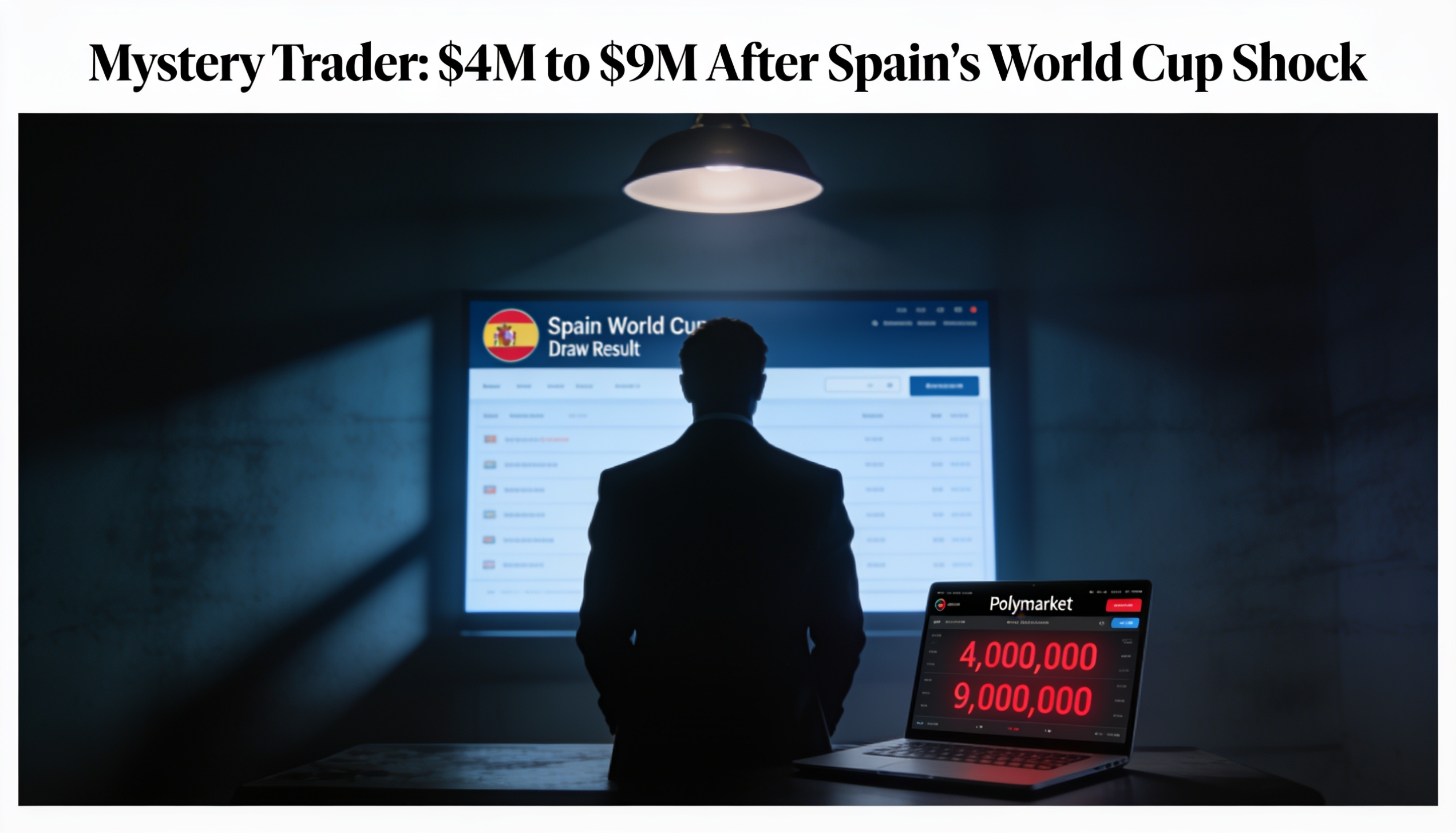
A wallet created just days ago reportedly turned about $4 million into nearly $9 million in profit by betting against Spain, prompting on-chain analysts to question whether the move was simply luck or the result of prior knowledge.
In a major World Cup shock, debutants Cabo Verde held tournament favorites Spain to a 0–0 draw on Monday, delivering huge payouts to traders who had bet against the heavily one-sided pre-match odds, which priced Spain at around 1:10.
The result produced two of the most extreme outcomes seen on Polymarket this tournament. Data reviewed by CoinDesk shows a newly formed wallet generated over $9 million in gains within hours after starting with roughly $4 million in capital. Meanwhile, another trader lost close to $1 million on a position that would have returned only about $85,000 if Spain had won.
Cabo Verde, appearing in its first World Cup with a relatively unknown squad, faced Spain—one of the tournament favorites and reigning European champions. Veteran goalkeeper Vozinha, aged 40, was named player of the match after a standout performance.
On-chain analytics firm Lookonchain identified the winning wallet, “fishalive,” created this month. It reportedly placed two bearish wagers: one on Spain failing to win outright and another on Cabo Verde covering a +2.5 goal spread.
Both positions paid out after the match ended 0–0, with public records showing about $4.7 million from the outright market and $8.5 million from the spread, resulting in a single-day profit of roughly $9 million.
On the other side, a trader using the handle “betoor619” lost nearly $1 million after backing a Spain win when the market implied a 92% probability. If correct, the payout would have been only around $85,000, highlighting the asymmetric risk of betting on heavy favorites.
That account’s previous trading history reportedly showed no individual gain or loss larger than $9,000, underscoring the scale of the blowup.
Polymarket operates as a prediction market where users trade shares tied to real-world outcomes, with prices reflecting implied probabilities and settlements conducted in USDC on-chain.
Because trades are made through crypto wallets without identity checks, users remain pseudonymous, a structure that has drawn regulatory scrutiny compared with traditional sportsbooks that require full customer verification.
The Spain match alone generated about $64 million in trading volume, while Polymarket’s World Cup market has reached roughly $2.4 billion—surpassing activity from this year’s Super Bowl and trailing only major political event cycles such as last year’s U.S. election.
Although blockchain records make all transactions visible, they do not reveal identity, allowing observers to track the rapid rise of the “fishalive” wallet without knowing who controlled it.
That anonymity, combined with the size and timing of the bets, has made the mysterious trader one of the most closely watched figures on the platform.