cpeditor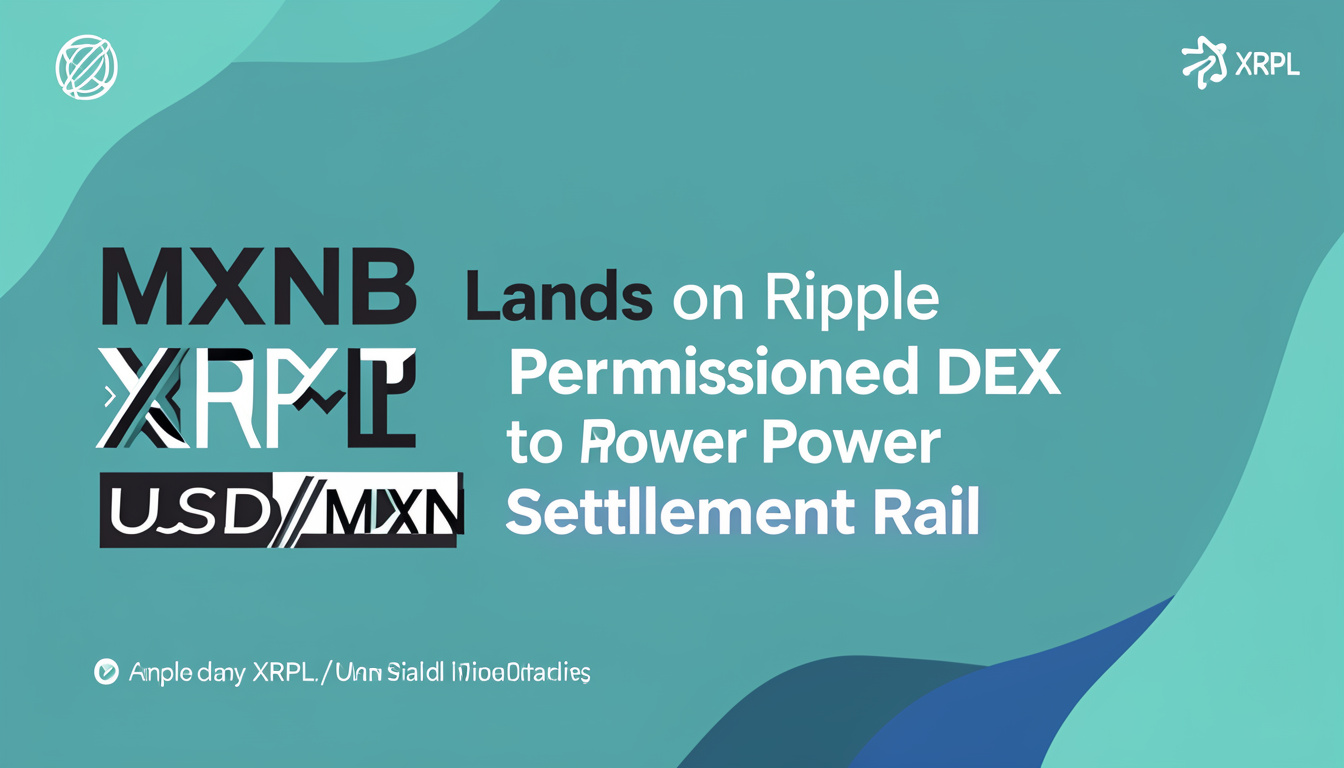
Ripple and Bitso have broadened their partnership by launching MXNB, a peso-backed stablecoin, on XRPL’s Permissioned DEX alongside RLUSD, with the objective of creating a regulated on-chain USD/MXN settlement rail for the U.S.–Mexico remittance corridor, which processes an estimated $60 billion annually.
Announced on June 13, 2026, the integration brings MXNB—issued by Juno, a Bitso subsidiary—directly onto the XRP Ledger. Together with Ripple’s RLUSD, it enables USD/MXN settlement through XRPL’s Permissioned DEX, a compliance-first venue limited to KYC/AML-verified institutional participants.
The initiative is more than a simple asset deployment. It reflects a broader attempt to position XRPL as regulated liquidity infrastructure for one of the world’s largest and most active cross-border payment corridors.
While Ripple’s release does not provide a market size estimate, external sources such as Bitget place annual U.S.–Mexico remittance flows at over $60 billion, highlighting the scale of the opportunity.
MXNB deployment and settlement architecture
MXNB is already active across several blockchains, including Ethereum, Arbitrum, and Avalanche, but its integration into XRPL introduces a permissioned trading environment designed specifically for institutional settlement. The Permissioned DEX restricts access to verified entities, separating regulated liquidity pools from XRPL’s open trading infrastructure.
Combined with RLUSD, MXNB forms a unified on-ledger FX and settlement layer, reducing reliance on traditional correspondent banking systems for cross-border payments.
According to Bitso’s disclosures, MXNB is fully collateralized 1:1 with Mexican pesos held in regulated financial institutions. Its issuer, Juno, operates under Mexico’s Fintech Law as a licensed electronic payments institution, providing the compliance framework needed for institutional adoption.
Ripple and Bitso’s evolving Latin America strategy
Ripple first partnered with Bitso in 2019 under its On-Demand Liquidity model, using XRP to facilitate cross-border remittances into Mexico.
That early collaboration positioned Bitso as a key liquidity bridge across Latin America and laid the groundwork for today’s shift toward stablecoin-based settlement infrastructure.
Ripple LATAM Managing Director Silvio Pegado described the latest integration as “the next evolution of how value moves between dollars and pesos,” adding that RLUSD and MXNB together deliver “regulated, onchain liquidity infrastructure purpose-built for enterprise cross-border payments.”
Bitso Business Head of Stablecoins Ben Reid said MXNB was designed specifically for institutional settlement, offering compliant, peso-denominated liquidity optimized for efficiency and enterprise use cases.
Industry impact and infrastructure outlook
The central question is no longer whether XRPL can support stablecoins—it already does—but whether the Permissioned DEX can attract sufficient institutional participation from banks, fintechs, and payment providers to create meaningful FX liquidity.
Ripple positions the MXNB–RLUSD pairing as a foundational model for expanding localized stablecoin settlement corridors across Latin America, with the U.S.–Mexico corridor serving as the initial implementation.
Ultimately, the key metric to watch is institutional onboarding rather than token performance, as this will determine whether the system scales into a broader regional settlement network or remains a more limited bilateral payments framework.