cpeditor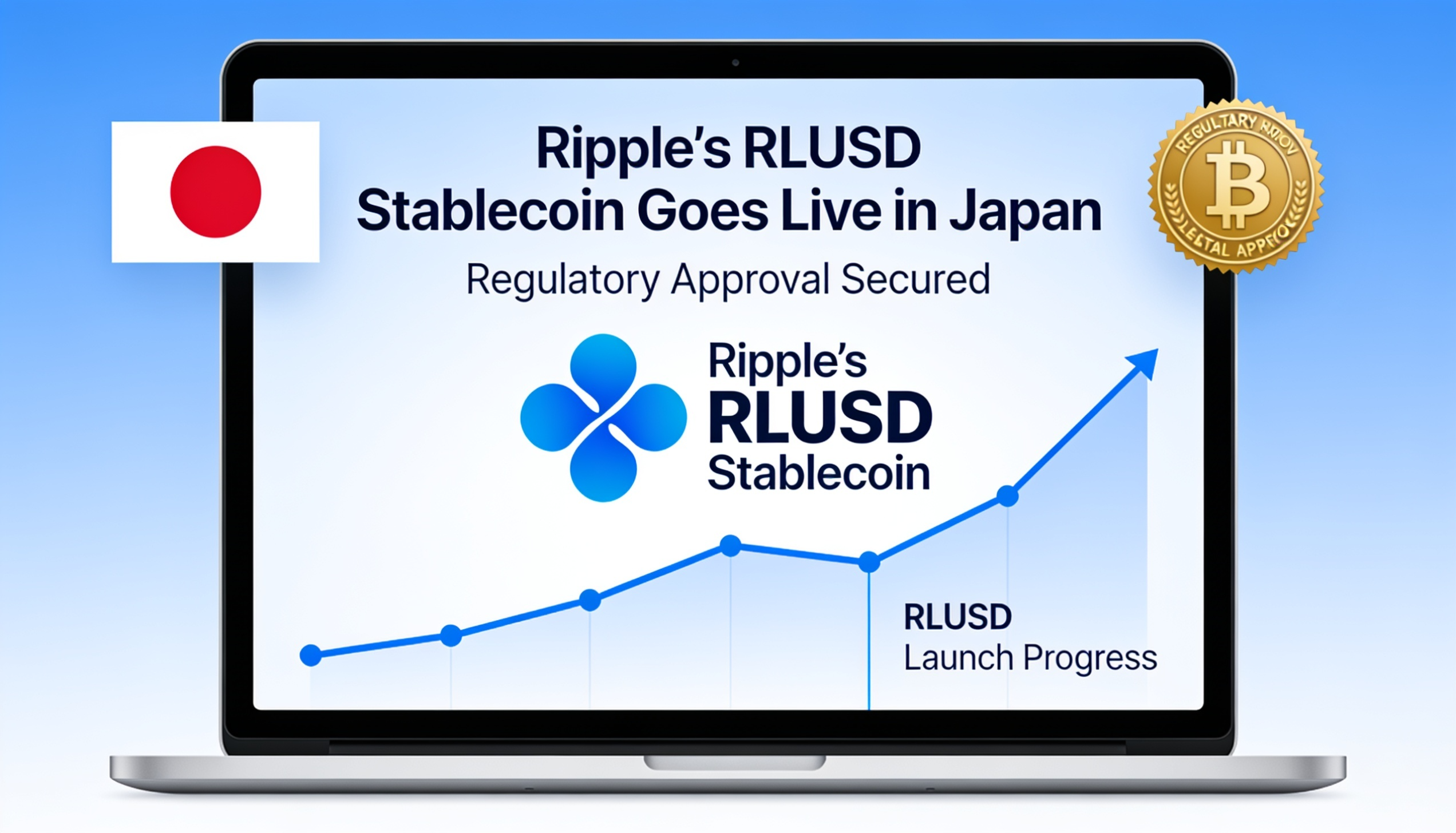
Japan’s financial regulator has approved Ripple’s U.S. dollar–backed RLUSD stablecoin as a new category of payment instrument, allowing SBI VC Trade to offer it to both institutional and retail customers. Despite the approval, RLUSD remains relatively small, with a market value of about $1.7 billion.
The move marks RLUSD’s entry into Japan, one of Asia’s most tightly regulated crypto markets, after receiving clearance from the country’s financial watchdog.
The Japan Financial Services Agency has designated RLUSD as a new type of electronic payment instrument under the Payment Services Act, a framework created for foreign-issued stablecoins that comply with strict domestic requirements.
Stablecoins are crypto assets designed to maintain a stable value, typically pegged to fiat currencies like the U.S. dollar. In Japan, RLUSD will be distributed via SBI VC Trade, the digital asset arm of SBI, and made available to both retail and institutional clients.
Japan’s strict regulatory regime makes approval of a foreign-issued stablecoin particularly notable, especially given the scope for retail access.
However, RLUSD remains modest in scale. Ripple estimates its market capitalization at around $1.7 billion since its late-2024 launch, far below market leaders such as USDT at roughly $186 billion and USDC at about $74 billion.
The rollout builds on a memorandum of understanding signed by Ripple and SBI in August 2025, extending a partnership that began in 2016 focused on cross-border payments and blockchain infrastructure across Asia.
Ripple executive Jack McDonald said RLUSD is designed to act as a bridge for payments, tokenization, and collateral management, linking Japanese businesses to global dollar liquidity.
RLUSD is Ripple’s regulated stablecoin offering and is separate from XRP, the company’s native token, with a focus on enterprise-grade settlement and tokenized real-world assets.
The Japan launch reflects Ripple’s broader expansion into regulated stablecoin markets as jurisdictions including the U.S. and Europe move toward clearer digital asset frameworks.
Still, competition remains fierce. While regulatory approval strengthens RLUSD’s institutional standing, it must still scale liquidity and adoption significantly to compete with dominant stablecoins like USDT and USDC.