cpeditor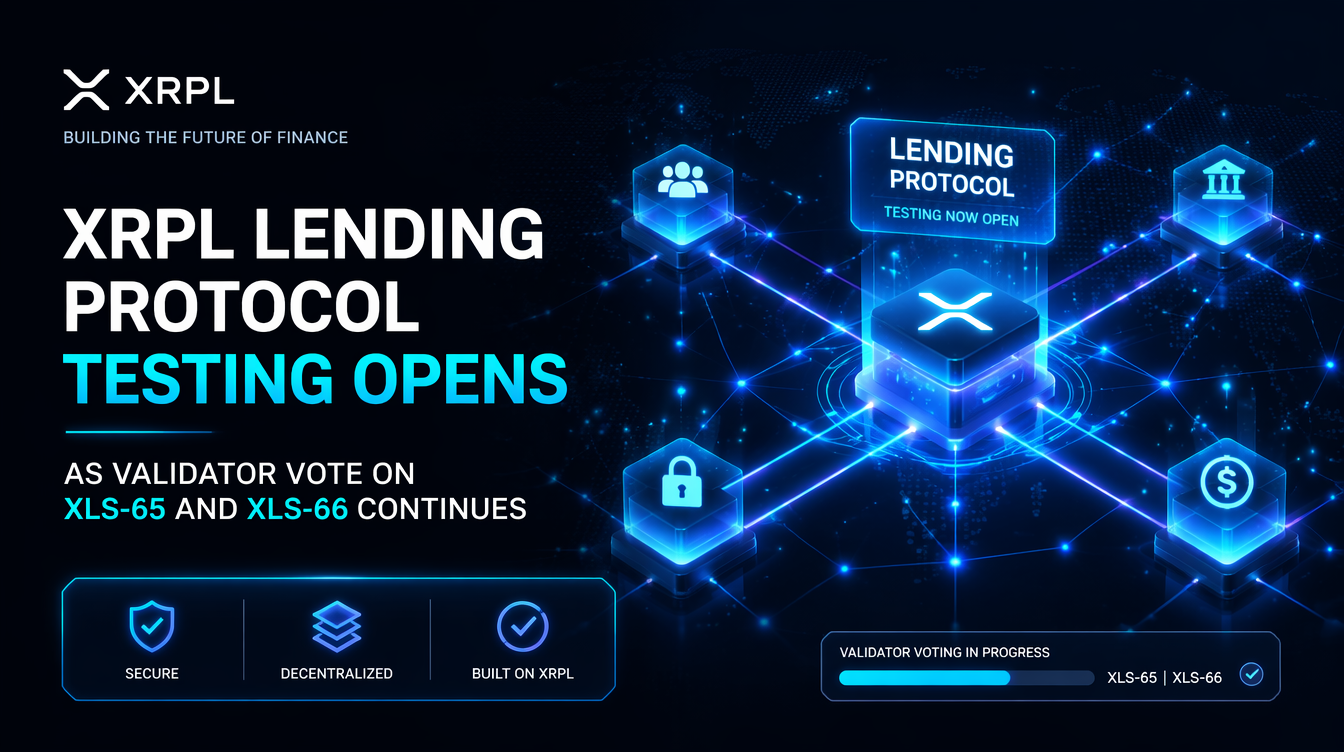
Ripple has initiated testing for its XRPL Lending Protocol alongside proposed upgrades XLS-65 and XLS-66, as validator voting approaches a decision on introducing native credit infrastructure to the XRP Ledger.
In a June 29 update, Ripple said developers can now access a dedicated test environment for the protocol. The paired proposals aim to embed fixed-term lending directly on-chain, marking a significant expansion of XRPL’s financial capabilities.
The amendments are still subject to approval, requiring over 80% support from trusted validators for two consecutive weeks under the network’s governance process.
The initiative reflects a shift away from traditional DeFi models toward an institutional-focused credit framework. Rather than relying on collateral-heavy, automated systems, the design incorporates off-chain underwriting, fixed-rate loan terms, and first-loss capital structures aligned with conventional finance.
Architecture and Mechanics
XLS-65 introduces a Single Asset Vault format, allowing participants to supply a single token—such as XRP or RLUSD—into pooled lending structures.
XLS-66 defines the lending layer, including loan terms, repayment schedules, interest calculations, and default handling, all enforced natively within the protocol rather than through external smart contracts.
Loans are structured as fixed-term and uncollateralized, distinguishing the model from collateralized DeFi platforms like Aave. Credit decisions remain off-chain, while the ledger manages execution and lifecycle processes.
In the event of borrower default, losses are first absorbed by pool managers and underwriters, reflecting a first-loss model commonly used in traditional credit markets.
Ripple has framed this separation between underwriting and execution as a deliberate design choice, enabling flexibility across a broader range of credit products.
RippleX developer Edward Hennis described the system as “real credit,” emphasizing its alignment with regulated financial use cases, with loan tenors typically ranging from 30 to 180 days at fixed rates.
RWA Expansion and RLUSD Utility
Ripple positions the lending protocol as a complement to growing real-world asset activity on XRPL. In May 2026, Ondo Finance completed a cross-border redemption of tokenized U.S. Treasuries on the network, underscoring the need for credit infrastructure alongside tokenization.
If approved, the protocol would allow tokenized assets to be deployed as working capital, supporting short-term liquidity for payment providers and enabling treasury functions to generate yield.
RLUSD, Ripple’s stablecoin, is expected to play a central role within the vault system. Since its launch in late 2024, it has reached a market capitalization of roughly $1.5 billion, offering a liquid, dollar-denominated base asset for on-chain lending.
Validator Vote and Market Context
The proposals entered validator voting following the XRPL v3.1.0 release in January 2026 and remain under review.
RippleX has conducted formal verification of the code and is offering up to $200,000 in bug bounties to identify potential vulnerabilities before any mainnet rollout.
At the time of the announcement, XRP was trading near $1.05, down around 8% over the past week, briefly dipping below $1 amid broader market weakness.
The focus now shifts to whether XRPL validators will approve the credit framework needed to move the network beyond asset transfer and toward a more fully developed on-chain financial system.