cpeditor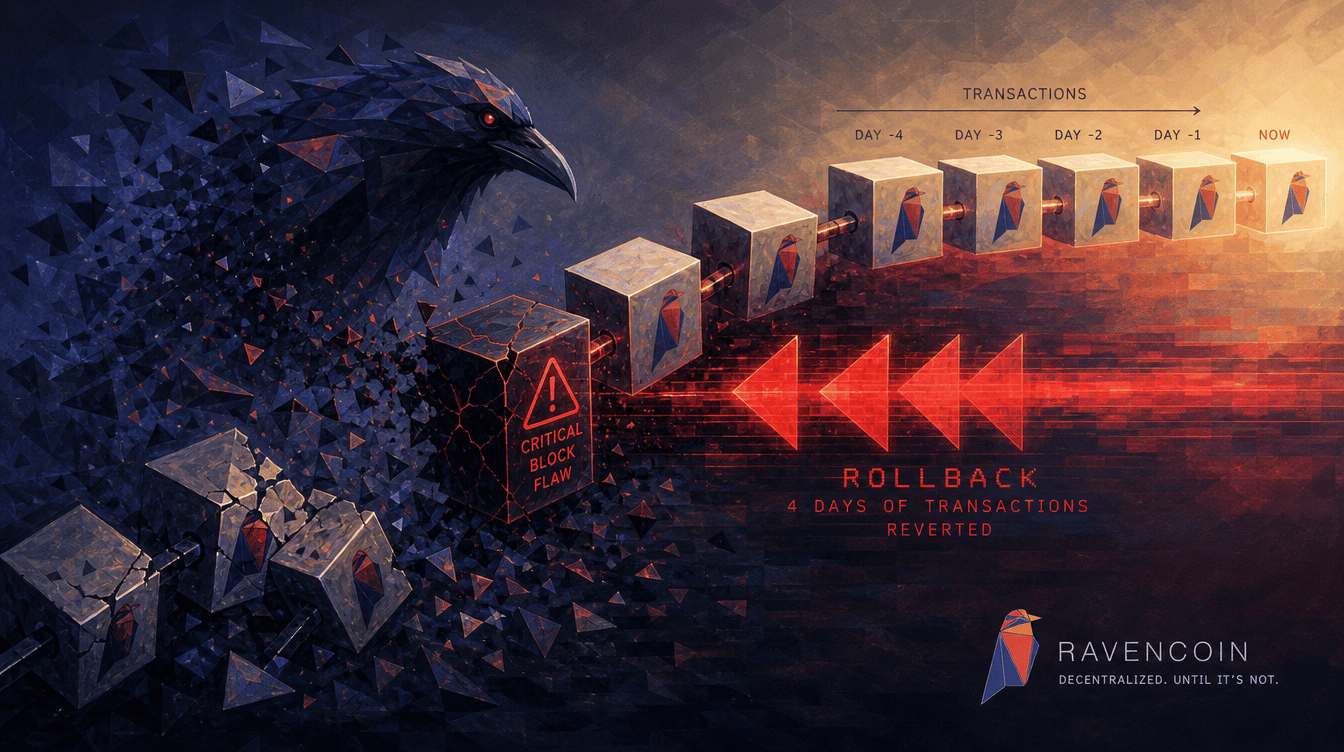
Ravencoin could face a rollback of several days of network activity after two major mining pools began rebuilding the blockchain from before the first invalid block produced on Friday. Because the pools control most of the network’s hashpower, transactions recorded after that point, including deposits, withdrawals and payments, could be removed if their chain becomes the accepted version.
The Ravencoin team said Tuesday that attackers had exploited a critical flaw in the blockchain’s software, creating invalid blocks and putting recent transaction history at risk.
Launched in 2018 as a fork of Bitcoin’s code, Ravencoin was designed primarily for issuing and transferring digital assets. Its consensus mechanism also relies on miners to validate transactions and extend the blockchain. However, its comparatively small mining ecosystem means that a handful of pools can have an outsized influence when different versions of the chain compete.
That dynamic is now particularly important. 2Miners and RavenMiner, which together account for most of Ravencoin’s computing power, are rebuilding the ledger from block 4,487,775, the final block before the exploit. If enough hashpower supports the rebuilt chain, all transactions added after that block could be replaced.
A blockchain acts as a chronological record of transactions, with miners grouping activity into blocks and adding them to the ledger. Individual miners typically join pools, combining their computing resources and sharing rewards. The chain with the strongest mining support is generally recognized as the legitimate network history.
The impact on users could be significant. A payment that appeared to have been completed could disappear following a rollback, potentially restoring the RVN to the sender while leaving the recipient without the expected payment.
Exchanges that credited deposits before the chain was finalized could also face losses. For example, a platform might credit an RVN deposit and allow the customer to withdraw the funds, only to see the original transaction disappear if the blockchain is rolled back. This risk has led several exchanges to suspend RVN services.
Amsterdam-based Bitvavo halted Ravencoin deposits and withdrawals as a precaution after the vulnerability was exploited. Upbit in South Korea also issued an investment warning for RVN in its KRW, BTC and USDT markets and suspended deposits.
How the attack unfolded
The first invalid block was produced at height 4,487,776 at 15:44 UTC on Aug. 7. After the vulnerability was demonstrated on the live network, additional invalid blocks were generated as others exploited the same weakness.
Ravencoin has since issued a patch to close the vulnerability. However, updating nodes only addresses the software flaw; it does not automatically undo blocks already recorded on the network.
2Miners and RavenMiner are rebuilding their chain from block 4,487,775. Ravencoin said it requested that the pools restart from a later block to reduce the amount of transaction history potentially affected, but the pools declined.
RavenMiner said its nodes have been updated with an emergency fix and are now mining what it describes as the clean chain. It said blocks produced during the attack period are being removed throughout the network, meaning mining rewards from the affected period would be reversed for miners generally rather than only for RavenMiner participants.
The pool has suspended payouts while the chain is resolved and said it would cover any resulting shortfall. It also confirmed that mining earnings generated before 15:44 UTC on Aug. 7 remain unaffected.
Ravencoin has dealt with a major vulnerability before. In 2020, attackers exploited a flaw that allowed them to create more RVN than permitted by the protocol. Around 31 million additional tokens were reportedly generated before the issue was fixed.
The latest incident has also weighed heavily on RVN’s market price. The token fell approximately 17% over 24 hours to around $0.0029, reducing its market capitalization to roughly $48 million. About $10 million worth of RVN changed hands during the period, while the token remains down approximately 77% over the past year.