cpeditor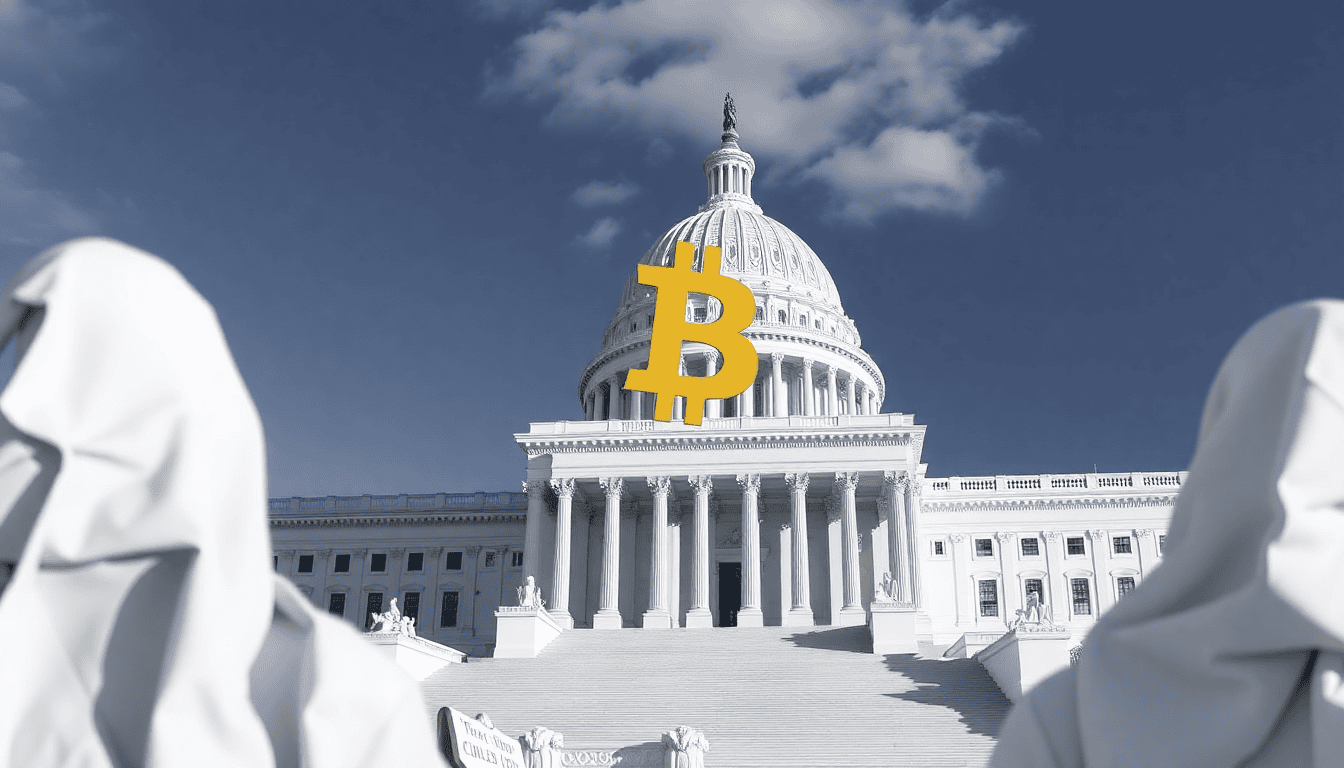
U.S. fiscal worries and digital-asset legislation are shaping two separate narratives around Bitcoin. Senator Cynthia Lummis has pointed to Bitcoin as a potential hedge against the country’s $39.2 trillion debt burden, while the Digital Asset Market CLARITY Act continues to face significant hurdles in the Senate.
Bitcoin gained 22% over the week after Treasury yields declined following intervention in the government bond market. The rally was later intensified by a short squeeze, with CoinGlass data showing roughly $2.7 billion in crypto short positions were liquidated.
CNBC reported that concerns over the size of U.S. debt and rising borrowing costs were also part of the market backdrop. The Treasury’s move to double its purchases of longer-dated government debt was viewed as an effort to ease pressure around long-term yields. Despite the strong rally, Bitcoin remained below both its 2026 peak and its all-time high.
Market sentiment improved further after the White House and crypto industry leaders renewed efforts to advance the CLARITY Act. The bill is viewed as a potential catalyst for the digital-asset market, although its path through Congress remains uncertain.
Lummis Ties Bitcoin to America’s Debt Burden
On June 15, Senator Cynthia Lummis linked Bitcoin to concerns surrounding the United States’ $39.2 trillion national debt. She described BTC as a possible hedge against currency debasement, particularly for younger Americans who may inherit the consequences of years of deficit spending.
Lummis has argued that Bitcoin’s fixed supply gives it a fundamentally different profile from sovereign debt. She has characterized the U.S. fiscal outlook as unsustainable and suggested that Bitcoin could help younger generations offset some of the risks created by persistent government borrowing. She has also acknowledged uncertainty over the legislative timeline.
The CLARITY Act would divide regulatory authority between the Securities and Exchange Commission and the Commodity Futures Trading Commission. Under the proposed framework, the SEC would oversee digital-asset securities and new token offerings, while the CFTC would regulate spot markets for digital commodities, including Bitcoin and Ethereum.
The bill would also establish registration frameworks for exchanges, brokers and custodians. Proposed provisions cover capital segregation, protections for developers publishing software code and bankruptcy rules that would give customers priority claims over assets held by custodians.
For tokens operating in regulatory gray areas, an activity-based test would determine whether sufficiently decentralized assets qualify as digital commodities subject to CFTC oversight. The bill would also prohibit passive stablecoin yield products while protecting rewards tied to actual platform activity.
Galaxy Research estimated that the CLARITY Act had a 60%-75% chance of becoming law in 2026. However, the White House’s July 4 signing target faced several obstacles, including unresolved ethics provisions, differences between the House and Senate versions and the Senate’s 60-vote cloture requirement.
The two versions also differ over the balance of power between the SEC and CFTC. The Senate Banking Committee discussion draft would give the SEC primary authority over ancillary assets and require joint SEC-CFTC rulemaking on margin and disclosure requirements. The House version takes a more CFTC-oriented approach.
Despite the legislative roadblocks, Bitcoin remains near $80,000 after briefly breaking above the psychological level. BTC’s latest advance keeps it within its broader uptrend, although the $80,000-$82,000 range remains a key resistance zone following its recent three-month high.