cpeditor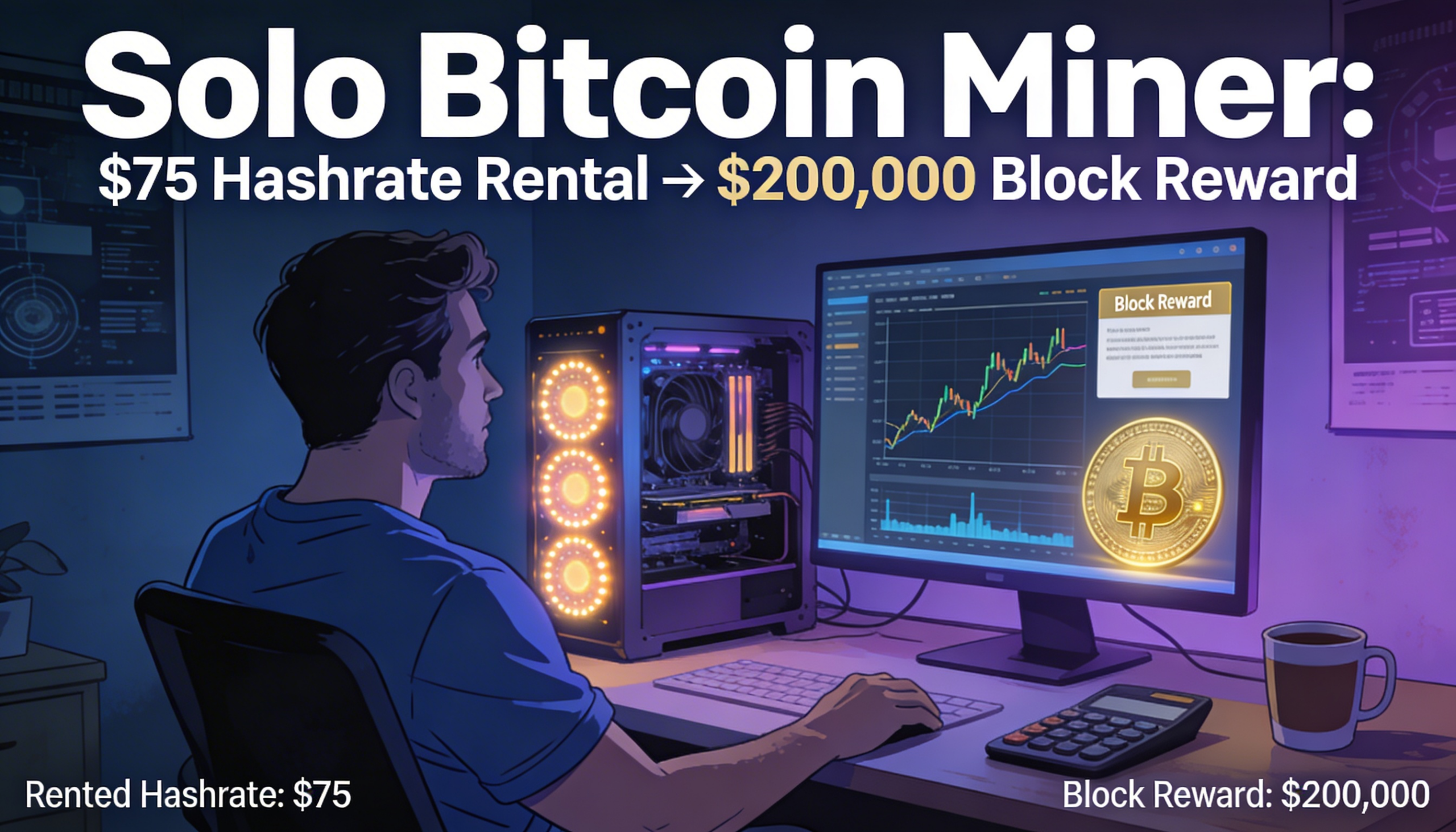
A solo miner has captured a full Bitcoin block reward worth more than $200,000 after deploying just $75 in rented computing power, pulling off one of the rare independent wins recorded this year.
According to blockchain data from Mempool.space, block 938,092 was validated at approximately 8:04 a.m. UTC on Tuesday. The miner secured the entire 3.125 BTC subsidy by leasing 1 petahash per second (PH/s) of hashpower through an on-demand cloud mining service, spending roughly 119,000 satoshis — about $75 — for the attempt.
The operation was conducted via CKPool, which enables individuals to mine independently while using shared infrastructure to submit completed blocks to the Bitcoin network. Unlike traditional mining pools that split rewards among participants, solo miners retain 100% of the payout if they find a valid block.
The outcome represents an extraordinary return — approximately 2,600 times the initial expenditure — highlighting the asymmetric payoff profile of small-scale solo mining. While the mathematical odds are transparent, they remain heavily stacked against miners operating with minimal hashrate.
Bitcoin produces a new block roughly every 10 minutes. Miners compete to solve a cryptographic puzzle, and the first to generate a valid solution receives the block subsidy along with transaction fees. The likelihood of success is dictated by hashrate — the computational power used to generate attempts per second. Greater hashrate increases the probability of solving the puzzle first.
With only 1 PH/s, the miner commanded a negligible share of the network’s total computing power, which is largely dominated by industrial-scale operations. Statistically, the probability of such a small allocation discovering a block ahead of major mining farms is extremely low.
Still, solo wins continue to occur. Data from solo mining tracker Bennet shows that 21 independent miners have validated blocks over the past year, earning a combined 66 BTC — worth roughly $4.1 million at current prices. That marks a 17% year-over-year increase in solo-mined blocks, averaging about one successful solo validation every 17 days.
The growth reflects the expanding availability of cloud-based hashpower rentals. Prospective miners no longer need to purchase and operate specialized hardware; instead, they can lease computing power for relatively modest amounts, effectively turning solo mining into a high-risk, probability-driven wager with defined odds.
The successful block also arrived during a period of shifting mining dynamics. Network difficulty recently rose 15% to 144.4 trillion, reversing an 11% decline earlier in the month caused by severe winter storms in the United States that temporarily reduced overall hashrate. That short-lived drop made blocks marginally easier to find before the protocol’s automatic adjustment restored competitive balance.
At current difficulty levels, miners collectively must perform an average of 144.4 trillion hash attempts to find a valid block — a stark contrast to the network’s early days in 2009, when mining competition was minimal.
For one solo participant, however, a $75 allocation of rented hashpower — combined with favorable timing — proved enough to overcome the odds and secure a six-figure reward.