cpeditor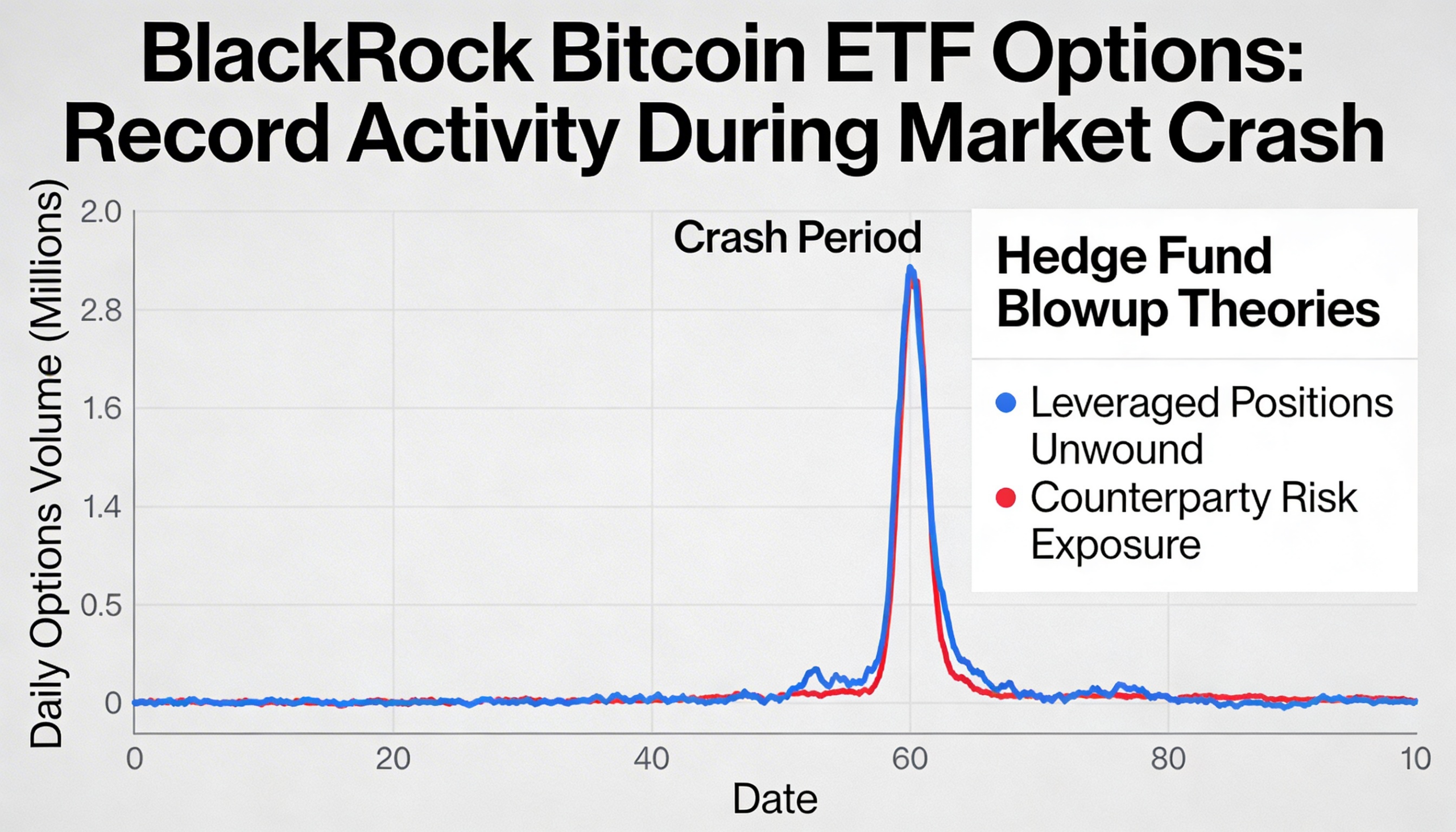
Options trading linked to BlackRock’s spot bitcoin ETF, IBIT, spiked to record levels last week as bitcoin slid sharply, igniting debate over whether forced hedge fund liquidations helped intensify the selloff.
IBIT has attracted billions of dollars since its launch, becoming a primary vehicle for investors seeking bitcoin exposure without directly holding the asset. While ETF inflows have traditionally been used to track institutional positioning, last week’s volatility has drawn fresh attention to derivatives activity tied to the fund.
As bitcoin fell on Thursday, IBIT options volume climbed to an all-time high of 2.33 million contracts. By Friday, the ETF was down 13%, marking its weakest level since October 2024. Put options marginally outpaced calls, pointing to heightened demand for downside protection during the decline.
Options provide traders with a way to hedge risk or express leveraged views while capping losses at the premium paid. Calls offer upside exposure if prices rise beyond a preset level, while puts protect against declines below a set threshold.
The session also saw a record $900 million in premiums paid by IBIT options buyers, the largest single-day total on record and a figure comparable to the market value of many mid-cap cryptocurrencies.
Hedge fund liquidation speculation
Speculation gained traction after market analyst Parker suggested in a widely circulated post on X that the spike in activity reflected the collapse of one or more hedge funds heavily concentrated in IBIT. The theory holds that the fund had amassed large positions in out-of-the-money call options following the October correction, wagering on a swift rebound.
Those positions were reportedly financed with leverage. As IBIT continued to decline, losses mounted, triggering margin calls. Unable to post additional collateral, the fund was allegedly forced to liquidate significant IBIT holdings, contributing to roughly $10 billion in spot trading volume. At the same time, the fund may have closed or rolled expiring options positions, pushing premium payments to record highs.
Shreyas Chari, director of trading and head of derivatives at Monarq Asset Management, said the market action was consistent with margin-driven selling.
“Systematic selling across the majors yesterday was probably tied to margin calls, especially in the ETF with the highest crypto exposure, IBIT,” Chari said, adding that rumors circulated of an options-focused entity selling aggressively as key price levels were breached.
Alternative explanations
Others urged caution in attributing the surge to a single fund failure. Tony Stewart, founder of Pelion Capital, said IBIT options likely contributed to volatility but argued that the available data does not conclusively support the hedge fund blowup theory.
Citing Amberdata, Stewart noted that about $150 million of the $900 million in premiums came from traders buying back put options they had previously sold. As IBIT dropped and those puts increased sharply in value, short sellers moved to reduce risk—behavior typical during periods of market stress.
Stewart said the remaining premium activity appeared to be distributed across smaller trades rather than concentrated in a single position. While he acknowledged that some transactions may have occurred in over-the-counter markets, he said the evidence points to broad-based panic rather than a singular forced liquidation.
Whether driven by hedge fund distress or widespread risk aversion, the episode underscores the growing role of ETF options in crypto market volatility and the importance of derivatives data in tracking institutional behavior.