cpeditor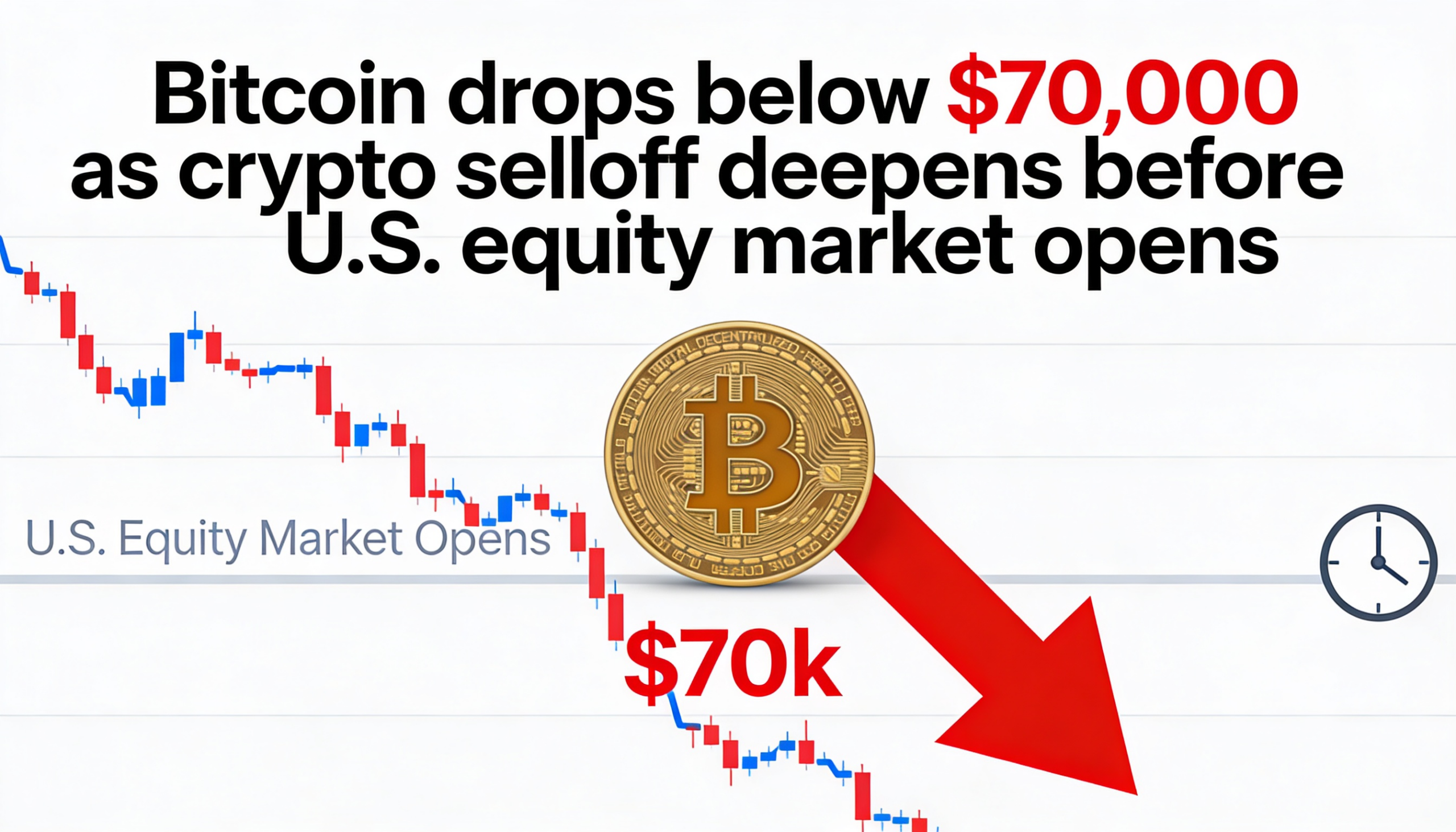
“Extreme fear” continues to dominate crypto and metals markets, while U.S. equities show relative steadiness ahead of a packed earnings schedule.
Bitcoin slipped below $70,000 as the selloff in digital assets deepened before the U.S. equity market opened. The largest cryptocurrency fell to an intraday low near $69,917, according to CoinDesk data, pushing sentiment further into bearish territory. The Crypto Fear and Greed Index stands at 11 — a level reached only a handful of times in the past.
The weakness remains largely concentrated in crypto and precious metals. Gold declined more than 1% to below $4,900 per ounce, while silver plunged over 11% to under $79 per ounce.
U.S. equities, by contrast, were slightly higher in pre-market trading. The Invesco QQQ ETF, which tracks the Nasdaq 100, was up about 0.05%, underscoring continued resilience in large-cap technology shares.
Bitcoin-linked stocks extended their losses. Strategy (MSTR), the largest publicly traded corporate holder of bitcoin, fell more than 5% and now trades nearly 80% below its November 2024 all-time high, ahead of its fourth-quarter earnings report later Thursday. Other bitcoin treasury firms, including Strive (ASST) and Nakamoto (NAKA), were down roughly 6%.
Crypto-related equities also remained under pressure. Coinbase (COIN) slipped another 2%, while Bullish, the owner of CoinDesk, fell about 0.4%. Bitcoin-focused AI miners were mixed: IREN (IREN) dropped 3% and Cipher Mining (CIFR) fell 2%, following steep losses of around 15% in the prior session. Larger miners with sizable bitcoin holdings, including Riot Platforms (RIOT), MARA Holdings (MARA), and CleanSpark (CLSK), were each down about 3%.
Some investors see potential for stabilization if historical correlations reassert themselves. The iShares Expanded Tech Software ETF (IGV), a sector bitcoin has often tracked closely, edged slightly higher. Meanwhile, Alphabet (GOOG) fell 3% despite beating fourth-quarter profit expectations, after announcing a rise in capital expenditures to $185 billion from $175 billion, with projected spending of roughly $119.5 billion