cpeditor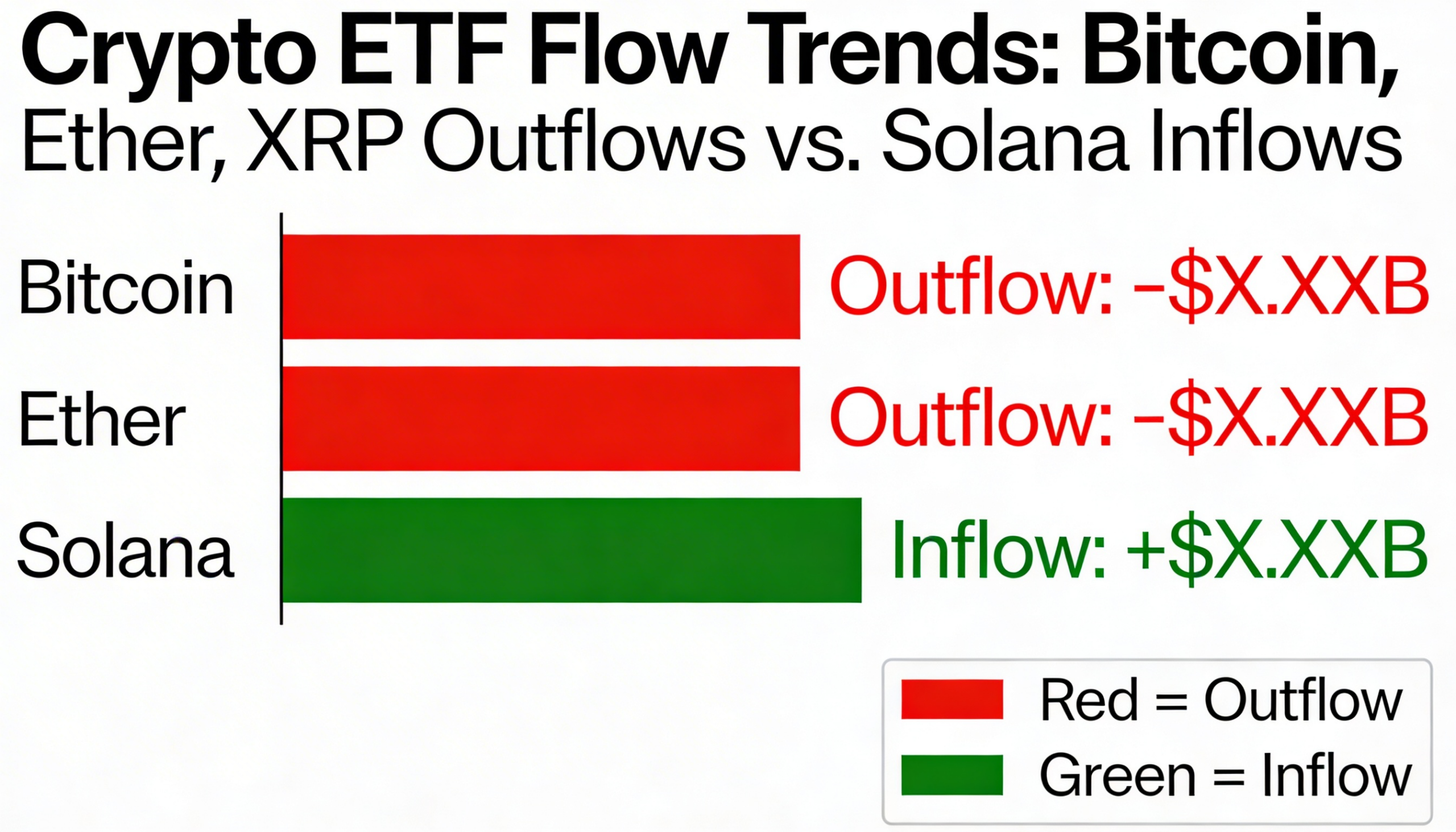
U.S. spot crypto ETFs experienced broad outflows, with bitcoin and ether products leading the redemptions, while Solana funds attracted fresh inflows — pointing to targeted repositioning rather than a sweeping withdrawal from digital assets.
Bitcoin spot ETFs recorded $133.3 million in net outflows on Feb. 18. The largest withdrawals came from BlackRock’s IBIT, which lost $84.2 million, and Fidelity Investments’s FBTC, which saw $49 million redeemed. Total net assets across U.S. bitcoin ETFs remain substantial at $83.6 billion, equivalent to roughly 6.3% of bitcoin’s total market capitalization. However, recent flow patterns suggest institutions are scaling back exposure instead of adding on price dips.
Ether-focused funds mirrored the trend. U.S. spot ETH ETFs posted $41.8 million in daily net outflows, with BlackRock’s ETHA accounting for nearly $30 million of the total. Aggregate net assets across ether products stand at $11.1 billion, or about 4.8% of ETH’s market cap. The steady withdrawals come as ether trades below $2,000 and struggles to regain momentum despite expectations for possible rate cuts later this year.
XRP ETFs also saw modest redemptions, logging $2.2 million in outflows. Assets under management across XRP funds sit just above $1 billion, representing around 1.2% of XRP’s market value. The token’s price performance has reflected the cautious tone, with XRP down more than 4% on the day.
Solana, in contrast, stood apart.
U.S. spot SOL ETFs attracted $2.4 million in net inflows, pushing cumulative inflows to nearly $880 million. Bitwise Asset Management’s BSOL led the gains with $1.5 million in new capital. Although small in absolute terms, the inflow marks a clear divergence from the broader outflow trend affecting bitcoin and ether funds.
Other altcoin ETFs, including LINK-linked products, posted slight inflows, but the overall picture remains one of selective positioning rather than broad-based accumulation.
The divergence in ETF flows suggests investors are reallocating within the crypto sector instead of exiting entirely. With macroeconomic uncertainty lingering and the U.S. dollar firming, fund flows continue to serve as a real-time gauge of where institutional confidence is holding — and where it is beginning to wane.