cpeditor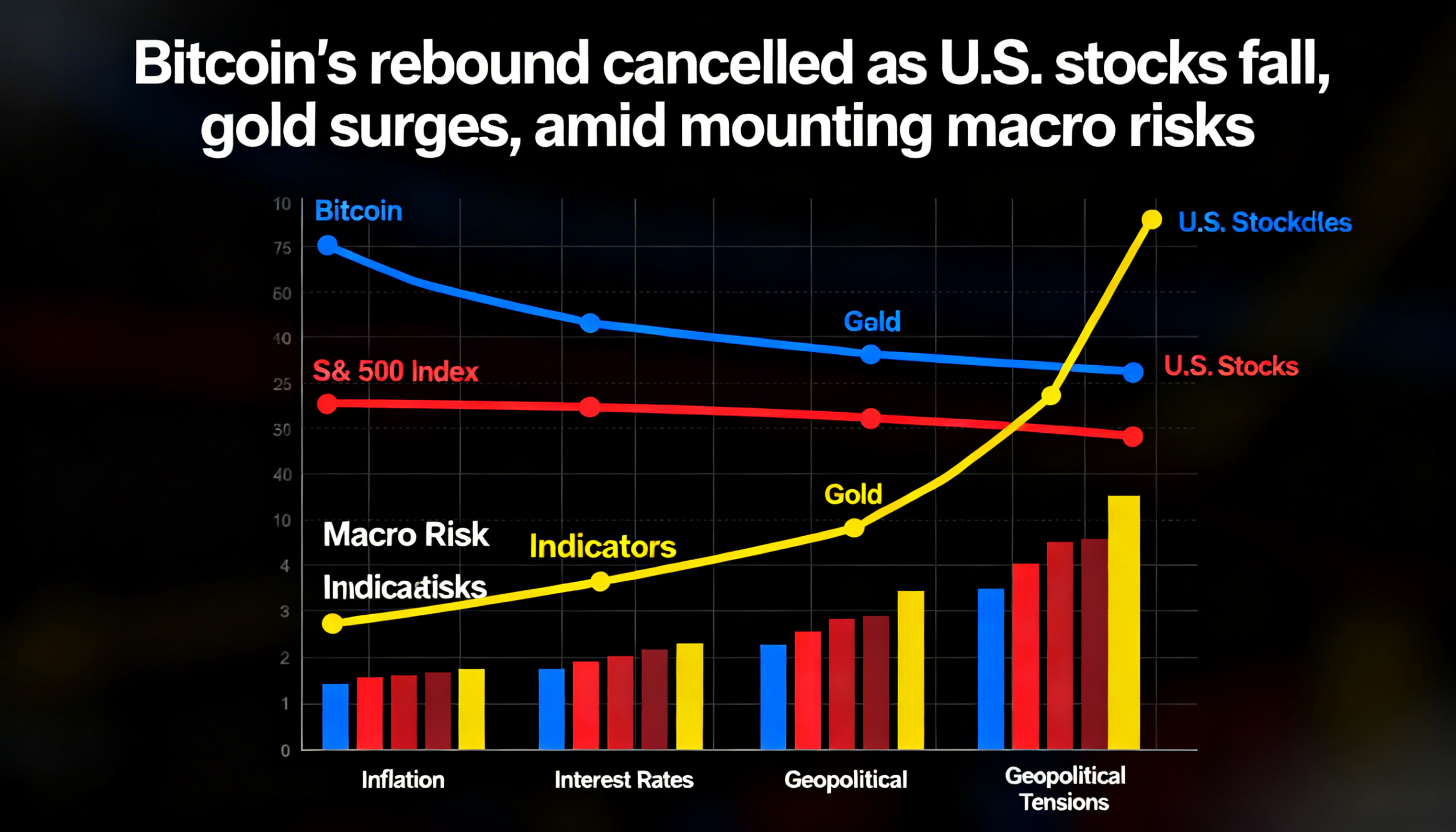
A wave of macroeconomic and geopolitical concerns pushed investors further into defensive mode, dragging cryptocurrencies and related equities lower.
Bitcoin slipped beneath the $66,000 mark during Friday’s early U.S. session, erasing nearly all of its midweek rebound. After briefly approaching $68,000, the cryptocurrency fell about 3% within hours to trade around $65,600. The broader CoinDesk 20 Index dropped 2.3% over the past day, with Ethereum, XRP, and Solana logging similar declines.
Stocks tied to the crypto sector also reversed course after earlier gains this week. Strategy (MSTR), the largest public corporate holder of bitcoin, fell 3%. Shares of Coinbase (COIN) declined more than 2%, while stablecoin issuer Circle (CRCL) tumbled nearly 5%, halting a rapid rebound that had lifted the stock close to 50% in just a few sessions.
Bitcoin mining firms — increasingly associated with AI infrastructure growth — saw even steeper losses. IREN, Cipher Mining (CIFR), Core Scientific (CORZ) and TeraWulf (WULF) declined between 6% and 8%.
The downturn in crypto tracked weakness in traditional markets. The Nasdaq Composite fell 0.8%, while the S&P 500 lost 0.6%.
Inflation and Credit Fears Resurface
A stronger-than-expected Producer Price Index reading dented optimism about cooling inflation. Core PPI increased 3.6% year over year in January, exceeding forecasts of 3.0% and accelerating from the prior 3.3%. As a result, traders now see a 96% probability that the Federal Reserve will leave interest rates unchanged at its March 18 policy meeting.
Concerns about tightening financial conditions also intensified. Credit spreads widened to their highest levels in four months, while shares of major alternative asset managers KKR, Ares Management, and Apollo Global Management dropped 6%–7% during the session.
Adding to the risk-off tone were rising geopolitical tensions. Prediction markets showed increasing odds of potential U.S. military action against Iran, following reports that the U.S. began evacuating some embassy personnel from Israel.
Shift Toward Safe Havens
As risk assets retreated, capital rotated into defensive plays. The U.S. 10-year Treasury yield fell below 4% for the first time since November 2024. Gold climbed 1% to trade above $5,230 per ounce, while silver surged 4% to regain the $92 level. Crude oil also advanced 2.3% to move above $67 per barrel.
Paul Howard, director at crypto trading firm Wincent, said bitcoin’s upside appears limited under current conditions. After February’s options expiry, traders are positioning for BTC to remain capped in the $72,000–$74,000 range, with support near $54,000 into March.
“A defensive stance remains prudent, especially considering that March has historically been a softer period for major cryptocurrencies,” Howard noted.