cpeditor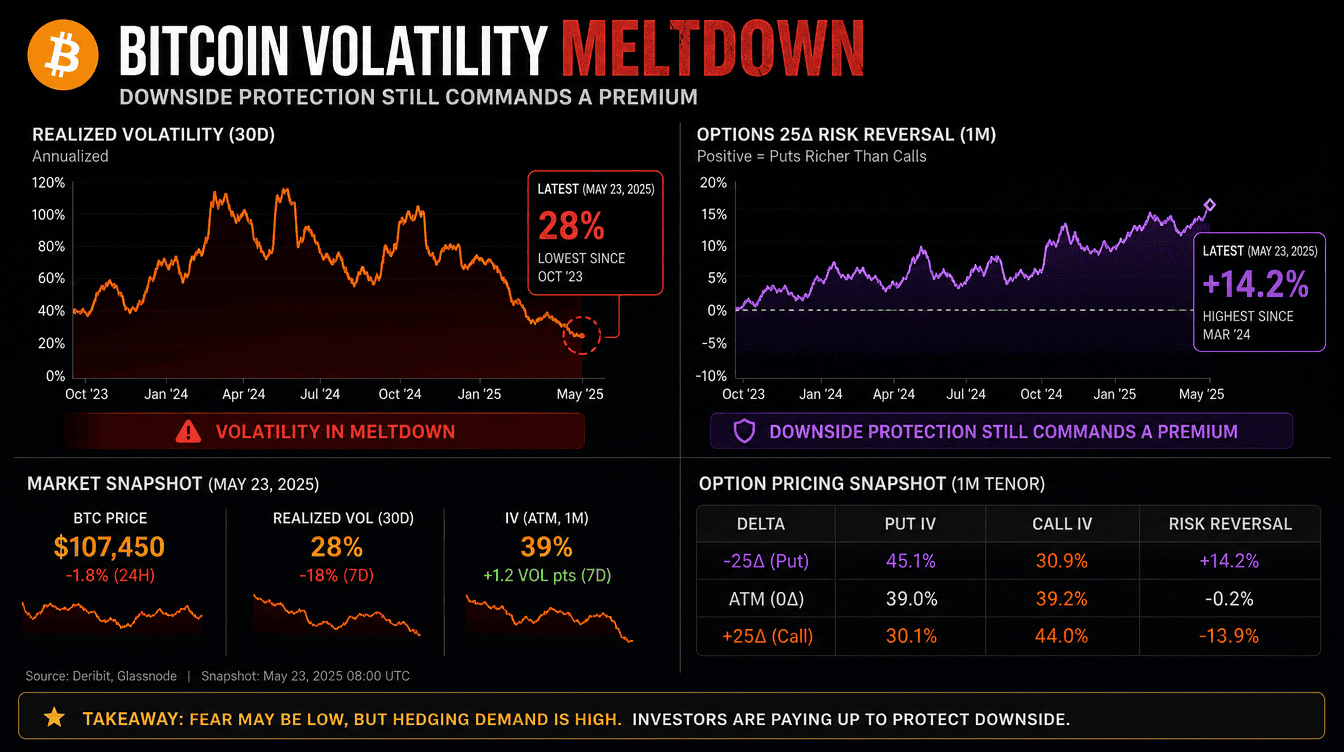
Bitcoin’s volatility has dropped sharply, but traders are still willing to pay a premium to guard against a potential sell-off.
The Volmex BVIV index, which tracks Bitcoin’s annualized 30-day implied volatility, fell to 35.59% over the weekend. That was its lowest reading since September and reflects a significant decline in expectations for large BTC price swings.
Bitcoin has traded within a roughly $62,000-$66,000 range since early July. With prices stuck in that band, traders have pulled back from options strategies that depend on a major move higher or lower.
BVIV functions as a crypto counterpart to the Cboe Volatility Index, or VIX, which tracks expected volatility in U.S. equities. Because both are derived from options markets, they can indicate how much investors are willing to spend to hedge against sudden price moves.
The current level is far below the spike seen in February, when BVIV surged past 90% as Bitcoin plunged from around $90,000 toward $60,000. The sharp decline drove traders to seek greater options protection against continued turbulence.
Option Supply Is Weighing on Volatility
Griffin Sears, head of derivatives at crypto prime brokerage FalconX, said the decline in BVIV is largely being driven by a broad supply-demand imbalance in crypto options.
The lack of a strong Bitcoin trend has reduced demand for directional options. Traders typically use calls, puts or combinations of both when they expect a significant move in the underlying asset.
Calls provide upside exposure, while puts can be used to hedge against losses or position for a decline. With Bitcoin moving sideways, demand for these trades has weakened.
Option supply, however, remains high. Sears said investors are increasingly selling options to market makers, which generally buy those contracts and provide liquidity.
Bitcoin miners and corporate treasuries are among those using systematic overwriting strategies, according to Sears. These programs involve selling call options against existing BTC holdings to generate additional income.
The steady flow of option selling can weigh on implied volatility. The effect may be even stronger during the typical midyear slowdown, when fewer traders are active and Bitcoin’s realized volatility has also declined.
Investors Still Pay Up for Puts
A lower BVIV reading does not necessarily mean the market has become fully confident about Bitcoin.
Put skew remains elevated, indicating that puts are still more expensive than comparable calls. Investors are therefore continuing to pay more for protection against downside risk.
The setup suggests traders expect Bitcoin to remain relatively calm in the short term but still see a meaningful risk of a deeper decline.
Professional options traders are consequently shifting away from simple long-volatility positions and toward relative-value trades. These strategies focus on differences in option pricing between expiration dates and the premium embedded in downside protection.
Low Volatility Could Hide Leverage Risks
Himashu Sahay, CTO and co-founder of Bitcoin-backed lending platform Arch, warned that falling implied volatility could encourage excessive risk-taking.
When volatility appears subdued, borrowing costs can become more attractive and traders may increase leverage without adequately accounting for potential losses.
Sahay said this does not eliminate the underlying risk. Instead, it can leave positions under-hedged and vulnerable to a sudden price shock, potentially triggering forced liquidations.
He argued that lenders and borrowers should establish clear leverage and credit limits before volatility rises. Building those safeguards into lending structures in advance can reduce the chance that a temporary liquidity squeeze turns into a broader liquidation event.