cpeditor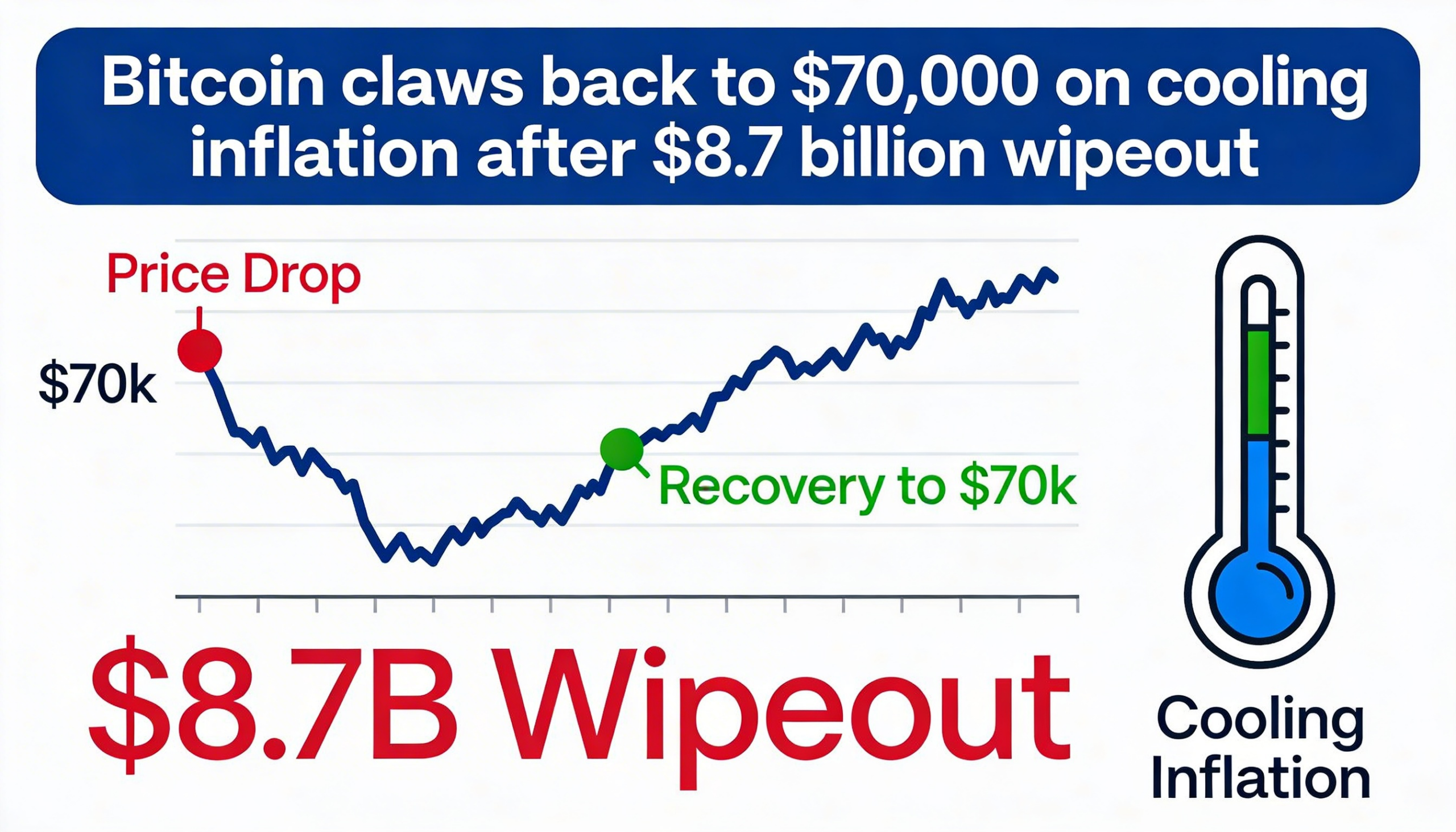
Bitcoin has surged back above the $70,000 threshold after sliding to nearly $60,000 earlier this month, posting a gain of about 5% over the past day. The broader CoinDesk 20 (CD20) climbed 6.2% in the same period, signaling a rebound across major tokens.
The advance followed a softer U.S. inflation reading that lifted expectations for earlier monetary easing. January’s Consumer Price Index rose 2.4% from a year ago, slightly below forecasts of 2.5%, reinforcing hopes that the Federal Reserve could begin trimming rates sooner than expected. Lower borrowing costs typically improve the appeal of riskier assets by narrowing the return gap with safer investments.
On prediction platform Kalshi, traders now assign a 26% probability to a 25-basis-point rate cut in April, up from 19% earlier this week. Similarly, odds on Polymarket have increased from 13% to 20%.
Despite the recovery, sentiment remains fragile. The Crypto Fear & Greed Index continues to register “extreme fear,” a level last seen during the 2022 downturn that followed the collapse of FTX. The index has remained in that territory since the beginning of the month, highlighting persistent caution among investors.
Analysts at Bitwise Asset Management said roughly $8.7 billion in bitcoin losses were realized over the past week — a figure surpassed only during the unwind of Three Arrows Capital. The firm described the sell-off as resembling a classic capitulation phase, when assets transition from weaker holders to longer-term investors with stronger conviction — a process that can lay the groundwork for stabilization but unfolds gradually.
At one point during the slump, bitcoin treasury companies were carrying more than $21 billion in unrealized losses, a record high. As prices rebounded, that amount has narrowed to about $16.9 billion.
Light weekend trading volumes and signs of seller fatigue appear to be amplifying the move higher. Even so, fear remains a dominant force. As Bitwise research analyst Danny Nelson told CoinDesk, the market’s prevailing driver is concern that prices could move lower.
That lingering anxiety has led some investors to view rallies as opportunities to reduce exposure. Whether the ongoing shift toward higher-conviction holders will ultimately alter the market’s trajectory remains to be seen.