cpeditor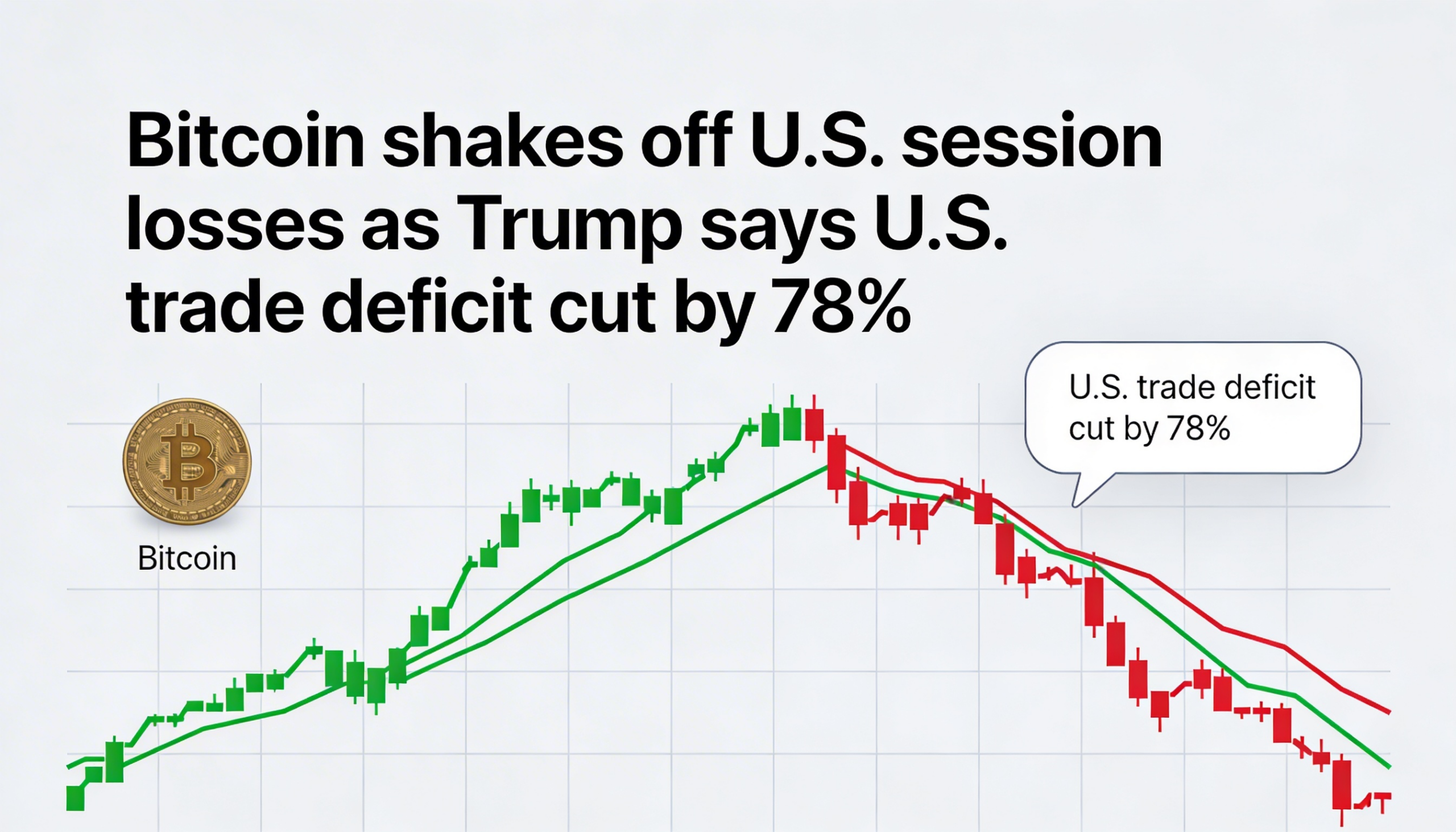
Bitcoin traded in wide ranges Thursday, recovering to near $67,000 after sliding to about $65,900, as markets reacted to renewed trade rhetoric from U.S. President Donald Trump.
In a late Wednesday social media post, Trump said tariffs had reduced the U.S. trade deficit by 78% and predicted the balance could turn positive later this year — a shift he said would be the first in decades. For investors, though, the debate isn’t centered on the precision of that figure. Instead, attention has shifted to what a revived tariff push could mean for inflation and interest rates.
Tariffs can function as a tax on imported goods, potentially pushing up domestic prices and complicating the Federal Reserve’s policy path. If markets begin to anticipate interest rates staying elevated for longer, the U.S. dollar typically strengthens, creating headwinds for risk assets such as cryptocurrencies.
Bitcoin has increasingly moved in line with broader macro trends, responding more to liquidity conditions and rate expectations than to crypto-specific developments.
There is also fresh economic data fueling the trade discussion. In early January, the U.S. trade deficit narrowed to roughly $29.4 billion — its smallest level since 2009 — driven by a decline in imports, stronger exports and the ripple effects of tariff threats. However, economists noted that much of the improvement was linked to fluctuations in non-monetary gold flows, which can distort monthly readings without reflecting a lasting shift in trade dynamics.
If tariff talk translates into sustained dollar strength and tighter financial conditions, bitcoin’s rebounds may struggle to gain traction. If it fades into political background noise, market focus is likely to return to capital flows, leverage positioning and whether buyers can reclaim recently lost ground.