cpeditor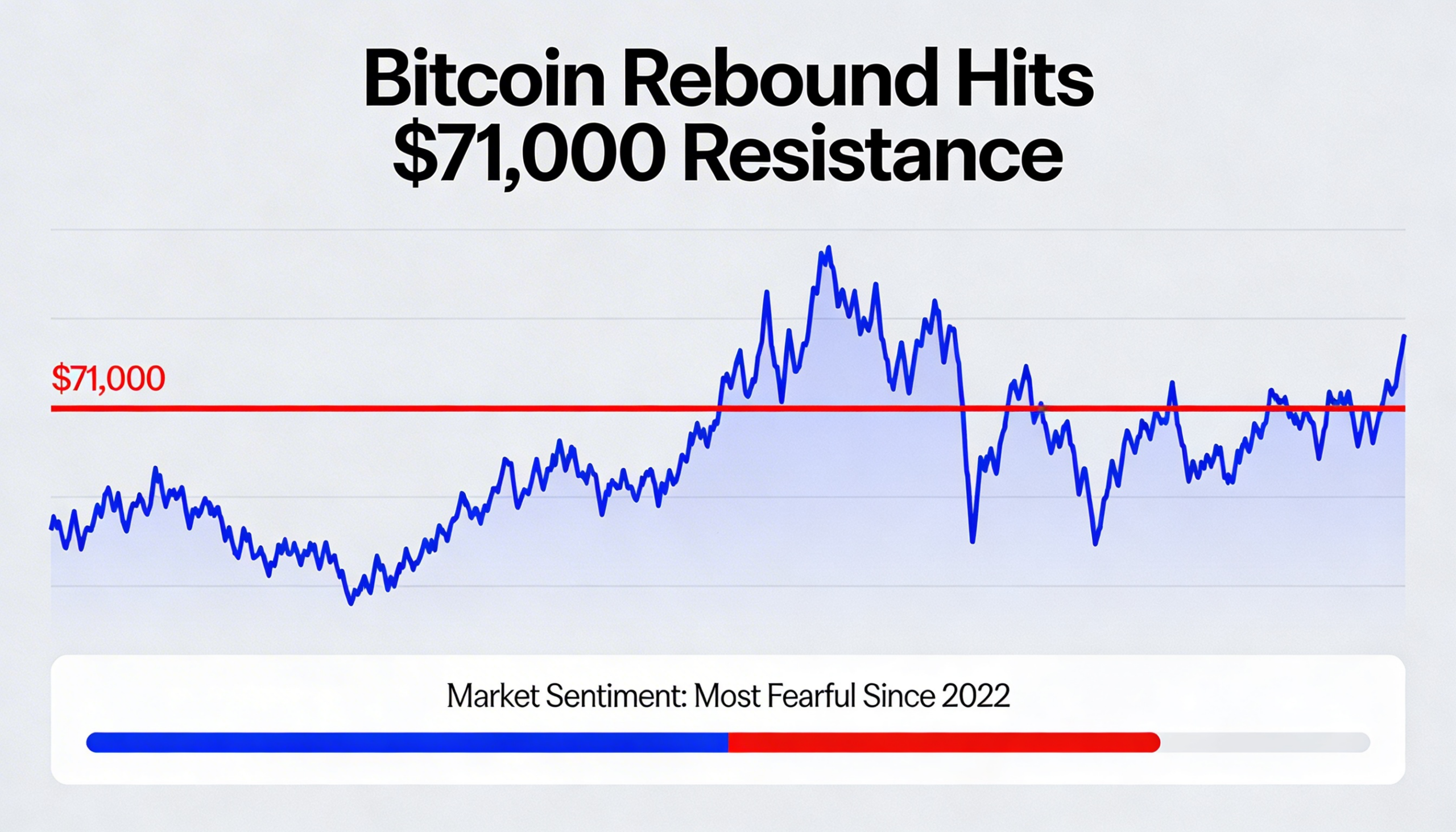
Bitcoin’s latest rebound is struggling to gain follow-through, as shrinking trading volumes and fragile liquidity conditions underscore a broader retreat from risk across crypto markets.
After plunging into the low-$60,000 range during last week’s sharp selloff, bitcoin (BTC) staged a swift weekend recovery that carried prices back toward $70,000. The move initially appeared constructive, but buying interest has since cooled, leaving the rally vulnerable to renewed selling pressure.
Some traders now view the advance as a textbook relief rally — a fast recovery within a larger downtrend that tempts dip buyers before running into heavy supply from investors eager to lighten positions at improved levels.
“There remains significant overhead supply from those looking to exit into strength,” said Alex Kuptsikevich, chief market analyst at FxPro. He suggested that, given the fading momentum, the market could soon retest the 200-week moving average, a key long-term technical benchmark.
The recovery also faltered near the $2.4 trillion mark in total crypto market capitalization, reinforcing doubts about the durability of the bounce. Kuptsikevich cautioned that the broader corrective phase may not yet be complete, describing the recent upswing as potentially temporary within a continuing downtrend.
Sentiment indicators paint a similarly cautious picture. The Crypto Fear and Greed Index dropped to 6 over the weekend — levels last seen during the 2022 FTX-driven collapse — before recovering modestly to 14 by late Monday. Despite the uptick, the gauge remains deep in extreme fear territory.
Such subdued sentiment typically signals that investor confidence has yet to return in a meaningful way, limiting the potential for sustained upside.
Liquidity dynamics are further complicating the outlook. With thinner order books across major exchanges, relatively small sell orders can generate exaggerated price swings. Those moves often cascade into stop-loss triggers and forced liquidations, creating a feedback loop that amplifies volatility and undermines breakout attempts.
This structural weakness helps explain how bitcoin can post large intraday fluctuations while still failing to clear key resistance levels.
According to data from crypto research firm Kaiko, the current backdrop reflects a broader risk-off unwind. Aggregate trading volumes on major centralized exchanges have declined roughly 30% since late 2025. Monthly spot volumes, which previously hovered near $1 trillion, have slipped closer to $700 billion.
Although last week’s volatility produced intermittent spikes in activity, Kaiko said the prevailing trend has been a steady decline in participation. Retail investors appear to be gradually stepping away from the market rather than exiting in a single capitulation event.
In thinner markets, prices can drift lower without the high-volume flush typically associated with durable bottoms. The absence of that decisive capitulation suggests the correction could take time to fully resolve.
Kaiko also framed the pullback within bitcoin’s historical four-year halving cycle. After reaching a peak near $126,000 in late 2025 or early 2026, bitcoin has retraced more than 50%, returning to the $60,000–$70,000 range.
Historically, cycle troughs tend to develop over months and often feature multiple failed rallies before a sustainable uptrend resumes.
For now, the $60,000 level stands as a critical line in the sand. Continued defense of that support could lead to a period of choppy consolidation. A decisive breakdown, however, would risk reactivating the same thin-liquidity forces that intensified the recent selloff — particularly if macroeconomic conditions remain tilted toward risk aversion.