cpeditor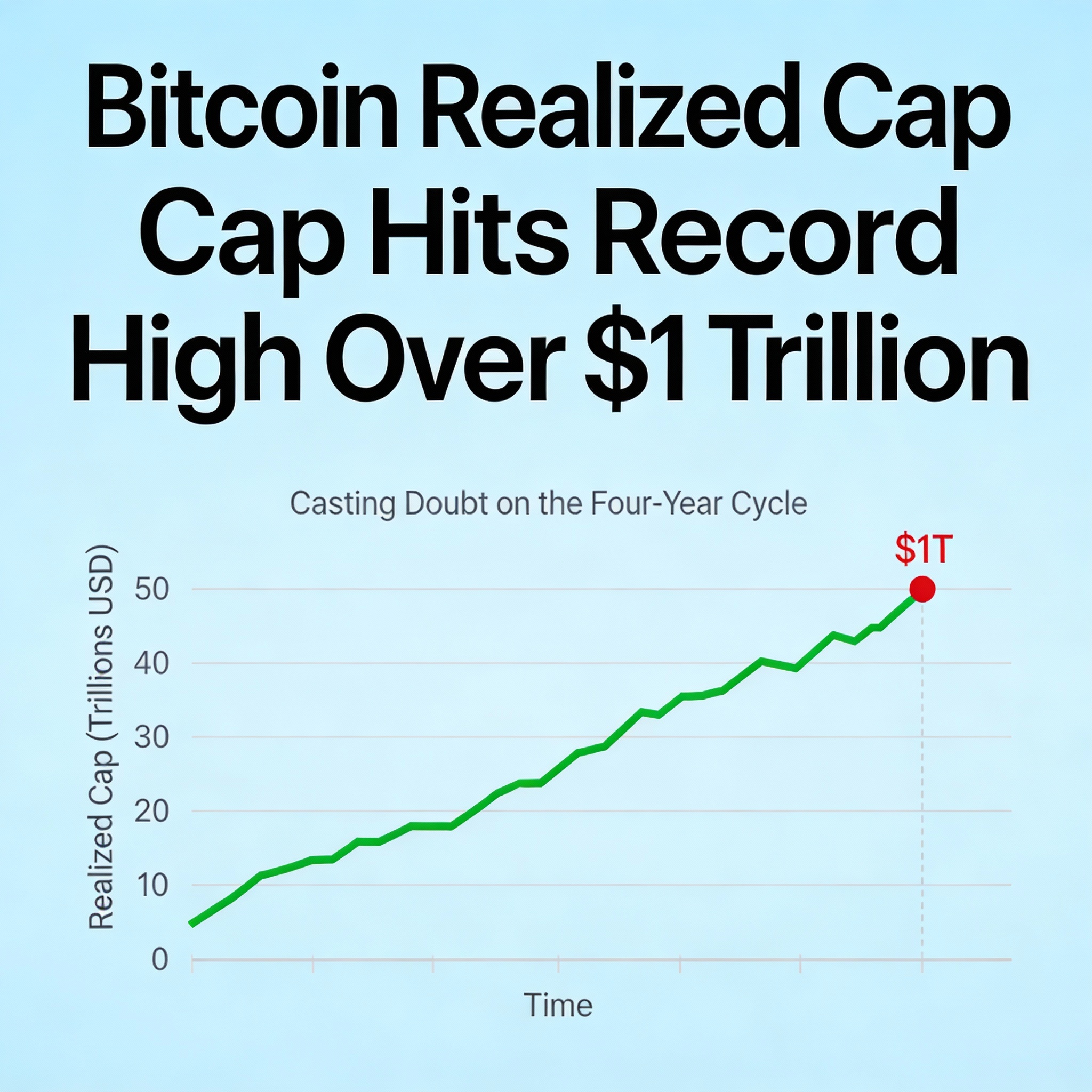
Bitcoin’s Realized Cap Hits $1.125 Trillion, Challenging Four-Year Cycle Narrative
Bitcoin’s realized capitalization has reached a record $1.125 trillion, signaling that the cryptocurrency may still be in a bull market despite a nearly 40% decline in prices over the past 10 weeks.
Unlike total market capitalization, this on-chain metric values each bitcoin at the price it last moved, providing insight into actual capital inflows rather than speculative trading activity. According to Glassnode data, realized cap continued climbing even during the 36% correction from October’s all-time price high, though it has recently plateaued around the $1.125 trillion mark. A similar pause was observed during the tariff-induced market dip in April 2025, when bitcoin bottomed near $76,000 before resuming its upward trajectory.
During the 2022 bear market, realized cap fell sharply from roughly $470 billion to $385 billion as investors capitulated and sold coins at lower cost bases—a reaction that has not been mirrored in the current market.
Four-Year Cycle Under Scrutiny
The traditional four-year cycle narrative may be losing its grip. Andre Dragosch, European head of research at Bitwise, told CoinDesk that bitcoin could defy this pattern, with potential upside surprises in 2026. He cited resilient global growth, ongoing rate cuts, and a steepening yield curve expanding liquidity—all factors that could weaken the U.S. dollar, an environment historically favorable for bitcoin.
“In my view, bitcoin is materially underpricing the prevailing macro backdrop, to a degree last seen during the Covid recession and the FTX collapse, despite no signs of a U.S. recession and evidence of re-accelerating growth,” Dragosch said.