cpeditor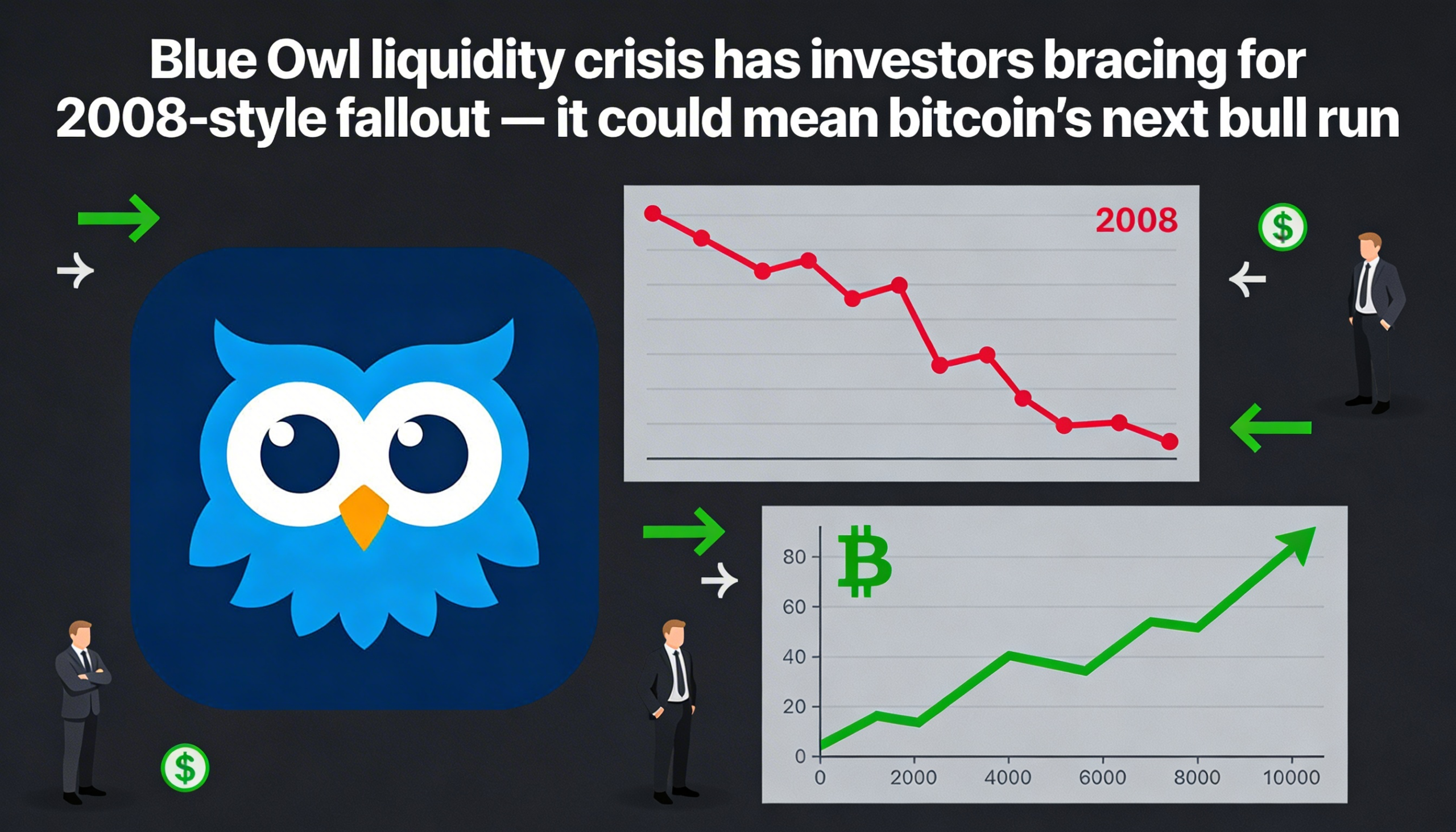
A wave of selling hit Blue Owl Capital (OWL) this week after the firm disclosed plans to liquidate $1.4 billion in loans to meet redemption requests from investors in one of its retail-focused private credit funds. The stock slid nearly 15% over the week and has fallen more than 50% over the past year.
The move has sparked concern across alternative asset markets. Shares of industry peers including Blackstone, Apollo Global Management and Ares Management also declined, reflecting unease about potential stress building in private credit.
Early tremors?
Some market veterans have drawn parallels to the early stages of the global financial crisis. In 2007, two Bear Stearns hedge funds collapsed under the weight of subprime mortgage exposure. Shortly afterward, BNP Paribas halted withdrawals in several funds, citing difficulties in valuing U.S. mortgage assets — a signal that deeper cracks were forming in credit markets.
Former Pimco CEO Mohamed El-Erian questioned whether Blue Owl’s liquidity action could be a “canary in the coal mine” moment. At the same time, he emphasized that current risks do not appear to approach the systemic magnitude of 2008. He also pointed to elevated valuations in artificial intelligence-related investments as another potential vulnerability.
Short-term pressure, long-term implications
For Bitcoin, a private credit shock would not necessarily mean immediate upside. Historically, tightening liquidity tends to weigh on risk assets in the near term.
Bitcoin was not trading during the 2008 crisis, but its behavior during the early COVID-19 panic offers a reference point. In March 2020, BTC dropped roughly 70% as global markets scrambled for cash.
The subsequent response from central banks changed the narrative. Massive monetary stimulus — particularly from the Federal Reserve — flooded markets with liquidity, helping bitcoin surge from below $4,000 to more than $65,000 within a year.
A crisis-born asset
The 2008 meltdown played a direct role in bitcoin’s creation. Developed by the pseudonymous Satoshi Nakamoto, bitcoin was conceived as a decentralized alternative to a financial system that required extraordinary government intervention.
Its Genesis Block, mined on Jan. 3, 2009, embedded the headline: “Chancellor on brink of second bailout for banks,” referencing U.K. rescue efforts during the crisis.
Nearly two decades later, bitcoin has transformed from an obscure experiment into a trillion-dollar asset class. Once positioned as an anti-establishment alternative, it is now increasingly intertwined with traditional finance through exchange-traded funds, institutional custody solutions and corporate treasury allocations.
Contained event or first domino?
Whether Blue Owl’s loan sales mark an isolated liquidity event or the beginning of broader private credit stress remains uncertain. If tensions escalate and prompt renewed central bank easing, bitcoin could ultimately benefit from another wave of liquidity — though not without potential volatility along the way.
For now, markets are watching closely to see whether this episode fades quietly or signals deeper instability beneath the surface of global credit markets.