cpeditor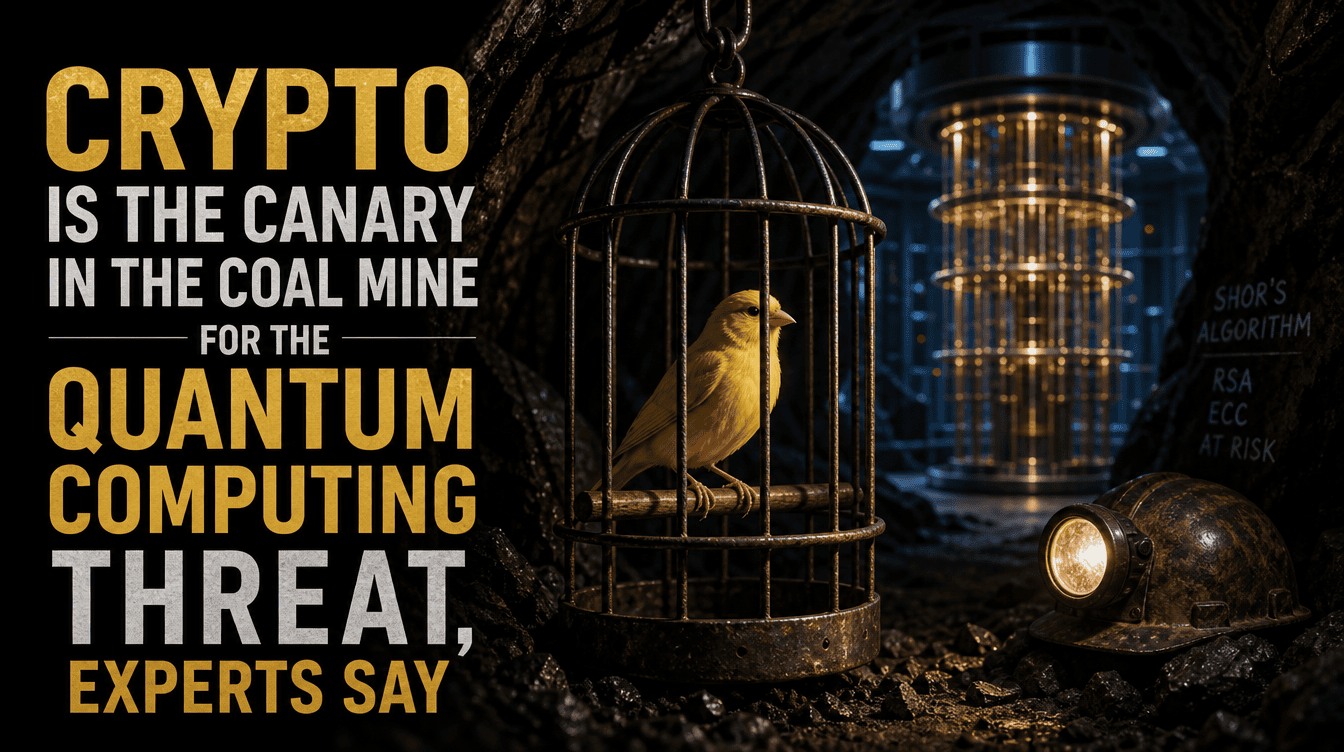
As forecasts for “Q-Day” move closer, experts warn that crypto’s biggest vulnerability may not be its encryption itself, but the challenge of coordinating rapid upgrades across decentralized networks.
Quantum computing poses a potential threat to all encrypted systems worldwide, including those used by major banks and financial institutions. However, cryptocurrencies could become the first major technology to face a practical quantum attack because of their decentralized structure.
Eddy Zervigon, CEO of Quantum Xchange, said crypto could serve as an early warning sign for the broader quantum security threat. His company builds infrastructure aimed at protecting networks, including financial systems, from quantum-enabled attacks. He believes cryptocurrencies are likely to be targeted first because their decentralized design makes them a unique testing ground.
Zervigon said that if a cryptocurrency network were successfully compromised, it would confirm that someone has developed a cryptographically relevant quantum computer capable of defeating current encryption methods.
A machine powerful enough to break the elliptic-curve cryptography securing Bitcoin transactions and the encryption protecting traditional financial networks does not exist today. However, industry estimates for when such technology could arrive are becoming increasingly optimistic.
According to Zervigon, major technology companies investing billions into quantum research, including Microsoft and IBM, generally expect a commercially viable quantum computer capable of breaking cryptographic systems could emerge around 2029.
Recent research has strengthened those projections. Google researchers estimated that cracking the elliptic-curve cryptography used by major cryptocurrencies such as bitcoin and ether could require fewer than 500,000 physical qubits, a substantial reduction from previous estimates. The findings have encouraged some experts to bring forward their expectations for Q-Day.
Governments are also preparing for the transition. The U.S. government has outlined plans to develop advanced quantum computing capabilities by 2028 and migrate valuable assets and federal data systems to post-quantum cryptography by 2030.
While quantum-resistant solutions are being developed, experts argue that crypto’s biggest challenge could be its governance structure. Traditional financial institutions can upgrade security systems through centralized decision-making, whereas decentralized blockchains require agreement from a wide network of participants.
Deutsche Digital Assets emphasized that governance speed is the key difference between traditional finance and blockchain networks. Banks can approve and deploy security changes internally, but public blockchains often require coordination among millions of participants before major upgrades can be implemented.
Bitcoin’s upgrade history highlights this difficulty. The 2017 SegWit upgrade faced significant resistance from parts of the community and contributed to disagreements that eventually resulted in blockchain splits, including the creation of Bitcoin Cash and Bitcoin Gold.
The central concern is whether decentralized networks can achieve sufficient consensus to adopt quantum-resistant protections before they become necessary. The technology may be available, but the ability to deploy it quickly could determine how well crypto withstands the threat.
Experts also warn that Q-Day should not be viewed as a single event where encryption suddenly becomes obsolete. Instead, quantum attacks could develop gradually, with attackers storing encrypted information today and attempting to decrypt it later as quantum capabilities improve.
Zervigon explained that attackers do not need immediate access to break encryption to cause harm. If they can decrypt valuable data within a few months while it remains useful, they may still achieve their objectives.
As a result, the quantum threat could emerge before computers are capable of instantly compromising blockchain networks, making early planning and timely upgrades critical.