cpeditor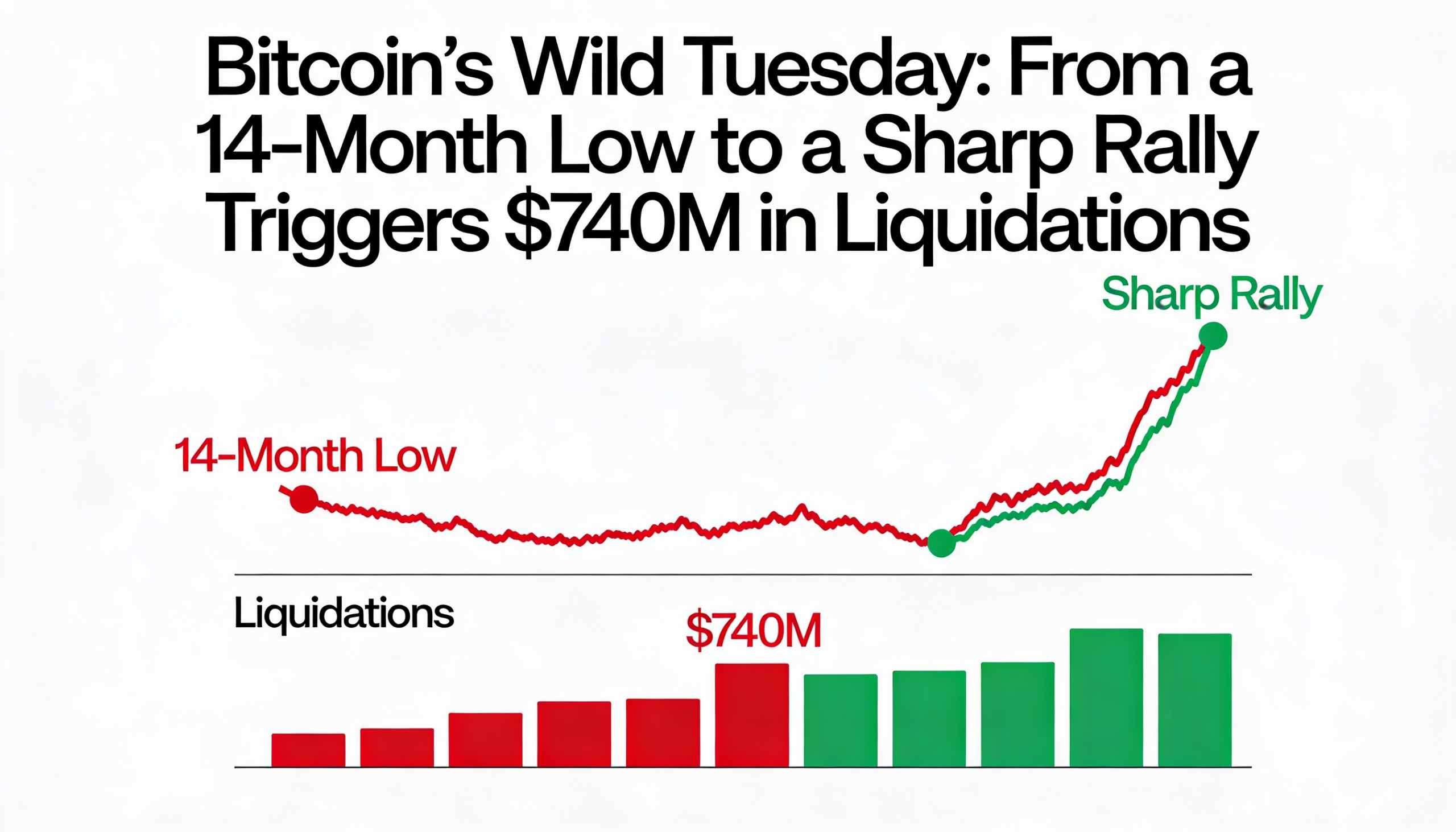
Bitcoin’s failure to quickly reclaim key levels could open the door to a difficult stretch ahead, one analyst warned, after the cryptocurrency endured a sharp bout of volatility on Tuesday.
The largest digital asset plunged to a 14-month low before rebounding sharply as turbulence in U.S. tech stocks spilled across risk markets. Bitcoin fell to $72,900 in early U.S. trading—its lowest level since November 2024, when Donald Trump won the presidential election—before bouncing roughly 5% to around $76,800. The rally later faded as selling pressure resurfaced.
Ether followed a similar trajectory, jumping as much as 10% from session lows to trade above $2,300 before surrendering part of those gains, according to CoinDesk data.
The rebound coincided with news that U.S. lawmakers had reached an agreement to end the partial government shutdown, providing temporary relief for risk assets. Sentiment was further supported by comments from Nvidia CEO Jensen Huang, who appeared on CNBC and dismissed reports of tensions between Nvidia and OpenAI.
“There’s no controversy at all. It’s complete nonsense,” Huang said, reaffirming Nvidia’s intention to participate in OpenAI’s next fundraising round. His remarks helped ease investor concerns surrounding OpenAI, a key pillar of the AI-driven tech rally.
Despite the bounce, the damage across crypto markets was substantial. Liquidations in digital asset derivatives totaled $740 million over the past 24 hours, according to CoinGlass. Long positions accounted for the majority of the losses, with $287 million in bitcoin longs and $267 million in ether longs wiped out.
Key technical levels broken
From a technical standpoint, bitcoin’s drop below the April 2025 “tariff tantrum” lows marked an important breakdown, increasing the risk of a deeper correction.
Still, Benjamin Cowen, founder of crypto analytics firm Into The Cryptoverse, said the extreme bearish sentiment could set the stage for a short-term countertrend rally. Historically, he noted, bitcoin has often rebounded after sweeping prior lows.
Cowen cautioned that a failure to bounce meaningfully could signal a prolonged downturn. “If bitcoin doesn’t bounce soon, it could be one hell of a midterm year,” he said, pointing to past bear markets in 2018 and 2022, both of which coincided with U.S. midterm election cycles.
“The bear narrative has been very strong for a while,” Cowen added in a post on X. “That usually creates the conditions for a relief rally—at least temporarily.”