cpeditor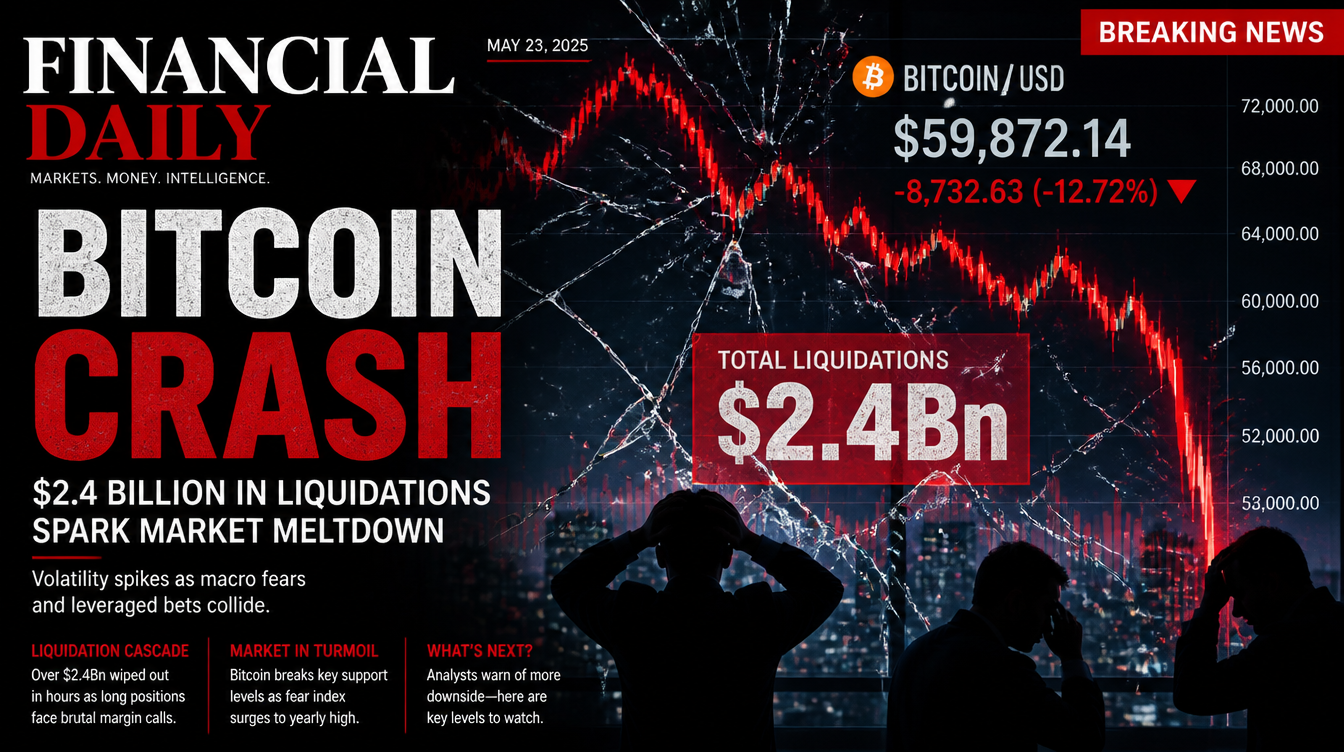
Here’s another refined rewrite with a sharper, more analytical tone:
Bitcoin Enters Deep Discount Zone as Long-Term Holders Realize $2.4B in Losses
Bitcoin has moved into a pronounced “fire-sale” phase after long-term holders (LTHs) absorbed approximately $2.4 billion in realized losses within a 48-hour window ending June 5, 2026. This shift followed a breakdown below the Short-Term Holder Realized Price (STH-RP), a key on-chain benchmark widely viewed as the final structural support during an active bull cycle.
The decline has unfolded alongside a broader risk-off trend across global markets, including over $2 billion in liquidated long positions in derivatives trading. At the same time, the Fear and Greed Index dropped to 12/100, signaling extreme market fear levels comparable to those seen during the COVID-19 crash and the collapse of FTX in late 2022.
The central issue is no longer the significance of the downturn, but whether current long-term holder behavior reflects a structural loss of confidence or a temporary capitulation phase that has historically preceded recovery.
On-Chain Signals Point to Heavy Distribution
On-chain metrics highlight sustained selling pressure, with the Long-Term Holder SOPR (LTH-SOPR) falling below 1.0—indicating that coins held for more than 155 days are being sold at a loss.
Such events are rare in bullish environments and have historically coincided with major market bottoms, including those in 2015, 2018, and 2022. Recent data shows that roughly 26% of Bitcoin sold originated from investors who entered above $90,000, signaling a shift from accumulation to distribution among long-term participants.
CryptoQuant categorizes this stage as an on-chain capitulation event. Indicators such as the STH-RP suggest Bitcoin is trading at substantial discounts, firmly within a “fire-sale” range. While this may attract value-driven buyers, similar conditions in past cycles have persisted for extended periods before a definitive bottom was established.
Bitcoin is currently down around 30–35% from its peak—historically sufficient to flush out late entrants without necessarily ending the broader uptrend. However, it remains unclear whether this represents a correction within a bull cycle or a potential cycle top.
Broader Metrics Show Stress Without Confirmation of a Bottom
Additional on-chain indicators reinforce the capitulation narrative but do not yet confirm a market floor. The MVRV Z-Score is currently near -1.5, aligning with the $62,000–$65,000 range—a zone that has previously acted as a strong accumulation level.
A significant portion of Bitcoin supply is now held at a loss, mirroring conditions seen during the late-2022 capitulation. However, this alone does not indicate that selling pressure has fully subsided.
Meanwhile, the Realized Cap HODL Wave shows increased turnover among coins aged 1–3 months, while longer-term holdings remain relatively stable—suggesting the market has not yet reached deeper bear market conditions.
A confirmed bottom would likely require a reduction in long-term holder outflows, sustained recovery above the STH-RP, and stabilization in loss-held supply—none of which are clearly visible at this stage.
Outlook: Three Potential Scenarios
Bullish Case:
Bitcoin reclaims the STH-RP within the next 5–10 sessions, supported by renewed ETF inflows and easing sell pressure. Holding the $62,000–$65,000 range would indicate accumulation, with upside potential toward $85,000–$92,000 over the coming months.
Base Case:
Price consolidates between $60,000 and $68,000 over the next several weeks as long-term holders complete their distribution phase. Key signals would include declining realized losses and stable inflows without sharp price volatility.
Bearish Case:
A sustained break below $60,000 could trigger a second wave of capitulation, pushing Bitcoin toward the $52,000–$55,000 range—representing a drawdown of up to 50%. Indicators would include continued ETF outflows, deteriorating sentiment, and further declines in LTH-SOPR.
The most critical metric to watch is whether realized losses from long-term holders begin to contract. A slowdown would suggest diminishing selling pressure, while continued losses would indicate that capitulation is still ongoing.