cpeditor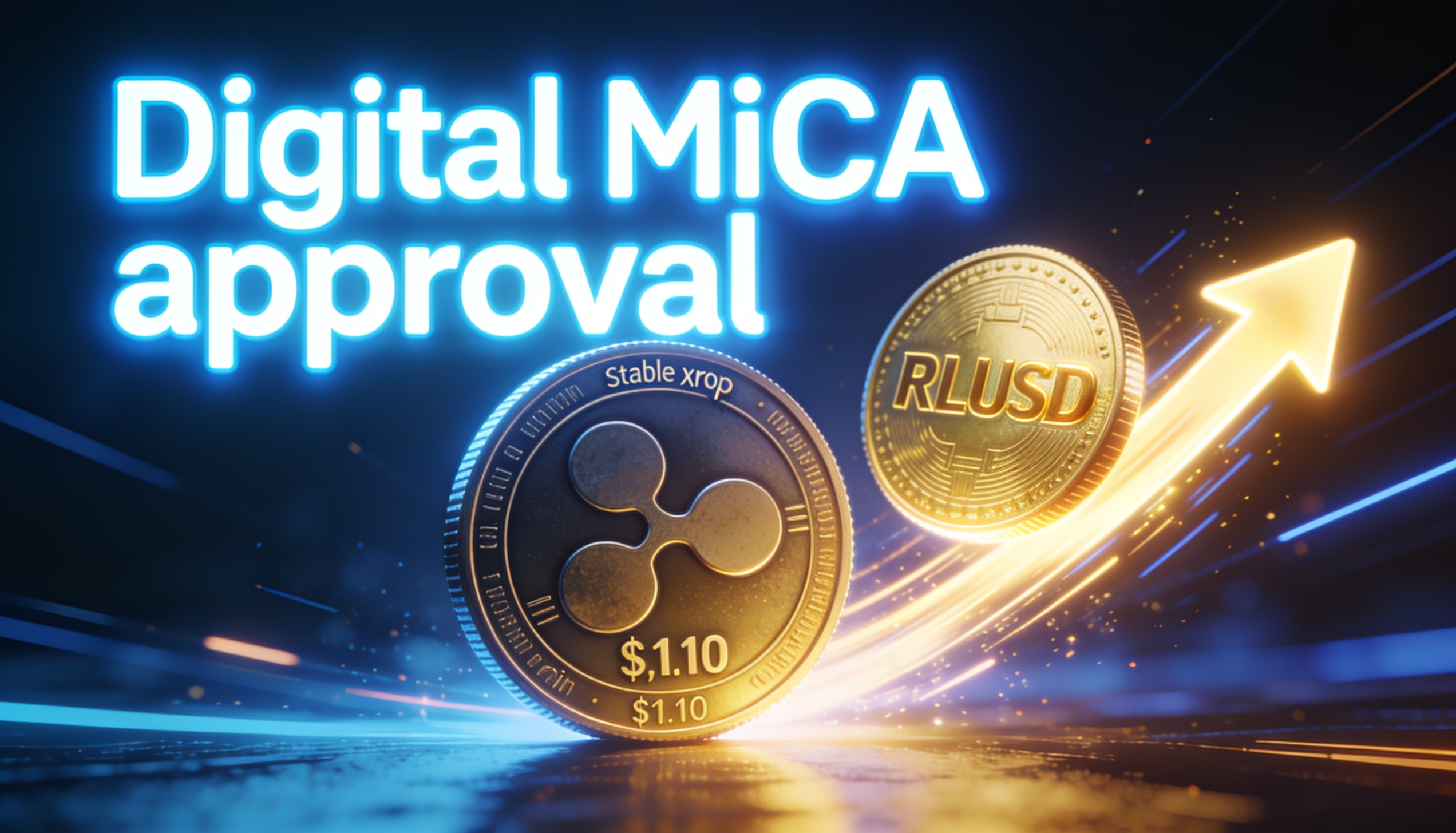
Ripple has received preliminary Crypto Asset Service Provider (CASP) approval from Luxembourg’s CSSF under the EU’s MiCA framework, but the development has done little to support XRP. The token fell 3% following the announcement and is currently trading near $1.10, down roughly 5% over the past 24 hours in a weak broader market.
While the regulatory milestone is notable, it has not translated into momentum for XRP. Ripple’s communication focused heavily on its RLUSD stablecoin and Ripple Payments infrastructure, with XRP positioned as a secondary, underlying element rather than a primary driver.
The CASP approval allows Ripple to operate regulated crypto services across the 30 countries of the European Economic Area. However, it does not directly create new demand for XRP.
The authorization comes in the form of a conditional “Green Light Letter,” meaning final approval is still subject to additional requirements. Once completed, the CASP license, combined with Ripple’s existing Electronic Money Institution (EMI) license in Luxembourg, would bring the company into full MiCA compliance.
In practical terms, the approval strengthens Ripple’s payments infrastructure, particularly around RLUSD distribution. The company is pitching a unified platform that enables banks, fintechs, and corporates to handle collections, foreign exchange, and payouts across Europe through a single integration.
However, an important regulatory question remains unresolved. A CASP license governs crypto services, but issuing a stablecoin requires separate authorization under MiCA’s e-money rules. Ripple has emphasized RLUSD’s role in payments without clarifying its status within these rules, especially given restrictions on non-euro stablecoins used in the region.
By comparison, Tether’s USDT has faced limitations in Europe, while Circle brought USDC and EURC into compliance through its EMI framework. RLUSD’s position within this regulatory landscape remains unclear, which could influence institutional adoption.
Ripple is also reaching this stage later than many competitors. MiCA became fully applicable in December 2024, with firms such as Circle, B2C2, OKX, Coinbase, and Kraken securing approvals throughout 2025.
The company’s main differentiator lies in its combined EMI and CASP structure, offering a fully regulated, end-to-end payments rail. Supported by more than $100 billion in transaction volume across 60+ markets and over 75 licenses globally, this presents a strong enterprise proposition—but one that does not inherently drive XRP demand.
This dynamic has drawn criticism from the XRP community, particularly as Ripple continues to prioritize RLUSD development while XRP underperforms. Meanwhile, RLUSD faces additional regulatory steps beyond Europe, including requirements in California.
Ultimately, Ripple’s latest announcement reinforces a broader trend: the firm is building a compliant global payments network centered on RLUSD, with XRP functioning as background infrastructure. As a result, the MiCA approval has had limited immediate impact on XRP’s price action.