cpeditor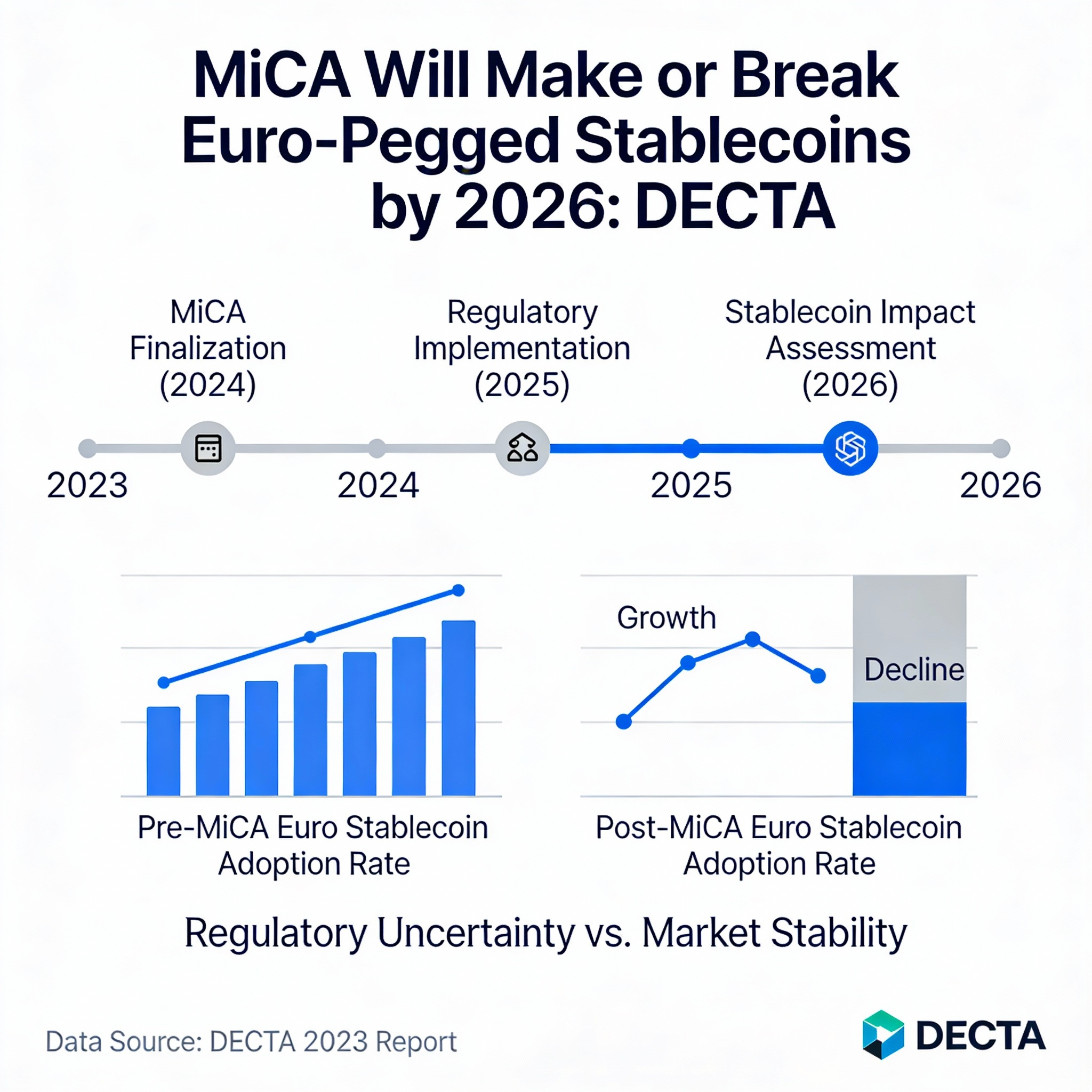
German payments processor DECTA said euro-pegged stablecoins are likely to see broader adoption in payments and tokenized finance as the EU’s Markets in Crypto-Assets regulation (MiCA) is fully implemented.
In a report published earlier this month, DECTA said the euro-denominated stablecoin market will continue to develop through 2026 as MiCA establishes a unified regulatory framework across the bloc, covering reserve requirements, issuer supervision and operational standards.
That regulatory clarity should lower barriers to integrating compliant euro stablecoins into payment rails, trading platforms and tokenized financial systems, the firm said.
DECTA noted that growth over the next two years will hinge on how quickly MiCA-approved issuers expand distribution and secure banking partnerships, the extent to which financial institutions embrace stablecoin-based settlement for tokenized assets and programmable payments, and the level of consumer demand for euro-denominated digital assets on exchanges and payment apps.
The company expects EU platforms to gradually phase out non-compliant or synthetic euro tokens in favor of fully regulated alternatives as MiCA takes hold.
However, adoption is likely to be uneven across member states, reflecting differences in consumer awareness, national digital-asset policies and market maturity.
By 2026, euro-pegged stablecoins should have a more clearly defined and regulated role within Europe’s digital-asset ecosystem, under a framework aimed at ensuring stability, transparency and consistent oversight, DECTA said.