cpeditor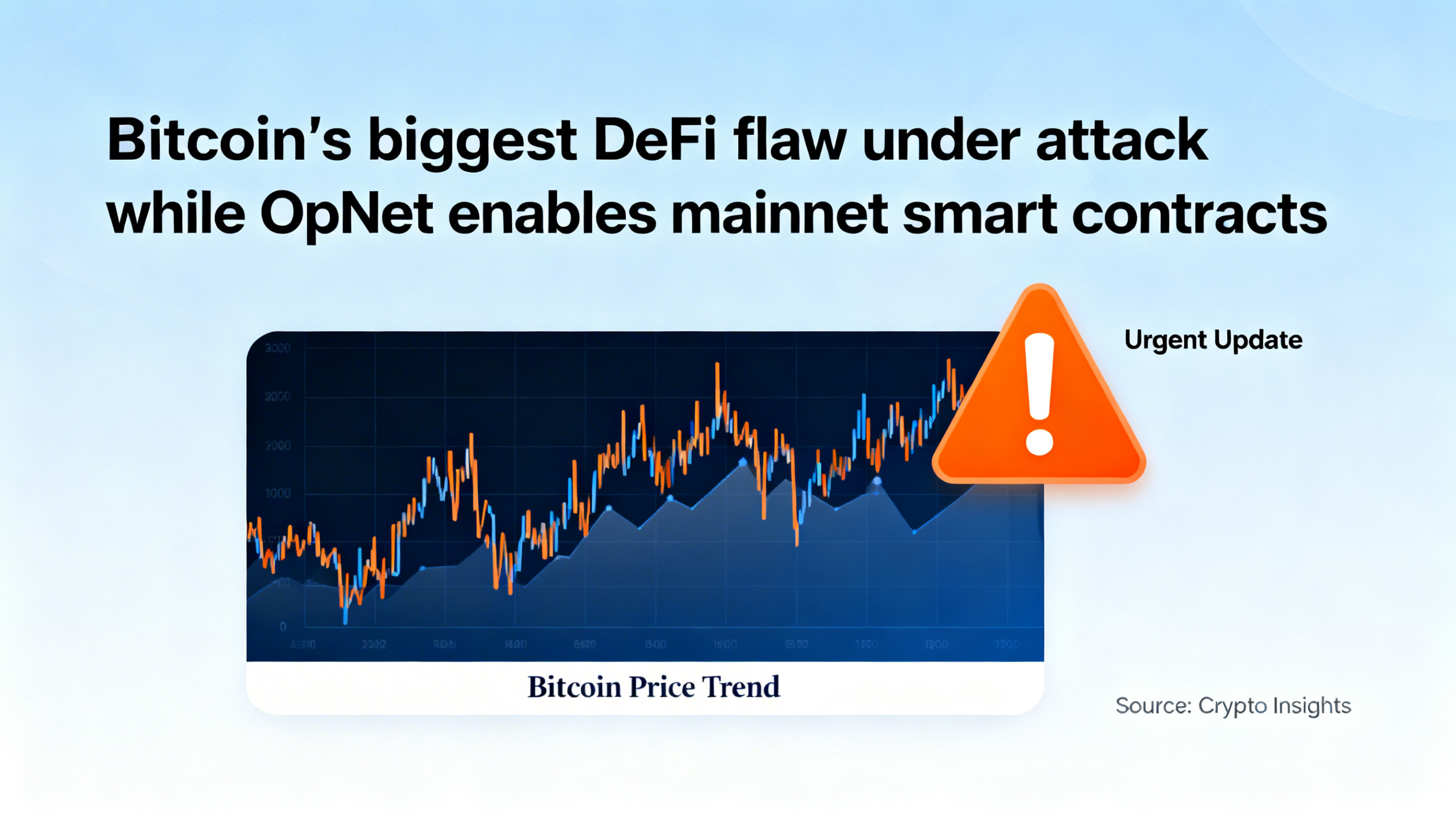
Bitcoin’s push into decentralized finance is gaining traction as OpNet launches on mainnet, bringing native smart contract functionality to the network and enabling yield-generating use cases without leaving its base layer.
The protocol went live Thursday, allowing users to participate in DeFi activities—including trading, lending and staking—through standard Bitcoin transactions, with BTC as the sole fee token.
Historically, Bitcoin has remained on the sidelines of DeFi, a sector largely built on smart contract platforms like Ethereum. To access these services, BTC holders have relied on wrapped assets, cross-chain bridges or custodial platforms, all of which introduce additional risk and compromise self-custody.
OpNet seeks to remove those friction points by enabling DeFi applications to operate directly on Bitcoin. Users can connect wallets and interact with applications while maintaining full control over their assets, without relying on intermediaries.
The protocol embeds smart contract data within Bitcoin transactions, which are validated by miners, ensuring that execution and state remain anchored to the network’s base layer.
At launch, OpNet includes a native DeFi stack on layer 1, supporting permissionless smart contract deployment focused on trading, yield generation and token issuance. Developers can issue assets using the OP-20 standard and build applications that settle natively on Bitcoin.
One of the first applications is MotoSwap, a decentralized exchange that allows users to swap BTC and OP-20 tokens directly on-chain. It incorporates a two-phase execution model designed to accommodate Bitcoin’s slower block times, alongside staking tools for yield generation.
Rather than treating Bitcoin’s slower throughput as a drawback, OpNet positions it as a structural advantage. The team argues that longer block times and congestion-driven fees create “stickier” liquidity, reducing rapid capital flight and encouraging more stable participation.
This “SlowFi” approach is intended to support a more durable DeFi ecosystem compared to faster networks, where liquidity can quickly rotate in and out of protocols.
Looking ahead, the team plans to roll out stablecoin support via the OP-20S standard in early Q2 2026, a move that could further broaden the use cases for Bitcoin-native DeFi.