cpeditor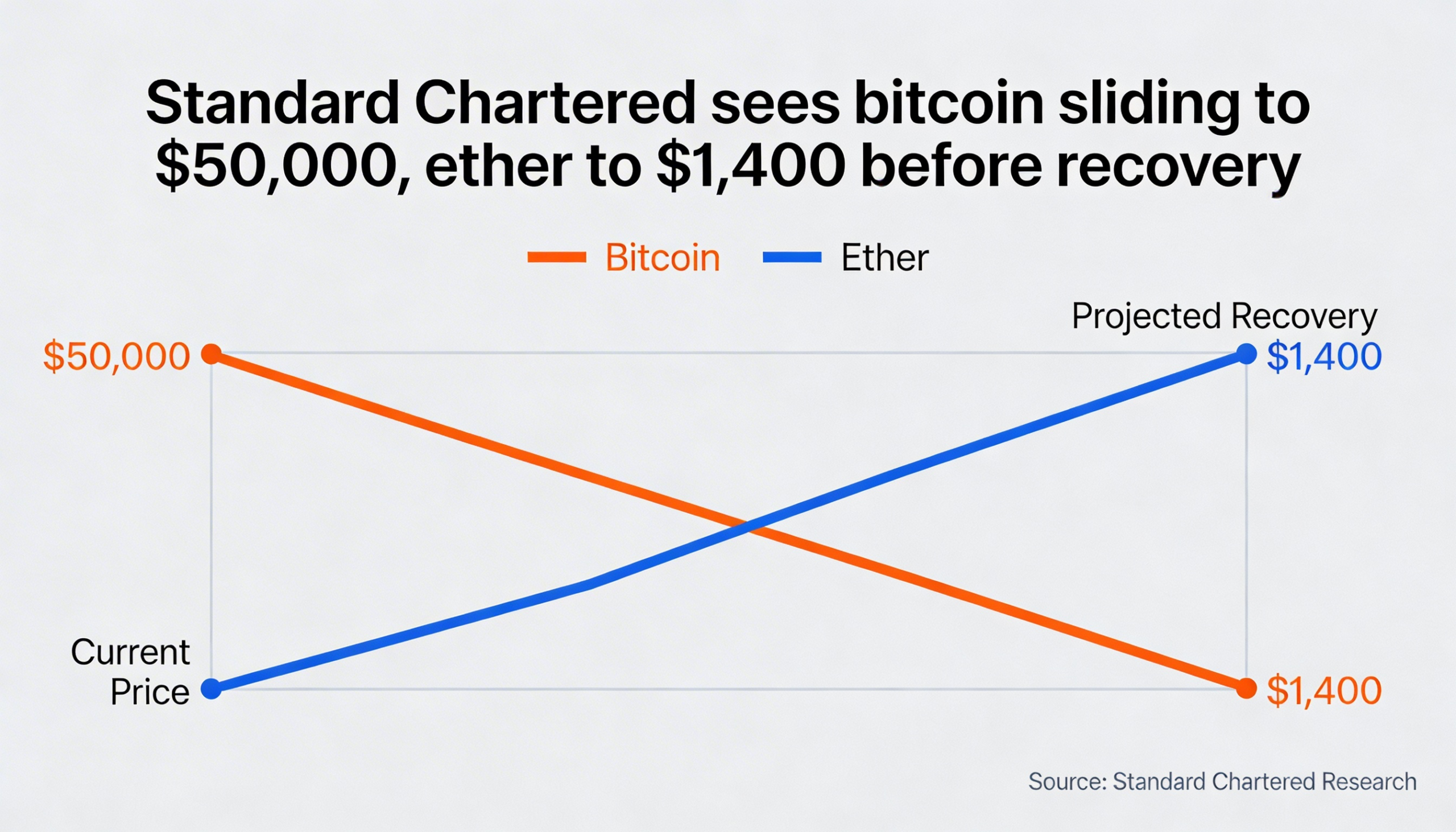
Standard Chartered has lowered its cryptocurrency price outlook for both the near term and full year 2026, cautioning that ETF outflows and persistent macroeconomic pressures could trigger further downside before a recovery materializes.
The bank now sees bitcoin sliding toward $50,000 in the months ahead, while ether could fall to roughly $1,400 before establishing a base. At the time of publication, bitcoin was trading around $67,900 and ether near $1,980.
Geoff Kendrick, the bank’s head of digital assets research, said the recent selloff may extend as investors in crypto exchange-traded funds — many currently holding unrealized losses — are more likely to trim positions than accumulate on weakness.
Although Kendrick expects prices to rebound once a bottom is formed, he revised his year-end 2026 forecasts lower across major tokens. The bank now projects bitcoin at $100,000 by the end of 2026, down from its previous $150,000 target. Ether’s forecast was cut to $4,000 from $7,500. Targets were also reduced for solana to $135 from $250, BNB to $1,050 from $1,755, and AVAX to $18 from $100.
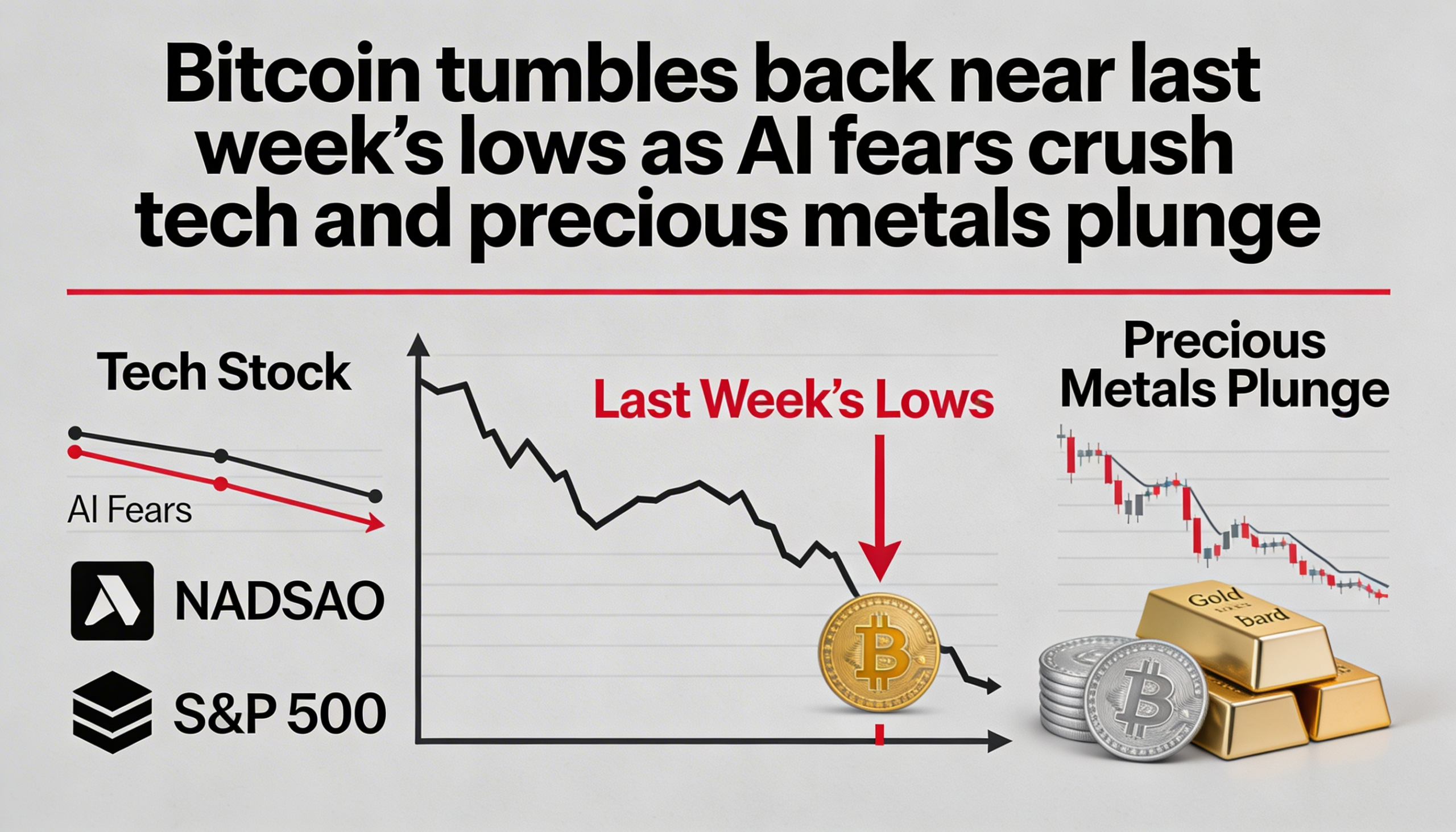
The broader digital asset market has struggled in early 2026, with bitcoin down nearly 23% year-to-date and significantly below its late-2025 highs. Total market capitalization has contracted sharply amid heightened volatility and widespread liquidations of leveraged positions.
Risk sentiment has deteriorated as crypto assets have moved more closely in line with weakening equity markets. Concerns about global growth and uncertainty around interest-rate policy have pushed investors toward traditional safe havens such as gold. At the same time, limited regulatory clarity in the U.S. and liquidity challenges at certain firms have further weighed on confidence, dampening trading activity and revenues across the sector.
Kendrick noted that bitcoin ETF holdings have dropped by nearly 100,000 BTC since their October 2025 peak. With the average ETF entry price estimated at about $90,000, many holders are facing unrealized losses of roughly 25%, increasing the risk of continued outflows.
Macroeconomic conditions offer little immediate relief. While some U.S. economic indicators suggest softening growth, markets do not anticipate interest-rate cuts before Kevin Warsh’s first Federal Open Market Committee meeting as Federal Reserve chair in mid-June, limiting short-term support for risk assets.
Despite the downturn, Standard Chartered emphasized that this drawdown is less severe than prior crypto bear markets. At its February low, bitcoin had declined roughly 50% from its October 2025 all-time high, with about half of circulating supply still in profit — a sharp correction, but milder than previous cycle collapses.
Importantly, the current cycle has not been marked by the failure of major crypto platforms, unlike the collapses of Terra/Luna and FTX in 2022. Kendrick said that absence of systemic breakdowns points to a more mature and resilient asset class.
The bank maintained its longer-term projections, keeping its end-2030 targets unchanged at $500,000 for bitcoin and $40,000 for ether, citing sustained adoption trends and structural growth drivers.