cpeditor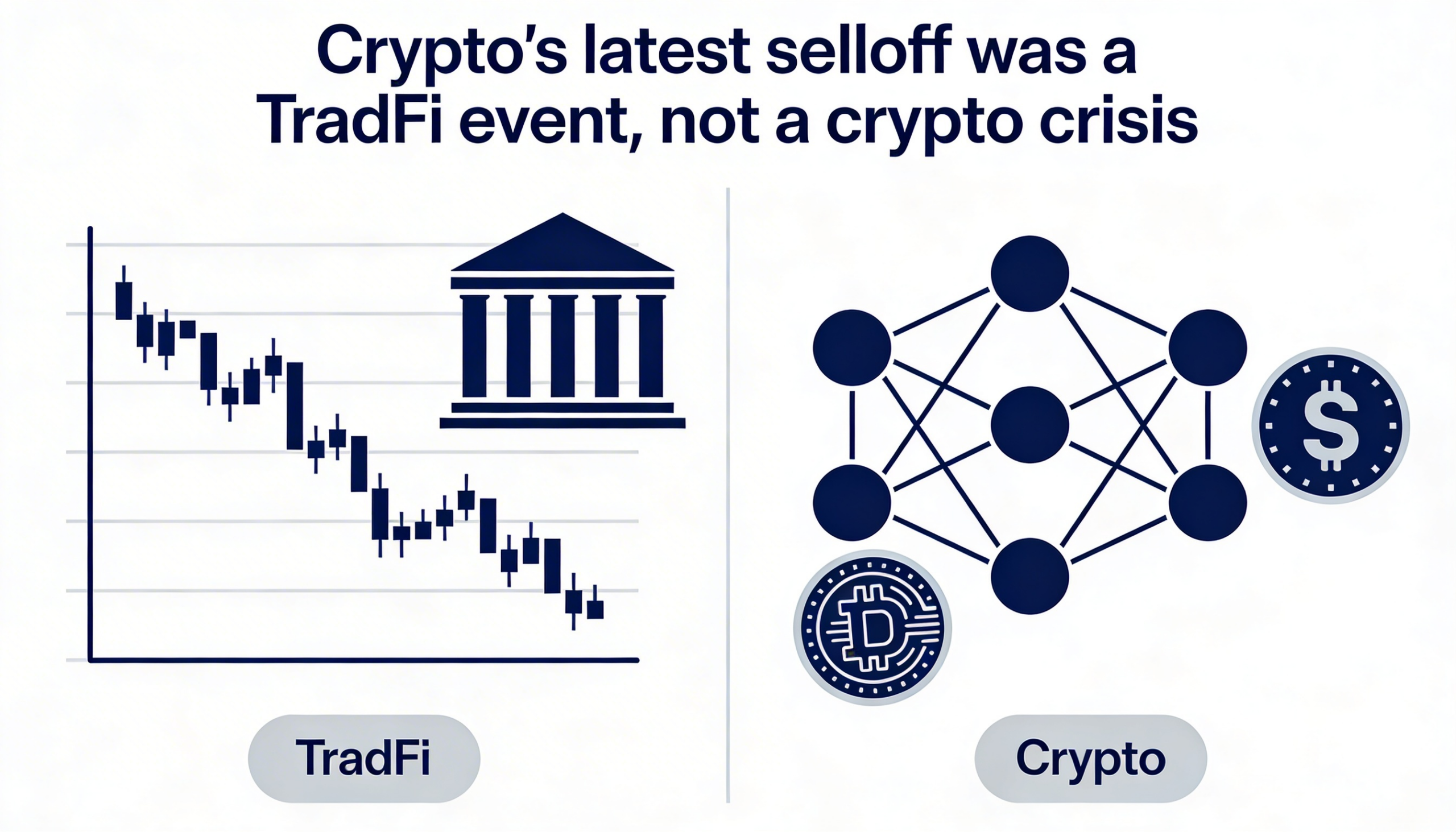
Last week’s slide in crypto prices stemmed from a broader macro unwind linked to traditional finance, rather than any new fault lines within the digital asset sector, speakers said at Consensus Hong Kong 2026.
HONG KONG — The latest downturn in bitcoin and other cryptocurrencies was driven by global funding pressures and the unwinding of leveraged trades, not a replay of the industry-specific crises that defined 2022, according to market participants speaking at Consensus Hong Kong.
By mid-October, many investors had already dialed down risk exposure, said Fabio Frontini, founder of Abraxas Capital Management. What followed, he argued, was a knock-on effect from traditional markets.
“This was a TradFi-driven move,” Frontini said. “Crypto is now deeply connected to broader financial conditions.”
Panelists highlighted the reversal of yen carry trades as a major catalyst. The strategy involves borrowing Japanese yen at relatively low interest rates and converting the proceeds into other currencies to invest in higher-yielding assets — from equities and metals to bitcoin and ether.
The trade works when borrowing costs remain cheap and the yen stays weak. But when Japanese rates rise or the currency strengthens, investors are forced to buy back yen to repay loans. That process pushes funding costs higher and can trigger rapid position unwinds across markets.
Thomas Restout, group CEO of B2C2, said the recent shift in rate expectations and volatility intensified pressure on leveraged players. Rising volatility led to higher margin requirements, increasing the capital needed to maintain positions. In metals markets, for example, margin requirements climbed from roughly 11% to 16%, he noted, prompting some traders to cut exposure.
The resulting deleveraging weighed on risk assets broadly, with crypto declining alongside other markets rather than leading the sell-off.
Bitcoin exchange-traded funds experienced elevated trading volumes during the pullback, but panelists rejected the idea of mass institutional exits. Assets under management in spot bitcoin ETFs peaked at around $150 billion and currently sit near $100 billion, with approximately $12 billion in net outflows since October.
“That’s meaningful, but it’s not a collapse,” Restout said, suggesting the flows reflect repositioning and ownership changes rather than wholesale retreat.
Looking forward, speakers said the integration between traditional finance and crypto infrastructure is likely to deepen. Emma Lovett, credit lead for Market DLT at J.P. Morgan, described 2025 as a regulatory inflection point, particularly in the U.S., where a more supportive environment has accelerated experimentation with public blockchains.
“What we started to see in 2025 was the use of public chains and stablecoins to settle traditional securities,” Lovett said, pointing to growing convergence between conventional financial systems and blockchain-based settlement rails as a defining theme heading into 2026.