cpeditor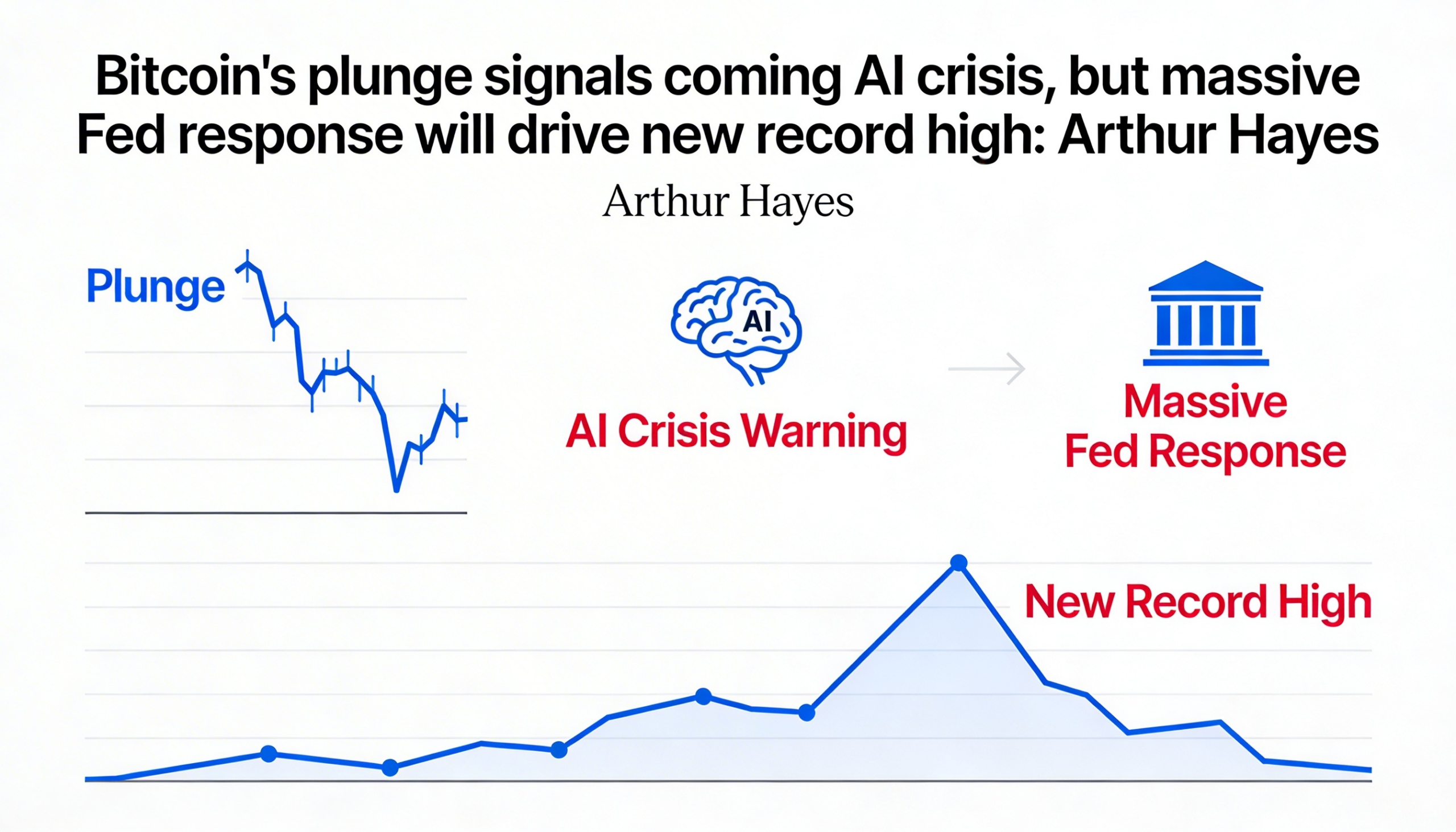
The rapid spread of artificial intelligence could soon trigger widespread job losses, setting off a chain reaction of credit defaults and financial stress, according to Arthur Hayes.
The BitMEX co-founder argues that bitcoin’s roughly 52% retreat from its October record high is signaling more than routine volatility. BTC has fallen from $126,000 to near $67,000, even as the Nasdaq has remained comparatively stable. Hayes views that divergence as evidence that crypto markets are already pricing in a severe credit contraction that equity investors have yet to fully recognize.
In his latest essay, “This Is Fine,” Hayes describes bitcoin as the “global fiat liquidity fire alarm,” asserting that it reacts more quickly than traditional assets to shifts in credit supply. From his perspective, the cryptocurrency’s sharp drawdown reflects mounting risks of debt destruction across the financial system.
Hayes outlines a scenario in which AI displaces 20% of the United States’ 72.1 million knowledge workers. Such a disruption, he estimates, could generate approximately $557 billion in consumer loan and mortgage defaults — roughly half the scale of the 2008 financial crisis. Regional banks, he warns, would be particularly exposed, potentially forcing policymakers into aggressive intervention.
While deflationary shocks tend to weigh on risk assets initially, Hayes believes they ultimately create the conditions for a powerful rebound. Markets first absorb the pain of credit tightening, he argues, before central banks step in with large-scale liquidity injections that reignite speculation.
He also pointed to gold’s recent strength relative to bitcoin as an indicator of rising risk aversion. A firming gold price coupled with a weakening BTC, he suggests, signals that investors are bracing for a deflationary credit event within the U.S.-led financial system.
Once the Federal Reserve moves to stabilize markets — similar to its emergency measures during the regional banking turmoil in March 2023 — Hayes expects bitcoin to rebound sharply from its lows. Sustained monetary expansion, in his view, would ultimately drive the cryptocurrency to fresh all-time highs.
However, he cautioned that further downside remains possible before any policy pivot. Political gridlock or delayed action could see bitcoin fall below $60,000. For now, Hayes advises investors to remain liquid, avoid excessive leverage and wait for clear signs of renewed monetary easing before aggressively rotating back into risk assets.