cpeditor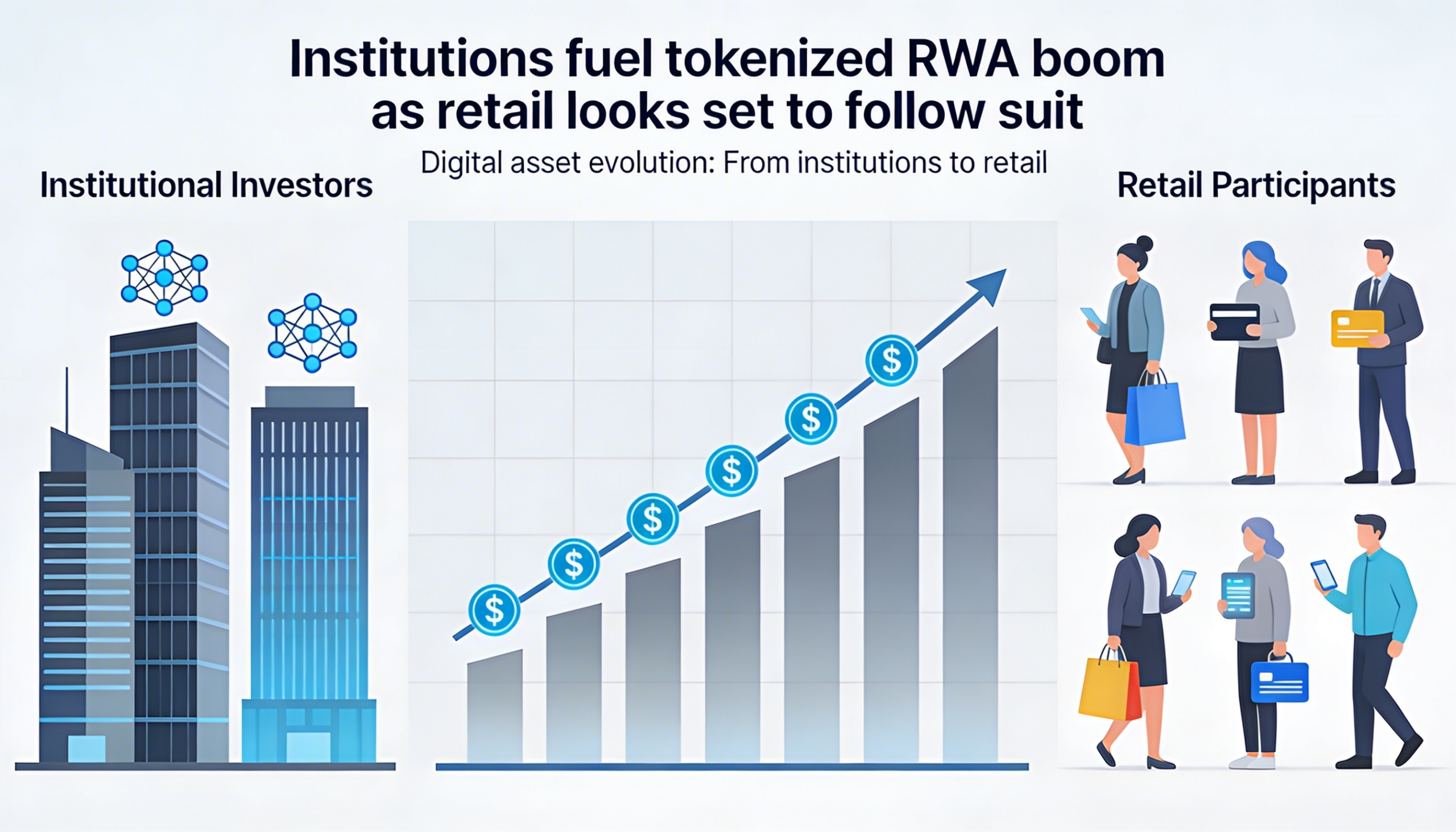
Institutional Players Cement Lead in Tokenized RWA Market as Retail Waits in the Wings
The evolution of tokenized real-world assets (RWAs) took center stage at Consensus Hong Kong 2026, where executives from traditional finance and crypto agreed that blockchain infrastructure is steadily reshaping capital markets. The discussion featured Evan Auyang of Animoca Brands, Christian Rau of Mastercard, Nicola White of Robinhood, and moderator Marcin Kazmierczak of RedStone.
Panelists echoed a recent statement from BlackRock COO Rob Goldstein, who described digital ledgers as the most consequential financial breakthrough since the invention of double-entry bookkeeping centuries ago — a comparison that reflects growing institutional conviction around tokenization.
For now, the momentum is firmly institutional. Capital is flowing primarily into tokenized money market funds, U.S. Treasuries, stablecoin-linked instruments, and collateral optimization products. High-profile initiatives such as BlackRock’s BUIDL fund, alongside tokenization efforts from Robinhood and Bitstamp, demonstrate that major financial firms are actively embedding blockchain-based assets into their offerings.
Retail adoption, however, remains limited. Few audience members indicated direct exposure to tokenized RWAs, underscoring that mainstream participation is still developing. Speakers pointed to Europe’s clearer regulatory framework as a catalyst for tokenized public equities, while identifying private credit, real estate, private equity, and alternative assets as areas with substantial untapped potential.
With companies remaining private longer and investors seeking fractional ownership and round-the-clock market access, tokenization is increasingly viewed as a gateway to unlocking liquidity in traditionally inaccessible markets.
The overarching takeaway: tokenized RWAs have transitioned from speculative narrative to practical institutional application. The next growth phase will depend on onboarding retail investors — a move that could open access to trillions of dollars in illiquid assets once regulatory and infrastructure barriers are addressed.