cpeditor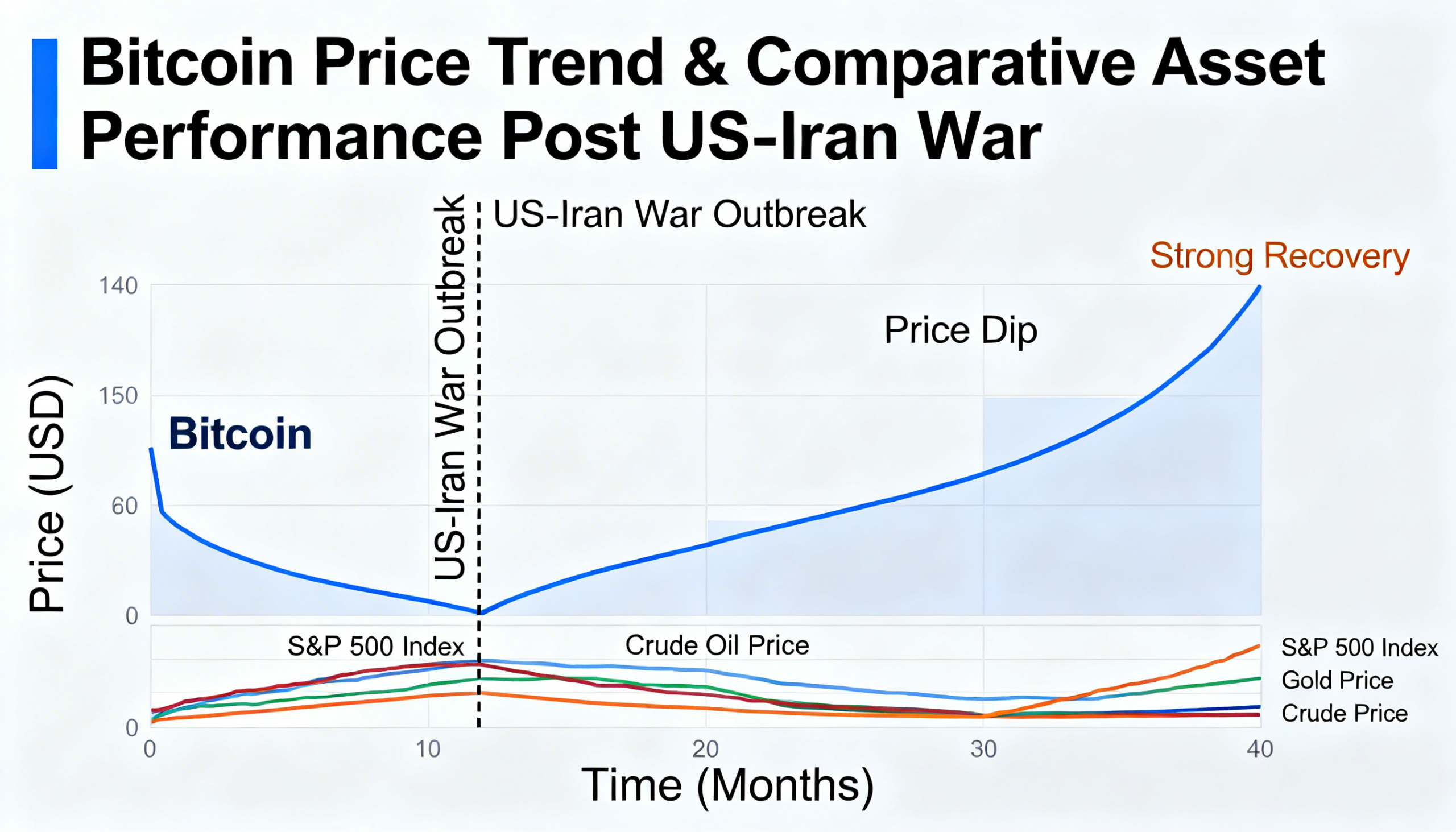
Each new escalation in the Iran conflict has been larger than the last, yet the price drops in Bitcoin have gradually become smaller.
Bitcoin was the first major asset to react when the conflict began, largely because it was the only liquid market open when the U.S. and Israel carried out their initial strikes on a Saturday several weeks ago. The cryptocurrency slid about 8.5% that day as traders rushed to price in the sudden geopolitical shock.
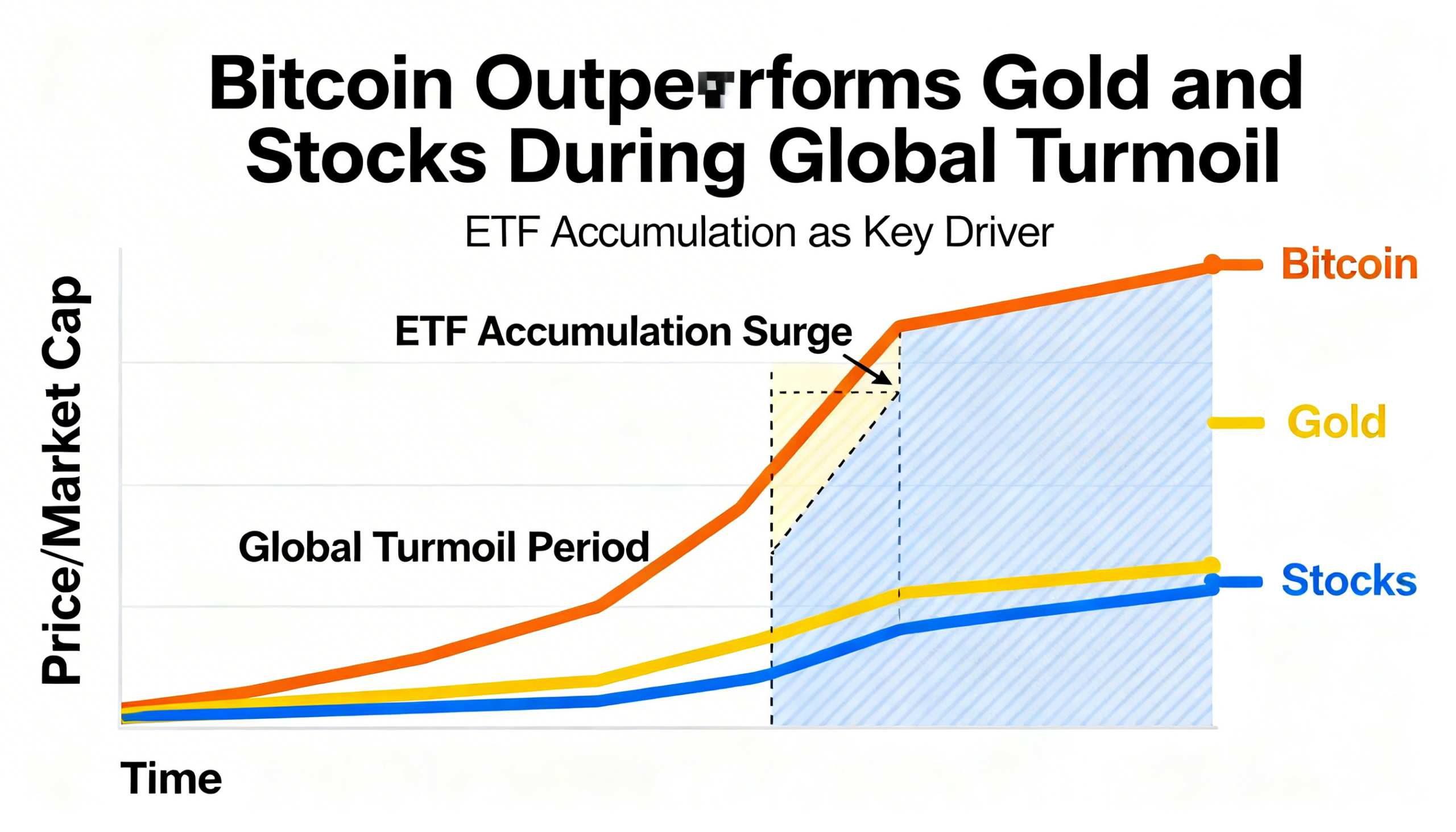
Two weeks later, however, bitcoin has rebounded and is outperforming most traditional assets. It has posted stronger returns than Gold, the S&P 500, Asian equities and South Korea’s stock market. Only crude oil and the U.S. dollar have delivered larger gains — both assets that tend to benefit directly from geopolitical tensions.
The shift has revived discussion about bitcoin’s potential safe-haven characteristics, an idea that had faded during the quieter price action late last year. At the same time, bitcoin appears to be acting as a rapid shock absorber for global markets, reacting instantly to geopolitical events and stabilizing quickly afterward.
The trend becomes clearer when looking at the price levels where buyers stepped in after each sell-off.
On Feb. 28, the day the initial strikes occurred, bitcoin bottomed near $64,000. On March 2, after Iran launched retaliatory missile attacks against Gulf states, the market found support around $66,000. By March 7, after a week of ongoing conflict, the low had climbed to roughly $68,000. Following tanker attacks on March 12, bitcoin held near $69,400. And after the strike on Kharg Island on Saturday, the latest low came in around $70,596.
In simple terms, each sell-off has been met by buyers at progressively higher price levels.
That sequence of higher lows has been rising by roughly $1,000 to $2,000 after each event. Meanwhile, the $73,000–$74,000 range continues to act as strong resistance, rejecting bitcoin four separate times over the past two weeks.
The tightening price range suggests a decisive move may be approaching. Either the rising support eventually pushes bitcoin above $74,000, or a larger escalation disrupts the pattern and leads to a deeper correction.
Relative performance
Bitcoin’s resilience becomes more notable when compared with other markets during the same period.
Oil prices have surged more than 40% since the conflict began, reflecting fears of supply disruptions. Meanwhile, the S&P 500 has declined, gold has moved sharply in both directions, and Asian equities have experienced their worst week since the early stages of the pandemic in 2020.
This does not necessarily mean bitcoin has become a traditional safe-haven asset. The cryptocurrency still tends to sell off when major headlines break. The difference is that it has been recovering more quickly — and each rebound has been holding at a higher level.
The contrast with earlier this year is particularly striking.
In early February, a sudden liquidation cascade erased roughly $2.5 billion in leveraged crypto positions over a single weekend. Bitcoin plunged to around $77,000 during that episode, wiping out roughly $800 billion in market value compared with its October peak.
At the time, the event appeared severe enough to undermine market confidence for months. Instead, it seems to have cleared out excessive leverage and reset market positioning. Since then, bitcoin has absorbed repeated war-related headlines without triggering another wave of forced selling.
The broader macro backdrop also continues to influence market sentiment. Donald Trump said late Friday that oil infrastructure on Kharg Island had been spared “for reasons of decency,” but warned the decision could change if Iran continued interfering with shipping through the Strait of Hormuz.
Iran responded by warning that any attack on its energy infrastructure would trigger retaliatory strikes against facilities linked to the United States.
Such an escalation could worsen the supply disruption that the International Energy Agency has already described as the largest in history.
Even so, bitcoin’s behavior during the conflict highlights its evolving role in global markets. It is neither purely a safe-haven asset nor simply another risk trade.
Instead, bitcoin increasingly functions as a 24-hour global liquidity pool — one that absorbs geopolitical shocks faster than traditional financial assets because it continues trading even when most markets are closed.