cpeditor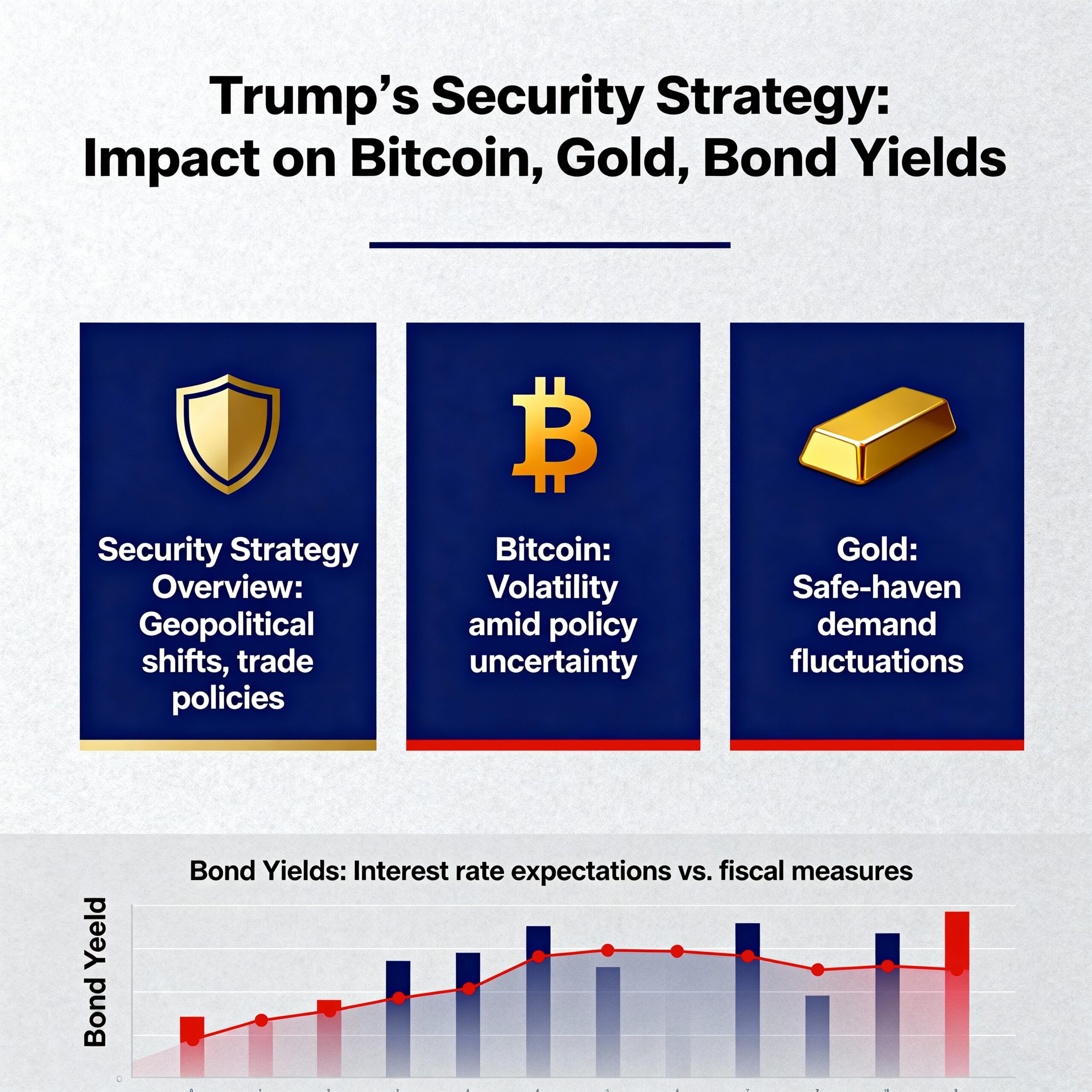
Trump’s National Security Strategy: Implications for Bitcoin, Gold, and Bond Markets
The White House’s newly released National Security Strategy reads less like a traditional diplomatic framework and more like a blueprint for global fiscal expansion—a reality that may jolt crypto markets, long accustomed to rapid interest rate cuts both in the U.S. and abroad.
Signed by President Donald Trump, the strategy emphasizes an “America First” agenda backed by substantial economic and military reorientation at home and overseas. Key directives call for NATO allies to increase defense spending to 5% of GDP, up from the long-standing 2% guideline, while Japan and South Korea are also expected to significantly raise their defense budgets.
The strategy states: “Given President Trump’s insistence on increased burden-sharing from Japan and South Korea, we must urge these countries to increase defense spending… necessary to deter adversaries and protect the First Island Chain.” It further commits to strengthening U.S. military presence in the Western Pacific, with clear expectations for Taiwan and Australia to bolster spending.
Financing such monumental outlays will likely require higher government borrowing, boosting bond yields, capital costs, and inflation, and potentially limiting central banks’ ability to cut rates effectively. Increased debt among already heavily indebted nations could also heighten fiscal crisis risks.
The strategy also signals an end to the “era of mass migration,” suggesting slower inflows of cheap labor, which could further contribute to sticky wages and inflationary pressures.
For markets, this backdrop favors traditional inflation hedges and safe-haven assets, like gold, which has surged 60% this year, while Bitcoin—a so-called “digital gold”—has struggled, down nearly 5% year-to-date.
The Federal Reserve is expected to lower rates by 25 basis points next week to 3.5%, but with the administration pushing for global fiscal expansion, the odds of more aggressive rate cuts appear limited.