cpeditor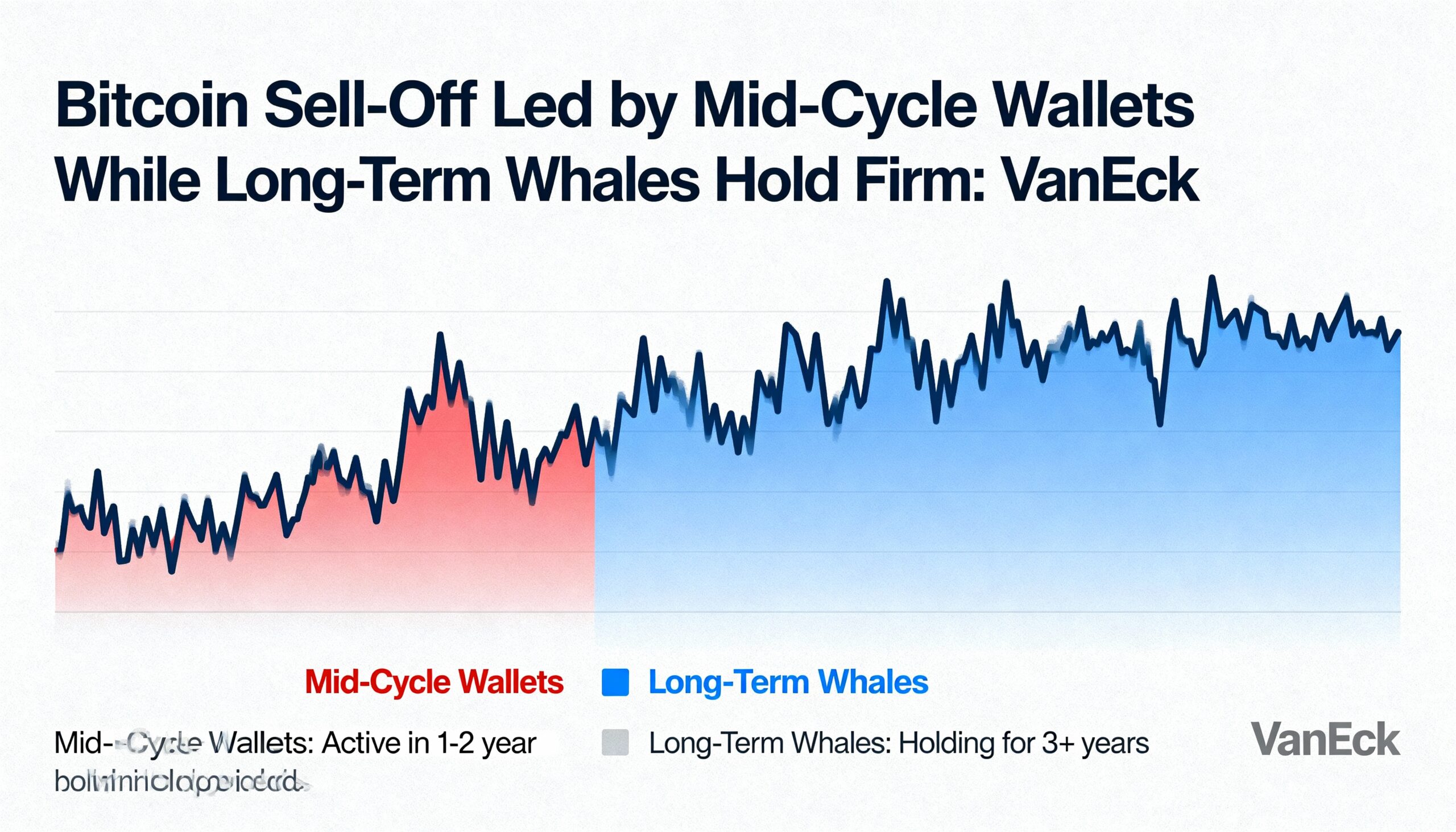
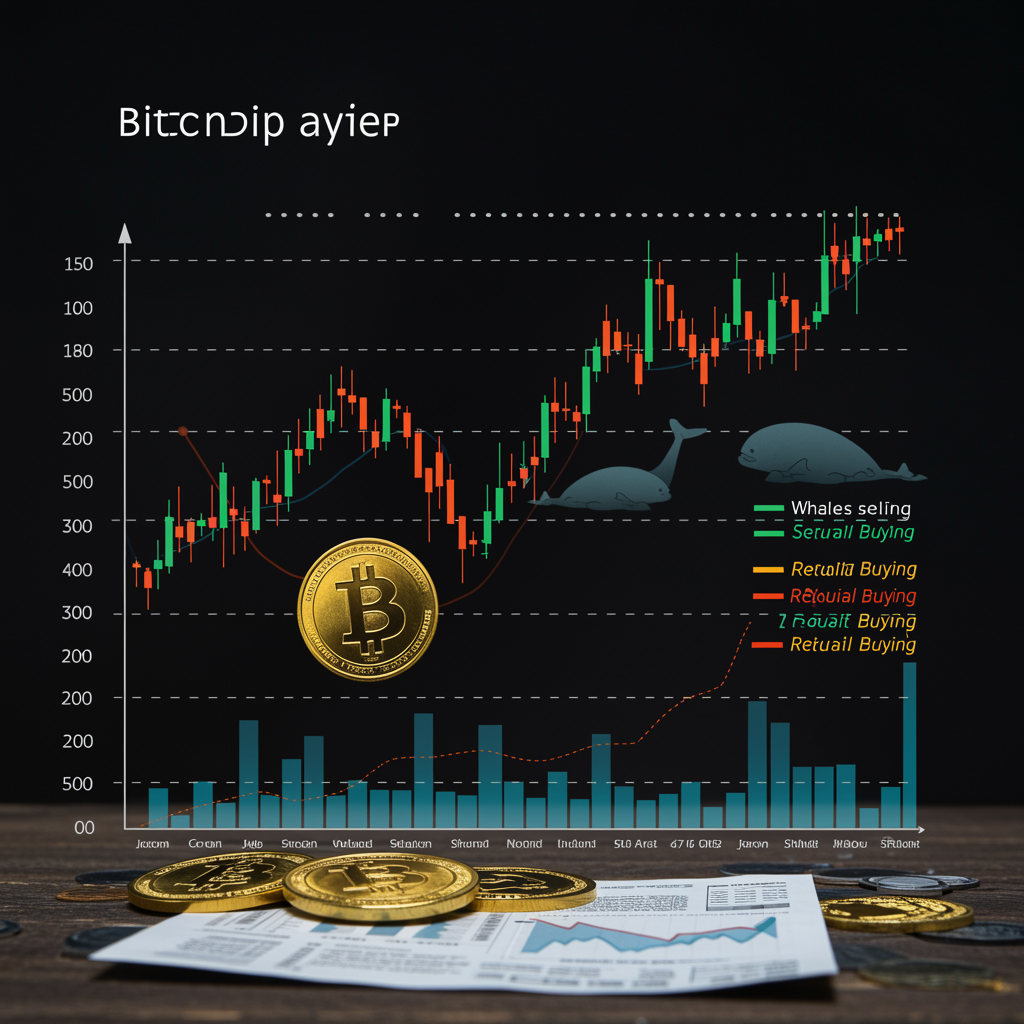
VanEck reports that Bitcoin’s recent decline is largely being driven by mid-cycle holders, while long-term whales continue to hold and accumulate, according to its “Mid-November 2025 Bitcoin ChainCheck” report.
The asset manager highlighted that wallets containing coins last moved within the past five years are responsible for most of the selling pressure. In contrast, the oldest cohorts—those holding BTC for over five years—have remained “remarkably steady,” even as market sentiment has softened. VanEck also noted that coins untouched for more than five years continue aging into the long-term cohort, adding roughly 278,000 BTC over the past two years, a sign of enduring conviction among long-term holders.
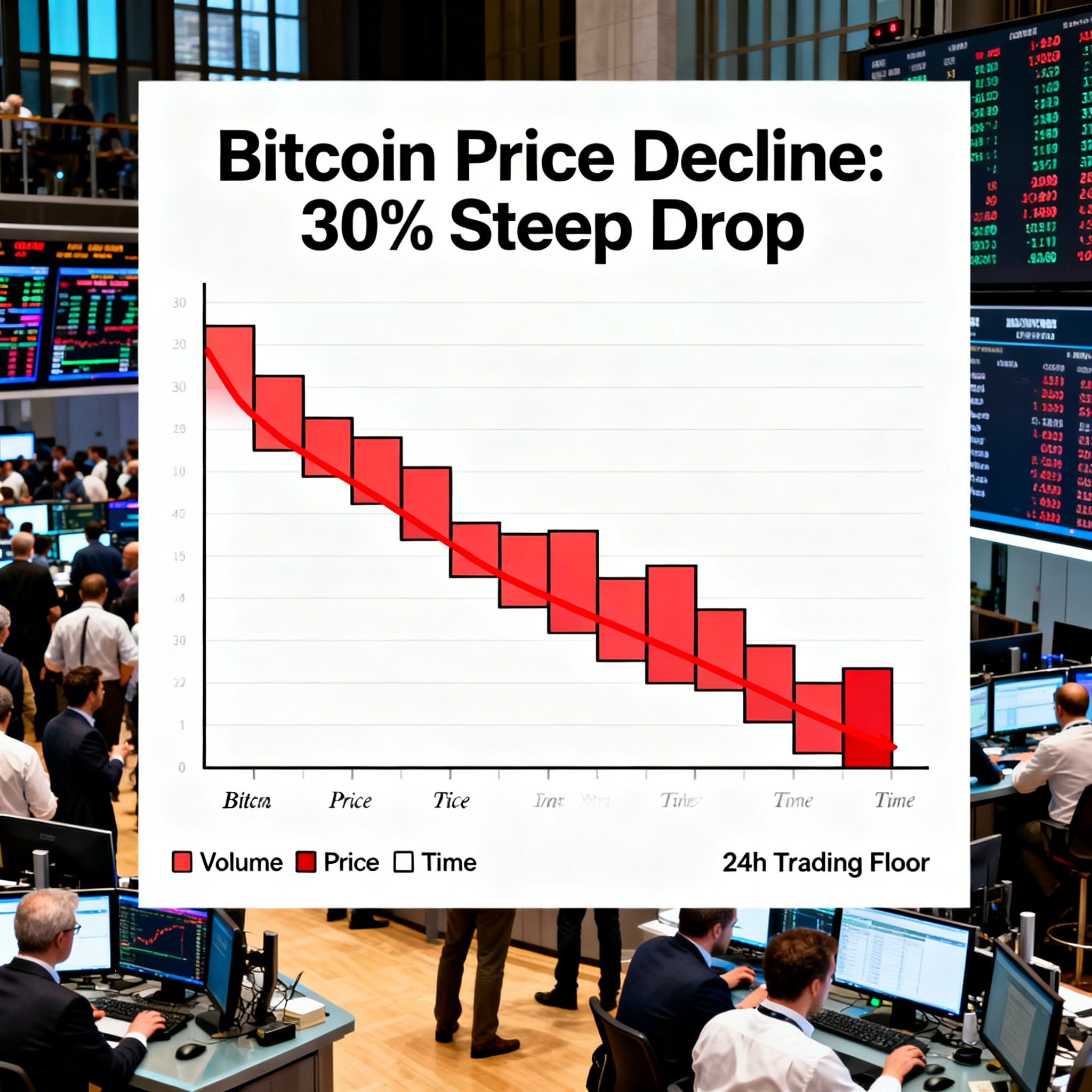
The report arrives as Bitcoin trades near multi-month lows. BTC was around $86,696 at 9:15 p.m. UTC on Thursday, down 3.2% over the past 24 hours and 31.2% below its October 6 all-time high of $126,080, according to CoinGecko. Analysts attribute the broader decline to forced liquidations, distribution from long-term holders, and heightened volatility in offshore derivatives markets.
“There have been several catalysts, but the biggest drivers appear to be long-term selling by ‘OGs,’ an uncertain economic climate, and a mass deleveraging event on October 10,” said Nic Puckrin, CEO of Coin Bureau, in comments to Euronews. He added that older, large-balance holders “have been selling for several weeks,” flooding the market with supply.
Carol Alexander, finance professor at the University of Sussex, noted that Bitcoin’s volatility is also influenced by aggressive trading behavior on offshore platforms. Professional trading firms often employ strategies such as “spoofing” or “laddering,” focusing primarily on rapid price movement, she said.
VanEck’s data shows that the 3–5 year coin age band has declined 32% over the past two years as these coins changed addresses. The firm attributes this movement to turnover among cycle traders rather than capitulation by decade-long holders.
The report also pointed to a reset in speculative positioning. Open interest in Bitcoin perpetual futures has fallen 20% in BTC terms and 32% in USD terms since October 9, with funding rates dropping to levels reminiscent of previous “washed-out” market periods. Smaller wallets holding 100–1,000 BTC have increased balances by 9% over six months and 23% over a year, even as the largest whale cohort trimmed positions.
According to VanEck, the combination of long-term holder stability, cohort rotation, and futures-market capitulation has left Bitcoin in a “reset” state—historically a setup that has preceded tactical rebounds in the past.