cpeditor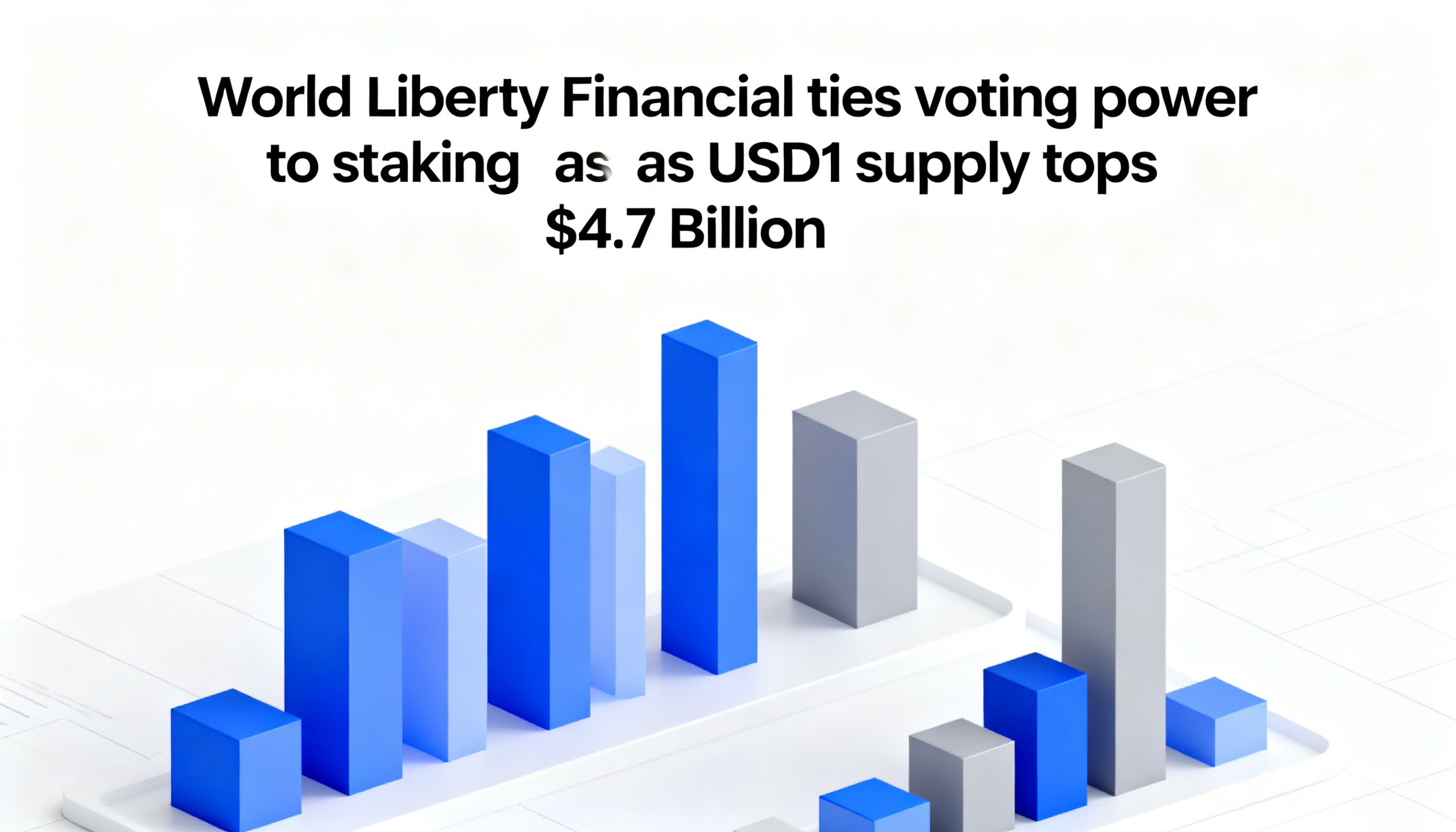
World Liberty Financial is seeking to reshape its governance structure by tying voting eligibility to long-term staking commitments and shifting stablecoin arbitrage economics toward major token holders.
The newly introduced proposal would require holders of unlocked WLFI tokens to stake their assets for a minimum of 180 days before they can participate in governance votes. Alongside that requirement, the framework establishes two participation tiers — “Node” and “Super Node” — offering enhanced benefits to users who commit significant capital.
Node and Super Node Structure
Under the plan, participants staking at least 10 million WLFI, valued at roughly $1 million at current prices, would qualify as “Nodes.” This designation would grant access to over-the-counter USD1 conversions at a 1:1 rate through licensed market makers. The protocol said it would subsidize those market makers to maintain price parity, effectively redirecting arbitrage spreads — previously estimated at 10 to 15 basis points per cycle — from institutional trading desks to qualifying stakers.
Users staking 50 million WLFI, approximately $5 million, would achieve “Super Node” status. In addition to conversion access, Super Nodes would receive guaranteed opportunities to engage directly with the team for partnership discussions and could qualify for additional economic incentives under separate commercial agreements.
Rewards and Governance Alignment
The proposal also outlines an estimated 2% annual staking reward in WLFI tokens, funded by the project treasury. However, rewards would be contingent on active participation in governance votes, reinforcing the link between capital lock-up and influence over protocol decisions.
The changes come as USD1’s circulating supply has expanded to roughly $4.7 billion, making it one of the larger stablecoins in circulation.
A timeline for the governance vote has yet to be announced.