cpeditor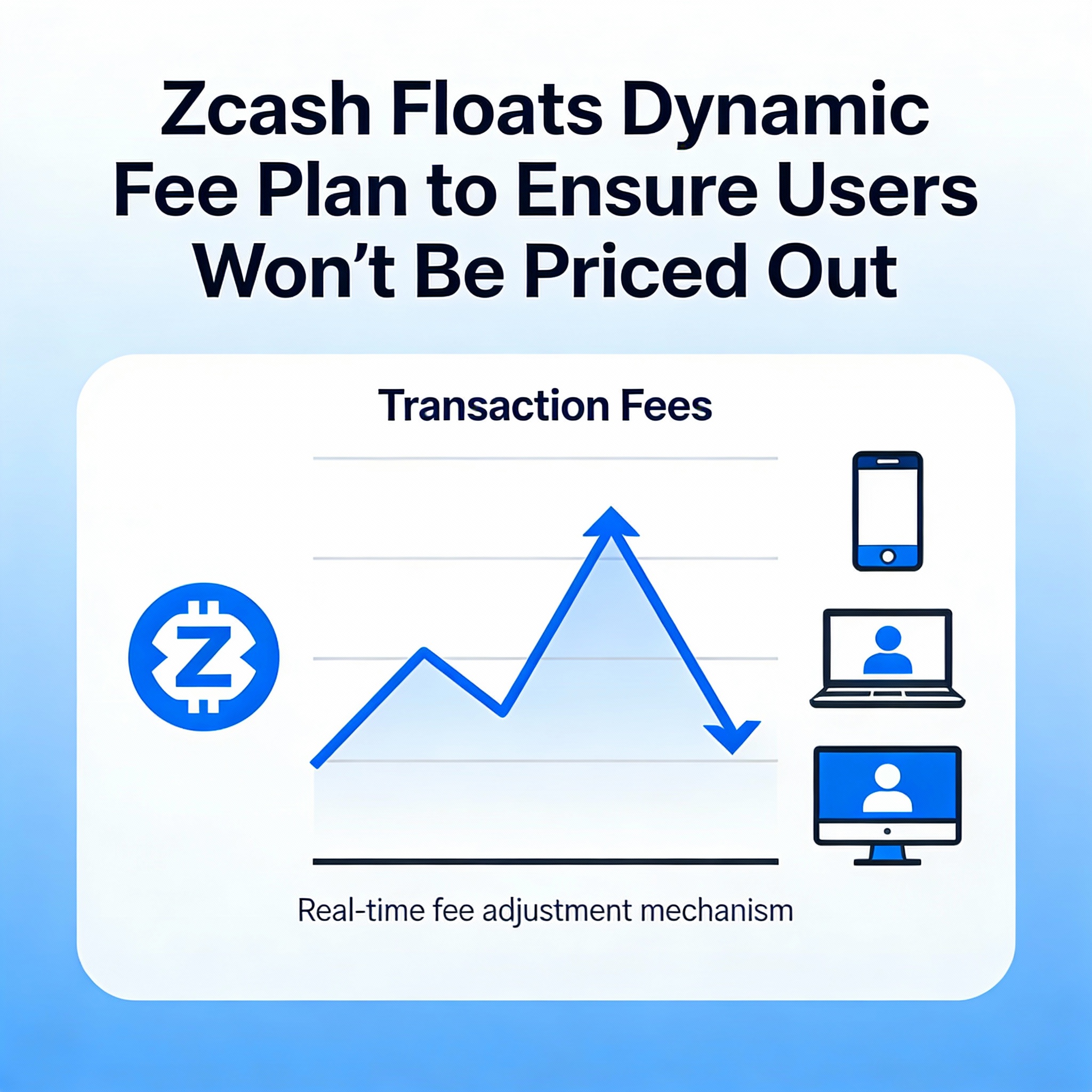
Zcash Developer Proposes Dynamic Fee System Amid Rising Usage and Token Prices
A leading Zcash developer has unveiled the first detailed blueprint for a dynamic fee market, sparking community discussion on how the decade-old network should price transactions as ZEC’s value, user activity, and institutional adoption grow.
The proposal, released Monday by Shielded Labs, outlines a shift from Zcash’s historically static fee model—initially 10,000 zatoshi, later reduced to 1,000. While effective during periods of low demand, the static system contributed to “sandblasting” spam attacks that congested wallets and clogged the blockchain.
Earlier efforts under ZIP-317 introduced action-based accounting, which treated each transaction component—spends, outputs, JoinSplits, and Orchard actions—as a single “action.” Fees scaled with activity rather than transaction size, solving the spam problem but keeping costs predictably low, without adjusting for network usage or token price fluctuations.
Developers argue that recent trends—ZEC’s price resurgence, growing retail adoption, and the rise of Zcash digital-asset treasuries—make the current model increasingly unsustainable. Users have reported rising transaction costs in ZEC terms, and edge cases, such as shielding large numbers of small transactions, can cost double-digit ZEC, highlighting fee rigidity under higher token valuations.
The new proposal introduces a stateless dynamic fee design based on “comparables”: the median fee per action observed over the previous 50 blocks, adjusted with synthetic transactions to simulate continuous congestion. Fees are bucketed into powers of ten to reduce linkability and preserve user privacy. Under network stress, a temporary priority lane at 10× the standard fee allows users to compete for block space without altering the protocol.
Implementation is planned in phases: first off-chain monitoring, then as a wallet policy, and eventually, if approved, as a consensus-level update with expiry-height limits and power-of-ten fee rules. This approach avoids the complexity and fork risks of mechanisms like Ethereum’s EIP-1559 while maintaining Zcash’s privacy standards.
Other ideas under consideration include using mining difficulty as a long-term metric to calibrate USD-denominated fees based on mempool pressure.
ZEC traded around $395 on Tuesday, up more than 12% in 24 hours as markets reacted to the first concrete roadmap for fee reform since ZIP-317.