cpeditor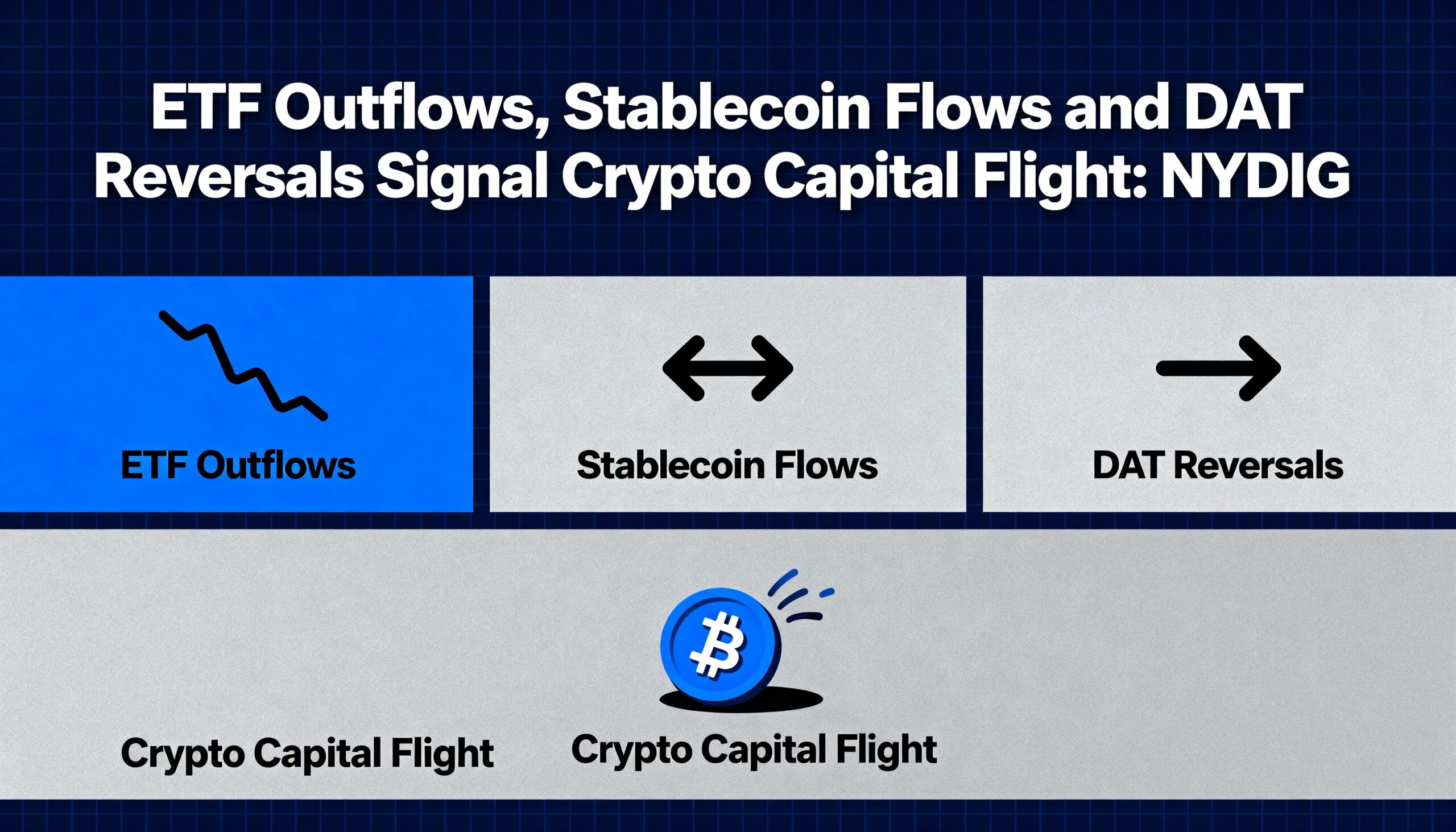
Spot Bitcoin ETFs, Stablecoin Supply, and DAT Reversals Signal Crypto Capital Flight: NYDIG
Spot bitcoin ETFs have experienced sustained outflows, totaling $3.55 billion in November, while stablecoin supply has declined—both indicators that capital is leaving the crypto market, according to NYDIG.
Greg Cipolaro, Global Head of Research at NYDIG, noted that bitcoin’s slide to $84,000 is driven more by structural factors than investor sentiment. In a recent report, he highlighted that the key engines behind the 2024–25 rally have shifted into reverse.
ETF Outflows Turn Red
Spot bitcoin ETFs, once the primary source of demand for the cycle, now show persistent redemptions. These vehicles had funneled billions into bitcoin during the first half of the year, but trailing five-day flows have turned negative. Data from SoSoValue indicates that November’s outflows are on pace to become the highest monthly withdrawal since these ETFs launched, just shy of February’s record $3.56 billion outflow.
Stablecoins Signal Capital Exodus
Stablecoins are flashing a similar warning. Total supply has dropped for the first time in months, and the algorithmic USDE token has lost nearly half its supply since the October 10 liquidation shock. Cipolaro said this reflects capital leaving the market rather than simply moving to the sidelines.
“Given its role in the selloff, where it fell to $0.65 on Binance, its rapid contraction underscores how aggressively capital has been pulled from the system,” he wrote.
DAT Reversals Add to Headwinds
Corporate treasury trades tied to DAT share premiums have also shifted. As premiums flipped to discounts, firms that previously issued stock to acquire bitcoin are now selling assets or repurchasing shares. For example, Sequans sold BTC earlier this month to reduce debt.
“While these reversals mark a clear shift from a strong demand engine to a potential headwind, no DAT has shown signs of financial distress,” Cipolaro noted. “Leverage remains modest, interest obligations are manageable, and many structures allow issuers to suspend dividends or coupon payments if needed.”
Large Purchases Fail to Stem Decline
Even sizable purchases, including those from Strategy and El Salvador, failed to halt the price drop. Cipolaro emphasized that this underscores the structural nature of the current decline. He argued that these reversals form a feedback loop triggered by the $19 billion liquidation event on October 10, where mechanisms that once propelled prices higher are now reinforcing the selloff.
Outlook: Prepare for Volatility
Cipolaro advised investors to “hope for the best, but prepare for the worst,” noting that while the long-term thesis for bitcoin remains intact, the near-term environment is likely to be shaped by familiar cyclical forces.
“History suggests the next stretch could be bumpy, but secular conviction remains an important asset for long-term investors,” he added.