cpeditor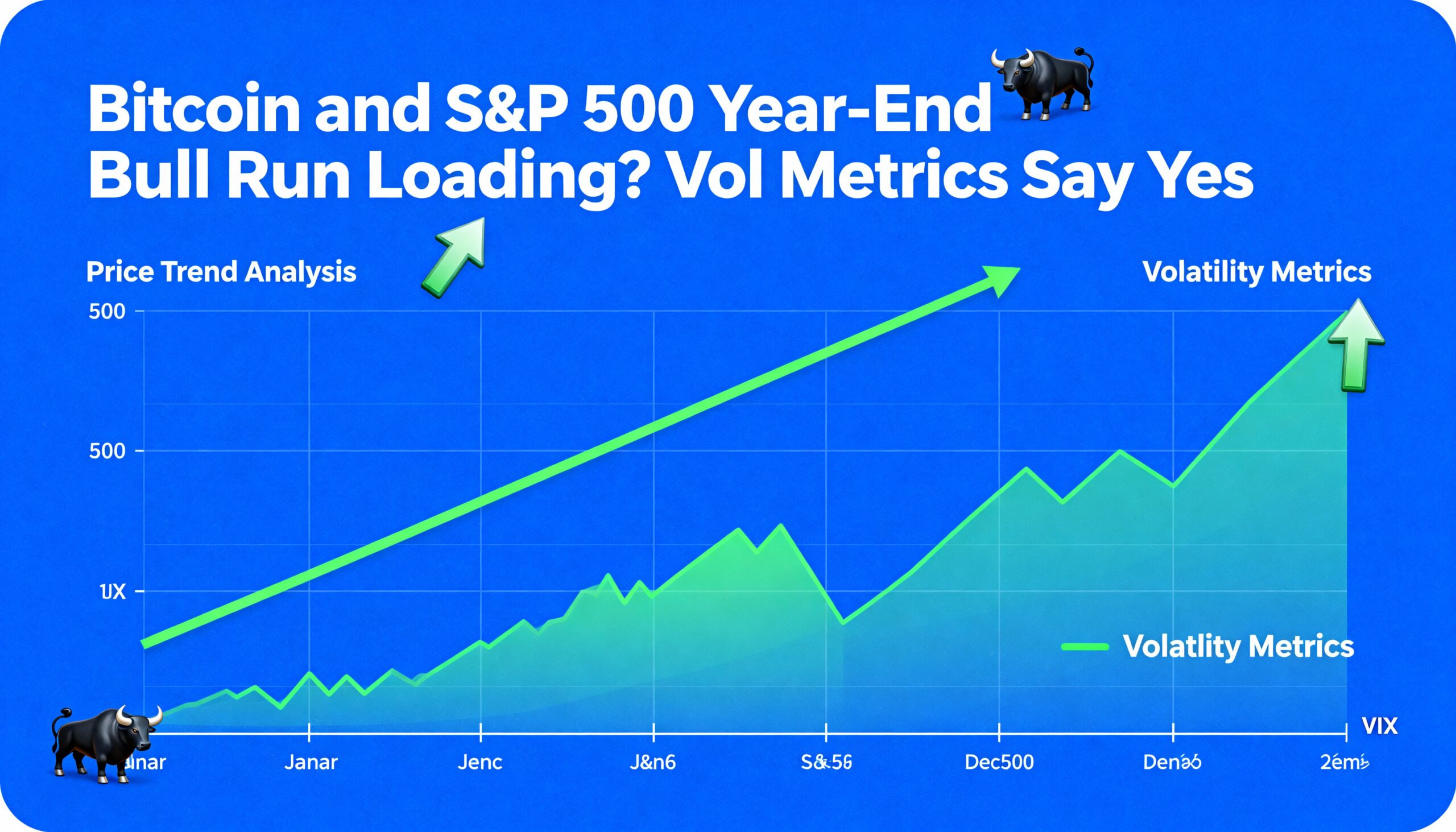
Implied volatility indices for Bitcoin (BTC) and the S&P 500 are retreating from recent spikes, signaling bullish potential as the year-end approaches.
Volatility metrics are flashing green amid rising expectations of a Fed rate cut. Volmex’s 30-day Bitcoin implied volatility index (BVIV) fell to an annualized 51%, reversing a sharp jump to nearly 65% during the sell-off from $96,000 to around $80,000 in mid-November. Other indicators, including Deribit’s DVOL, show similar spike-and-drop patterns, reflecting broader swings in financial markets. The VIX, which tracks 30-day implied volatility for the S&P 500, dropped from 28% before Nov. 21 to 17%, highlighting a retreat from panic-driven levels.
The decline in volatility suggests fear is fading and bulls are regaining control. Bitcoin has rebounded above $91,000, showing a negative correlation with its volatility index — a pattern increasingly aligning BTC with traditional assets.
This volatility easing aligns with surging odds of a December Fed rate cut, boosting risk appetite and reducing demand for Bitcoin puts as downside protection. Dr. Sean Dawson, head of research at on-chain options platform Derive, told CoinDesk:
“Markets are balancing on a knife’s edge, but sentiment has stabilised as rate-cut expectations recover. The probability of a 25 basis point cut jumped from 39% last week to nearly 87%.”
Dawson added that the cooling volatility and unwinding of last week’s strong put bias suggest markets are pricing in a lower likelihood of near-term disorder. On both Deribit and Derive, call-put skews for BTC have eased to around -5% from -7% to -10% last week, reflecting reduced fear and a partial unwinding of defensive hedging.
“Traders are still paying for downside protection, but noticeably less than last week, as rate-cut odds firm and markets regain confidence,” Dawson said.