cpeditor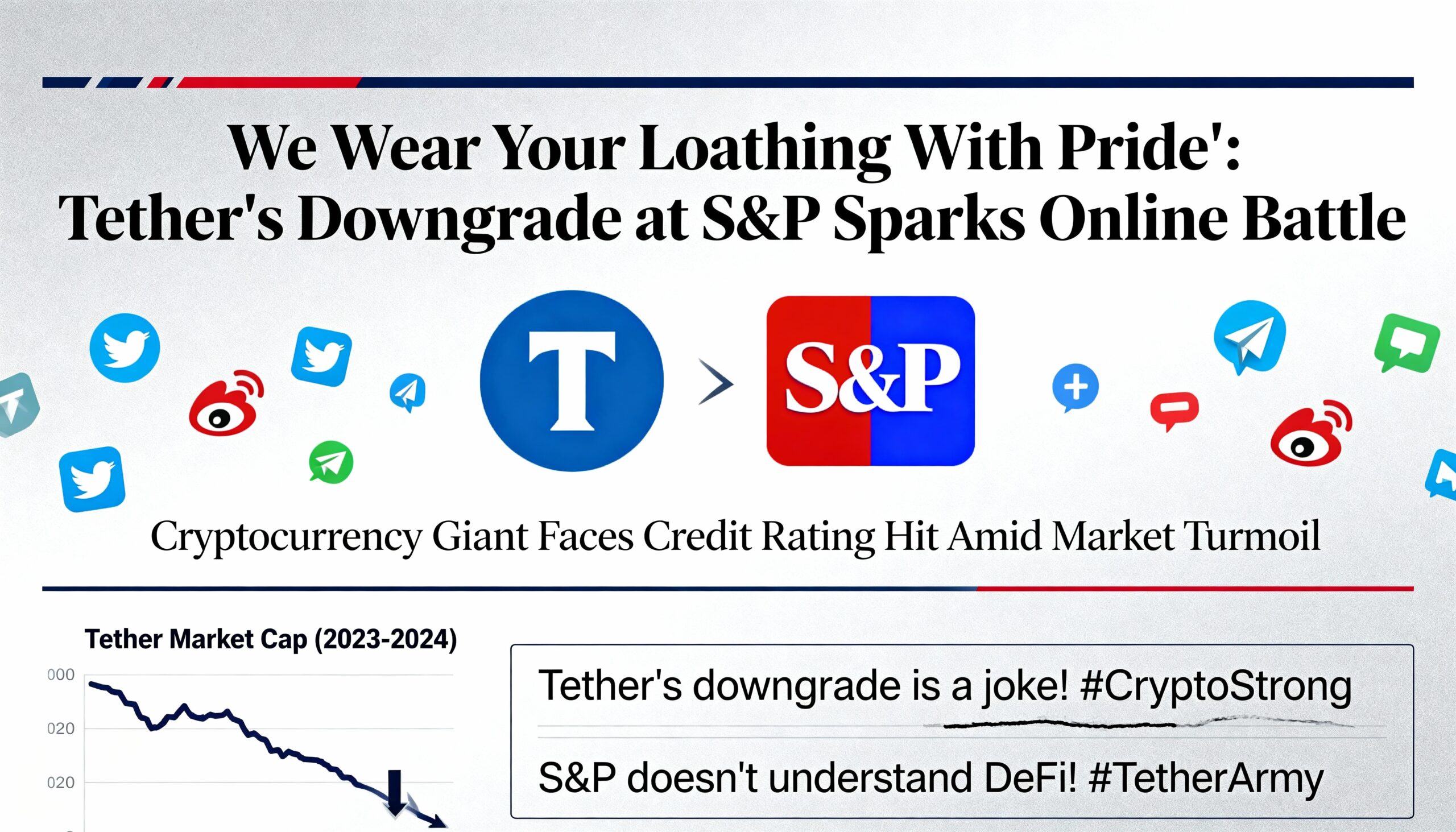
Tether Faces S&P Downgrade Amid Ongoing Reserve Transparency Debate
S&P Global on Wednesday downgraded Tether’s USDT stablecoin to its lowest rating on the agency’s stablecoin stability scale. The move highlights enduring concerns about Tether’s transparency and the composition of its reserves.
So familiar are the worries about whether Tether fully discloses its backing assets—or whether it risks being undercapitalized—that the crypto community has coined a two-word dismissal: “Tether FUD.”
Despite repeated scrutiny, USDT has continued to operate as designed, maintaining its U.S. dollar peg and redeemability throughout booming bull markets, steep bear markets, and high-profile industry collapses—including the failures of Sam Bankman-Fried, Alex Mashinsky, and numerous others. Meanwhile, Tether has emerged as one of the world’s most profitable crypto firms, reporting over $10 billion in earnings through the first nine months of 2025—numbers rivaling Wall Street giants Goldman Sachs and Morgan Stanley.
Yet the current bear market has reignited skepticism from some corners of traditional finance.
During the relatively quiet trading session ahead of the U.S. Thanksgiving holiday, S&P Global lowered USDT’s rating from 4 to 5, its weakest mark on the stablecoin stability scale. The downgrade cited ongoing opacity in Tether’s reporting and flagged a newer concern: bitcoin now represents over 5% of the reserves backing USDT, meaning sustained BTC price declines could raise the risk of undercollateralization.
Responding to the downgrade, Tether CEO Paolo Ardoino said, “We wear your loathing with pride.” He criticized the rating agencies, noting that traditional financial institutions grow uneasy when firms operate outside conventional constraints. “Tether built the first overcapitalized company in the financial industry, with no toxic reserves,” Ardoino added. “We are living proof that the traditional financial system is so broken that it is feared by the emperors with no clothes.”
Over the weekend, angel investor Jason Calacanis weighed in on X, offering advice to Tether: sell all bitcoin holdings, hold only U.S. Treasuries, and complete two audits by American firms. His recommendations sparked swift backlash from the crypto community, with critics pointing out the impracticality of exchanging a small portion of bitcoin for government debt. Many also referenced Calacanis’ prior calls for deposit bailouts during the Silicon Valley Bank collapse in March 2023—a period when U.S. Treasury holdings had contributed to significant losses.
Even as the debate over Tether’s bitcoin holdings continues, the question of independent audits remains contentious. Popular financial blogger Quoth the Raven, a longtime gold advocate turned bitcoin supporter, weighed in: “When a company refuses a full, independent audit, it’s never because everything is pristine,” he wrote. “Markets have a long, bloody track record of chewing up the naïve. An audit is the bare minimum for any entity issuing tens of billions in synthetic dollars that underpin entire markets.”