cpeditor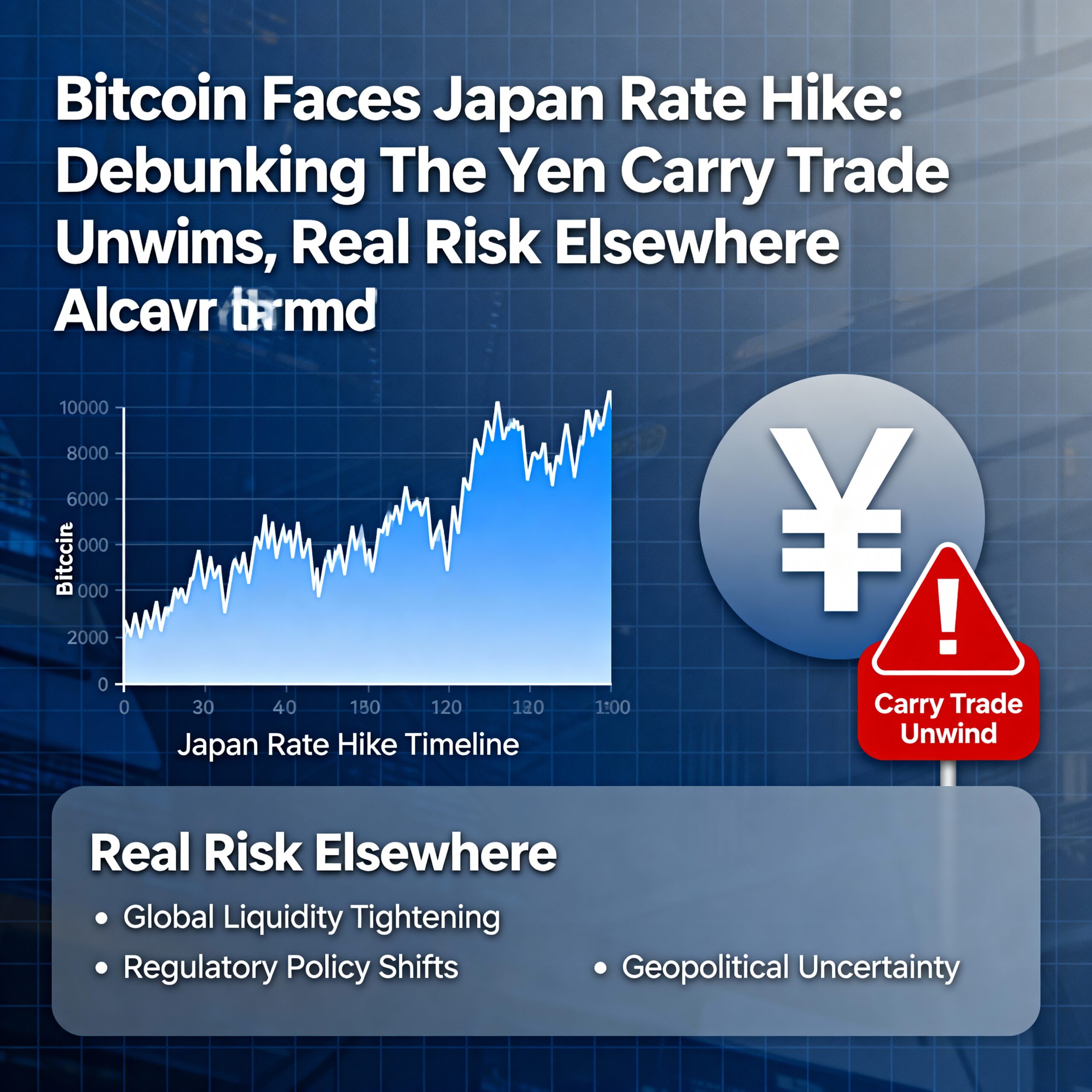
Bitcoin Braces for Japan Rate Hike: Yen Carry Trade Fears Overblown, True Risks Lie Elsewhere
Speculation is mounting as Japan prepares for a potential interest rate hike, prompting renewed chatter about the yen carry trade and its potential ripple effects on global markets—including Bitcoin. Yet, analysts suggest that the real risks for investors may lie elsewhere.
Understanding the Yen Carry Trade
The yen (JPY) carry trade has long influenced financial markets. Traders borrow yen at ultra-low Japanese rates and invest in higher-yielding assets abroad, including U.S. equities and Treasury securities. For decades, Japan’s near-zero interest rates fueled this strategy, creating a global funding mechanism that amplified risk-taking.
Concerns are rising that a rate hike by the Bank of Japan (BOJ) could erode yen’s cheap-funding status, prompting a sell-off of overseas assets—a so-called carry trade unwind. August 2025 offered a cautionary example when yen strength triggered global risk aversion, briefly impacting Bitcoin.
Why the Panic May Be Overstated
1. Rates Still Remain Low: Even after the anticipated hike, Japanese rates would rise to just 0.75%, compared with 3.75% in the U.S. The gap still favors U.S. assets, meaning a mass unwinding of carry trades is unlikely. In short, the BOJ remains the most dovish of major central banks.
2. Market Already Priced In Tightening: Japanese government bond (JGB) yields already reflect expectations for higher rates. The 10-year JGB yield stands at 1.95%, more than 100 basis points above the projected post-hike policy rate. Two-year yields are similarly elevated above 1%. “Japan’s 1.7% JGB yield isn’t a surprise. It has been in forward markets for over a year, and investors have already repositioned for BOJ normalization since 2023,” said Eamonn Sheridan, Chief Asia-Pacific Currency Analyst at InvestingLive. This suggests any rate adjustment is largely anticipated.
3. Speculators’ Yen Positions Are Bullish: Net long positions on the yen leave little room for panic buying post-hike. Data from Investing.com shows sustained bullish yen positioning since February 2025, in contrast to mid-2024, when bearish positioning amplified the shock of BOJ rate moves.
4. Risk-On/Risk-Off Dynamics Are Changing: The yen is no longer the sole barometer of market risk appetite. The Swiss franc has emerged as a low-volatility alternative, reducing the likelihood of sharp carry trade-driven swings.
The Real Risk
While the BOJ’s rate hike could trigger short-term volatility, it is unlikely to replicate the turbulence of August 2025. Investors are already positioned for tightening, and any adjustments are expected to be gradual.
Instead, the broader concern lies in sustained Japanese tightening keeping U.S. Treasury yields elevated. Persistently high yields could dampen global risk appetite, raising borrowing costs and pressuring asset valuations across equities and cryptocurrencies, including Bitcoin.
Bottom line: Watch the BOJ not for a sudden yen surge unwinding carry trades, but for its wider influence on global yields and market sentiment. That is where the real risk—and opportunity—may lie.